Categories
Archbishop’s Teaching

14η Κυριακή της Πεντηκοστής

Η Μάρθα και η Μαρία ( Λουκάς 10 / 38 - 42)

Αγαπητά εν Χριστώ αδέλφια,

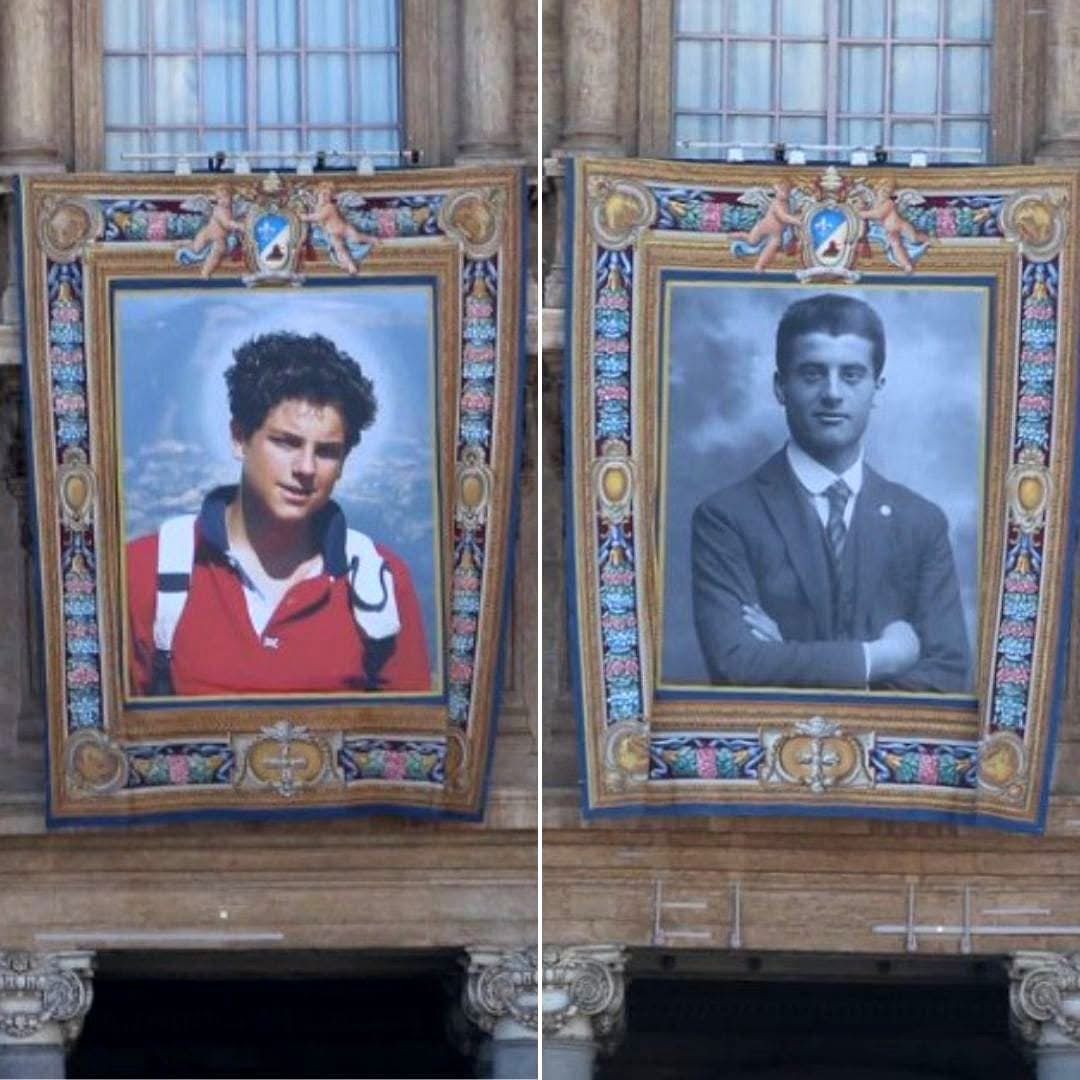
Η Αγιοκατάταξη των Μακαρίων Τζόρτζιο Φρασσάτι και Κάρλο Ακουτίς

Σήμερα, στην αγία πόλη της Ρώμης, ο αγαπημένος μας Άγιος Πατέρας, ο Πάπας Λέων ΙΔ΄, θα ανακηρύξει επίσημα για όλη την Εκκλησία δύο νέους αγίους, τον Τζόρτζιο Φρασσάτι και τον Κάρλο Ακουτίς. Και οι δύο νέοι αυτοί άνδρες έφυγαν από τη ζωή πολύ νέοι· όμως μέσα στη σύντομη πορεία τους, δείχνουν ότι το να ζει κανείς για τον Χριστό δεν αφαιρεί τίποτε από τη ζωή, αλλά την γεμίζει με νόημα και χαρά.

Οι άγιοι είναι οι ειδικοί της ακρόασης. Όπως η Μαρία της Βηθανίας, οι άγιοι είναι προσεκτικοί στη φωνή του Χριστού. Τον ακούν στην ανάγνωση του Ευαγγελίου, Τον ακούν στη διδασκαλία της Εκκλησίας, Τον ακούν στις φωνές των φτωχών και των μεταναστών, Τον ακούν στη σιωπή του Παναγίου Μυστηρίου. Οι άγιοι δεν αρκούνται να ακούνε τον Ιησού· Τον προσέχουν. Αυτό το έργο της ακρόασης είναι η ανακάλυψη της φωνής του Χριστού σε όσους βρίσκονται δίπλα μας, στις οικογένειές μας και στον χώρο εργασίας μας. Είναι ακόμη και η προσπάθεια να ακούσουμε τη φωνή του Χριστού στους συγχρόνους μας, μερικοί από τους οποίους βρίσκονται μακριά από την Εκκλησία. Ακόμα και στην αποξένωσή τους, είναι πλάσματα του Λόγου, της λογικής, και μπορούν, χωρίς να το γνωρίζουν, να μεταδίδουν την αλήθεια. Χρειαζόμαστε καρδιές και αυτιά ικανά να ακούν τον Χριστό που μιλά από τα πιο απίθανα μέρη.

Η καημένη η Μάρθα, μέσα στη γεμάτη μέριμνες κουζίνα της Βηθανίας, μπορούσε να ακούει τον Χριστό να μιλά στο άλλο δωμάτιο, αλλά ήταν τόσο αποσπασμένη που δεν μπορούσε να Τον προσέξει. Είχε επικεντρωθεί στα προβλήματά της, στις δυσκολίες και τις αποτυχίες της. Άκουγε τον εαυτό της και μόνο από απόσταση τον Ιησού.

Ο Θείος Λόγος δημιούργησε το ανθρώπινο σώμα ως μια εξατομικευμένη παραβολή: έχουμε δύο αυτιά και ένα στόμα. Ο Θεός μας δείχνει ότι πρέπει να ακούμε διπλάσια απ’ όσο μιλάμε· και ότι η ακρόαση είναι διπλάσια δύσκολη από την ομιλία.

Είθε η Ευλογημένη Μητέρα μας, της οποίας την όμορφη γέννηση θα εορτάσουμε αύριο (για εμάς τους Μαρωνίτες, θυμόμαστε την Κυρία μας της Μαρκί!) στις 8 Σεπτεμβρίου, να πρεσβεύει για όλους μας ώστε να γίνουμε καλύτεροι ακροατές! Αμήν.

+ Σελίμ Σφέιρ

Αρχιεπίσκοπος Μαρωνιτών Κύπρου
Categories
Archbishop’s Teaching

14th Sunday of Pentecost

2η Κυριακή της Ανυψώσεως του Τιμίου Σταυρού Ο ερχομός του Υιού του Ανθρώπου και η βασιλεία ( Ματθαίος 24 / 1 – 14)

Περίοδος της Ανυψώσεως του Τιμίου Σταυρού

Ομιλία του Σεβασμιωτάτου Αρχιεπισκόπου Μαρωνιτών Κύπρου κ.κ. Σελίμ Ζαν Σφέιρ

2η Κυριακή της Ανυψώσεως του Τιμίου Σταυρού

( Ματθαίος 24 / 1 - 14)

Ο ερχομός του Υιού του Ανθρώπου και η βασιλεία

Όταν ο Ιησούς βγήκε από το ναό και ξεκίνησε να φύγει, ήρθαν οι μαθητές του για να του δείξουν τα οικοδομήματα του ναού. Ο Ιησούς όμως τους είπε: «Τα βλέπετε όλα αυτά; Σας βεβαιώνω πως δε θα μείνει εδώ πέτρα πάνω στην πέτρα· όλα θα γκρεμιστούν».
Ύστερα ο Ιησούς πήγε και κάθισε στο όρος των Ελαιών. Κι ήρθαν οι μαθητές του και τον ρώτησαν ιδιαιτέρως: «Πες μας, πότε θα γίνουν αυτά, και ποιο σημάδι θα δείξει πως πλησιάζει η παρουσία σου και η συντέλεια του κόσμου;» Ο Ιησούς τους απάντησε: «Προσέχετε μη σας ξεγελάσει κανείς. Γιατί πολλοί θα εμφανιστούν σαν μεσσίες και θα ισχυρίζονται: «εγώ είμαι ο Μεσσίας». Έτσι θα παραπλανήσουν πολλούς. Τότε θ' ακούσετε πως γίνονται πόλεμοι, ή προετοιμάζονται πόλεμοι. Προσέξτε να μην ταραχτείτε, γιατί όλα αυτά
2
πρέπει να γίνουν, αλλά δεν είναι ακόμη το τέλος. Το ένα έθνος θα ξεσηκωθεί εναντίον του άλλου και το ένα βασίλειο εναντίον του άλλου θα έρθουν πείνα, αρρώστιες και σεισμοί σε διάφορα μέρη. Όλα αυτά όμως είναι σαν τους πρώτους πόνους της γέννας.» Θα σας παραδώσουν σε βασανιστήρια και θα σας σκοτώσουν, κι όλοι οι λαοί θα σας μισούν εξαιτίας μου. Τότε πολλοί θα αποστατήσουν, θα καταδώσουν ο ένας τον άλλο και θα μισούν ο ένας τον άλλο. Θα εμφανιστούν και πολλοί ψευδοπροφήτες και θα παραπλανούν πολλούς. Επειδή μάλιστα θα πληθύνει η κακία, η αγάπη πολλών θα ψυχρανθεί. Όποιος όμως μείνει σταθερός ως το τέλος, αυτός θα σωθεί. Πρώτα θα κηρυχθεί σ' όλη την οικουμένη αυτό το ευαγγέλιο για τη βασιλεία του Θεού, για να το ακούσουν όλα τα έθνη, και ύστερα θα έρθει το τέλος.
Αγαπητά εν Χριστώ αδέλφια,
1. Ο Ιησούς εγκαταλείπει το Ναό
Ο Ιησούς εκπλήρωσε αυτό που είχε πει στους Ιουδαίους στο τέλος του προηγούμενου κεφαλαίου: «Γι’ αυτό ο τόπος σας θα ερημωθεί!» (Ματθ. 23:38). Οι Ιουδαίοι ήταν προσκολλημένοι σε αυτό το σπίτι, το οποίο αποτελούσε το καμάρι του έθνους - ένα πολύ θεμιτό συναίσθημα, αφού ο
3
ναός είχε χτιστεί για να είναι η κατοικία του Θεού. Αλλά μετά την απόρριψη του Κυρίου, τα κτίρια του ναού δεν είχαν λόγο να παραμείνουν. «Σας βεβαιώνω πως δε θα μείνει εδώ πέτρα πάνω στην πέτρα, όλα θα γκρεμιστούν.»
2. Τα ερωτήματα των μαθητών
Ο Ιησούς «κάθεται στο όρος των Ελαιών.» Εκεί θα αναληφθεί στον ουρανό και θα επιστρέψει σε δόξα. Δίνει στους μαθητές του, «κατ' ιδίαν», μια γεύση των μελλοντικών γεγονότων.
Η ερώτηση των μαθητών έχει τρία μέρη:
- Πότε θα γίνει η καταστροφή του ναού;
- Ποιο θα είναι το σημάδι της έλευσης του Ιησού σε δόξα για να εγκαθιδρύσει τη βασιλεία του;
- Ποιο θα είναι το σημάδι του τέλους του αιώνα;
3. Η απάντηση του Ιησού και τα βάσανα των πιστών στους επερχόμενους καιρούς
Απαντώντας στην ερώτηση των μαθητών σχετικά με τους έσχατους καιρούς, ο Ιησούς τους λέει να μην επηρεάζονται από τα παγκόσμια γεγονότα, γιατί αυτά πρέπει να συμβούν. Αλλά να εμπιστεύονται τον Θεό, ο οποίος έχει τη μοίρα του κόσμου και τη δική μας μοίρα στα χέρια Του.
4
Με αυτή την σοβαρή προειδοποίηση: «Προσέξτε...», ο Ιησούς προετοιμάζει τον λαό Του για αυτή τη φοβερή εποχή των προβλημάτων.
«Προσέχετε μήπως κάποιος σας εξαπατήσει... Προσέχετε μήπως ταραχτείτε.» Ο Κύριος δίνει μια ζοφερή περιγραφή του μέλλοντος: πόλεμοι, φυσικές καταστροφές, διωγμοί - οι οποίοι, για τους χριστιανούς, συνεχίζονται από το βιβλίο των Πράξεων των Αποστόλων. «Πολλοί ψευδοπροφήτες θα σηκωθούν και θα εξαπατήσουν πολλούς ανθρώπους.»
Για εμάς τους πιστούς, η μάχη είναι πνευματική. Ο κίνδυνος δεν είναι μόνο εξωτερικός, διότι, προσθέτει, «βγήκαν από ανάμεσά μας»- θα προσπαθήσουν στη συνέχεια, με μεγάλα σημεία, «να εξαπατήσουν, αν είναι δυνατόν, και τους εκλεκτούς.»
Πώς μπορούμε να αποφύγουμε να παρασυρθούμε; Με το να μένουμε κοντά στον Κύριο, με το να τρεφόμαστε από Αυτόν στον Λόγο.
Το πιο σημαντικό πράγμα είναι να μπορέσουμε να διατηρήσουμε τη φιλανθρωπία, βλέποντας όλο το κακό που μπορεί να συμβεί σε αυτόν τον κόσμο. Γιατί όταν ο Υιός του ανθρώπου επιστρέψει, θα κρίνει τον κόσμο με βάση τη φιλανθρωπία. Υπομείνετε μέχρι τέλους και διατηρήστε τη φιλανθρωπία. Γιατί τότε θα είναι το τέλος, όταν τα καλά νέα της βασιλείας θα διακηρυχθούν σε όλα τα έθνη. Η βασιλεία του Μεσσία θα είναι τότε το σημάδι του τέλους του κόσμου.
5
Προσευχή : Κύριε, σου ζητάμε να αυξήσεις τη φιλανθρωπία μας. Να μας δώσεις τη δύναμη να επιμείνουμε στην εκτέλεση του ιερού Σου θελήματος, να βλέπουμε τα γεγονότα του κόσμου χωρίς να μας ενοχλούν. Όσο είμαστε βέβαιοι ότι μας φροντίζεις, τίποτα δεν μπορεί να μας φοβίσει. Αμήν.

+ Σελίμ Σφέιρ
Αρχιεπίσκοπος Μαρωνιτών Κύπρου
2nd Sunday of the time of the Exaltation of the Holy Cross The coming of the Son of Man and the kingdom Matthew 24 / 1- 14

The Time of the Exaltation of the Holy Cross
Homily of His Excellency Msgr Selim Sfeir
Maronite Archbishop of Cyprus
2nd Sunday of the time of the Exaltation of the Holy Cross
The coming of the Son of Man and the kingdom
Matthew 24 / 1- 14

Dear brothers and sisters in Christ,

1. Jesus leaves the Temple
Jesus fulfilled what he had declared to the Jews at the end of the previous chapter: "Behold, your house is left to you desolate" (Mt 23:38). The Jews were attached to this house that was the pride of the nation - a legitimate sentiment since the temple had been built to be the dwelling place of God. However, after the rejection of the Lord, the buildings of the temple no longer had a place to subsist. "Not a stone will be left here one stone upon another that will not be thrown down."

2. The disciples' questions
Jesus is "sitting on the Mount of Olives." It is there that he will be raised to heaven and will return in glory. He gives his disciples, "in private," a glimpse of future events.
The disciples' question has three parts:
- When will the destruction of the temple happen?
2
- What will be the sign of the coming of Jesus in glory, to establish his kingdom?
- What will be the sign of the end of the age?3. Christ's answer and the suffering of the faithful in the times to come
In response to the disciples' question about the end times, Jesus tells them not to be influenced by the world events, because they must happen. But to trust in God who holds the destiny of the world, and our own destiny, in his hands.
By this solemn warning: "Beware," Jesus prepares his people for this terrible period of troubles.
Beware that no one deceives you ... Beware of being disturbed." The Lord gives a dark description of the future: wars, natural disasters, persecutions - which, for Christians, have begun since the period of the book of Acts. "They will deliver you to make you suffer and they will kill you ... Many false prophets will arise and will deceive many people."
For us, believers, the battle is spiritual. The danger is not only external, as it is added, "they have come out from among us"; they will then seek by great signs, "to deceive, if possible, even the elect."
How not to be deceived? By staying close to the Lord, by feeding on Him in the Word.
What is most important is to be able to keep charity, in seeing all that can happen of evil in this world. For when the Son of Man returns, he will judge the world on charity. Hold on to the end and keep charity. For then it will be the end when the good news of the kingdom will be announced to all nations. The reign of the Messiah will then be the sign of the end of the times.

3 Prayer
Lord, we ask you to increase our charity, to give us to persevere in the fulfilment of your holy will, to look at the world events without being disturbed by them. As long as we are confident that you take care of us, nothing will be able to frighten us.

† Selim Sfeir
Maronite Archbishop of Cyprus

2ème Dimanche du temps de l’Exaltation de la Sainte Croix La venue du Fils de l’homme et le royaume Matthieu 24 / 1- 14

Le Temps de l’Exaltation de la Sainte Croix

Homélie de Son Excellence Mgr. Selim Sfeir Archevêque Maronite de Chypre

2ème Dimanche du temps de l’Exaltation de la Sainte Croix

La venue du Fils de l’homme et le royaume

Matthieu 24 / 1- 14


Chers frères et soeurs en Christ,

1. Jésus sort du Temple
Jésus accomplit ce qu’Il avait déclaré aux Juifs à la fin du chapitre précédent : « Voici, votre maison vous est laissée déserte » (Mt 23, 38). Les Juifs étaient attachés à cette maison qui faisait l’orgueil de la nation - un sentiment bien légitime puisque le temple avait été construit pour être la demeure de Dieu. Mais, après le rejet du Seigneur, les bâtiments du temple n’avaient plus lieu de subsister. « Il ne sera pas laissé ici pierre sur pierre qui ne soit jetée à terre ».

2. Les questions des disciples
Jésus est « assis sur le mont des Oliviers ». C’est là qu’Il sera élevé au ciel et qu’Il reviendra en gloire. Il donne à ses disciples, « en privé », un aperçu des événements futurs. La question des disciples comporte trois parties : - Quand arrivera la destruction du temple ?

2- Quel sera le signe de la venue de Jésus en gloire, pour établir son règne ? - Quel sera le signe de l'achèvement de l'ère ?
3. Réponse du Christ et souffrance des fidèles dans les temps à venir
Jésus en réponse à la question des disciples à propos de la fin des temps, leur déclare de ne pas se laisser influencer par les évènements du monde, car ils doivent arriver. Mais de faire confiance à Dieu qui a entre ses mains le destin du monde, et notre propre destin. Par cet avertissement solennel : « Prenez garde… », Jésus prépare les siens, en vue de cette terrible période de troubles. « Prenez garde que personne ne vous séduise… Prenez garde de ne pas vous laisser troubler ». Le Seigneur donne de l'avenir une sombre description : guerres, catastrophes naturelles, persécutions – qui, pour les chrétiens, ont commencé depuis la période du livre des Actes. « Ils vous livreront pour vous faire souffrir et ils vous feront mourir… Beaucoup de faux prophètes se lèveront et séduiront beaucoup de gens ». Pour nous, croyants, le combat est spirituel. Le danger n'est pas qu'extérieur car, est-il ajouté, « ils sont sortis du milieu de nous » ; ils chercheront alors par de grands signes, « à séduire, si possible, même les élus ». Comment ne pas être séduit ? En restant près du Seigneur, en se nourrissant de Lui dans la Parole.
Ce qui est le plus important, c'est de pouvoir garder la charité, en voyant tout ce qui peut arriver de mal en ce monde. Car quand le fils de l'homme reviendra il jugera le monde sur la charité. Tenir jusqu'au bout et garder la charité. Car alors ce sera la fin quand la bonne nouvelle du royaume sera annoncée à toutes les nations. Le règne du messie sera alors le signe de la fin des temps.

3 Prière
Seigneur, nous te demandons d'augmenter en nous la charité. De nous donner de persévérer dans l'accomplissement de ta sainte volonté, de regarder les évènements du monde sans être perturbés par eux. Tant que nous sommes confiants que tu prends soin de nous, rien ne pourra nous faire peur.

† Selim Sfeir
Archevêque Maronite de Chypre

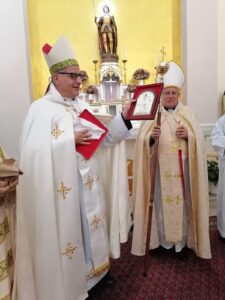
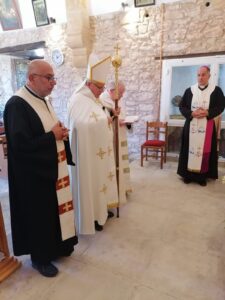
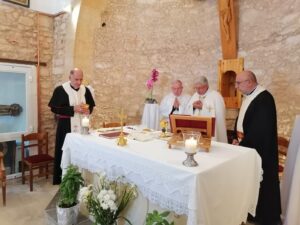
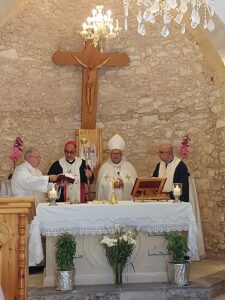
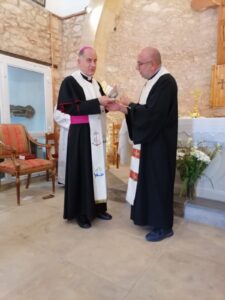
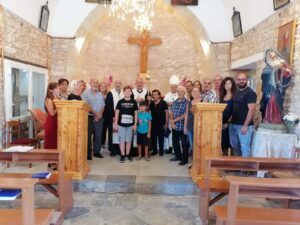
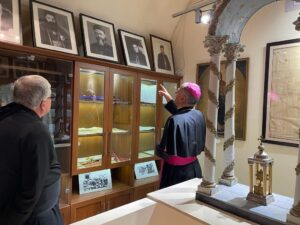
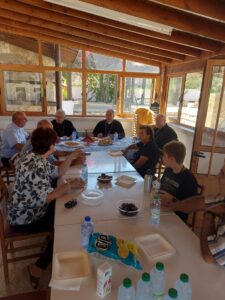
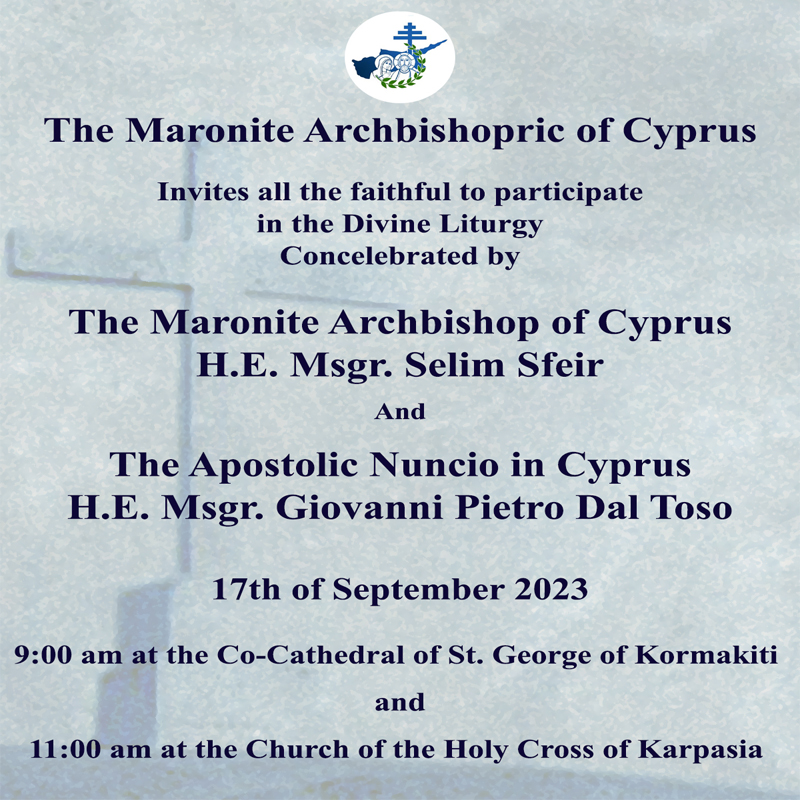
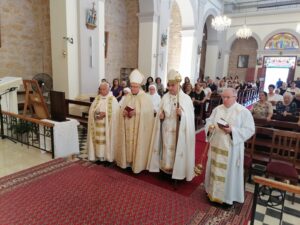
The Apostolic Nuncio, H.E. Msgr. Dal Toso and The Maronite Archbishop of Cyprus H.E. Msgr. Sfeir in Kormakiti and Karpasha

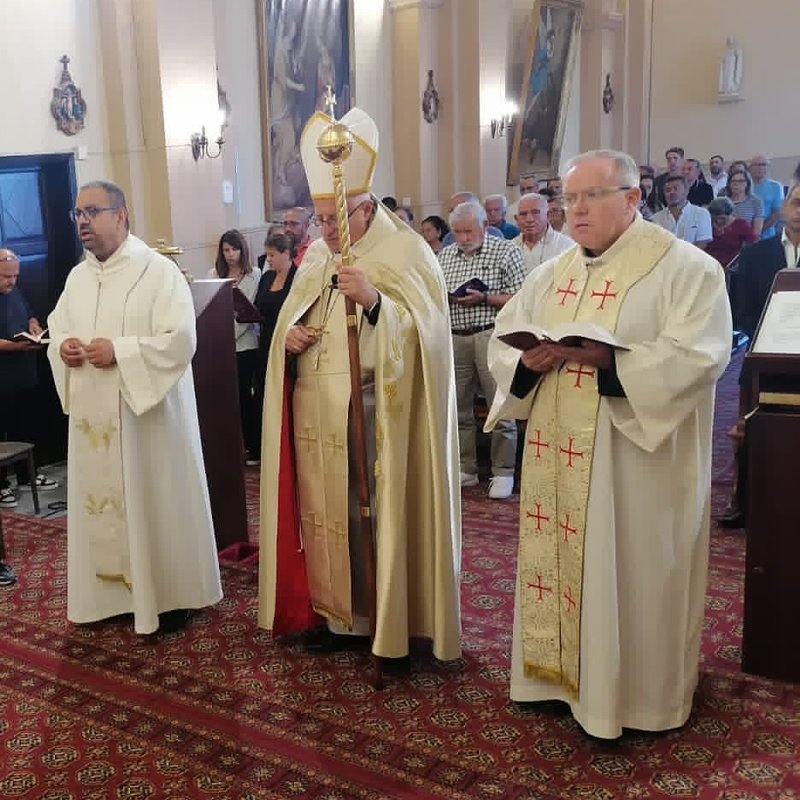
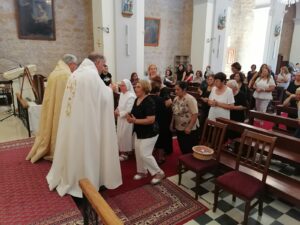
On Sunday September 17, 2023, the Apostolic Nuncio in Cyprus, H.E. Msgr. Giovanni Pietro Dal Toso, visited the Maronite Villages of Kormakitis and Karpasha together with the Maronite Archbishop of Cyprus H.E. Msgr. Selim Sfeir. This was the first visit of H.E. Msgr. Dal Toso to the Maronite villages as Apostolic Nuncio. He celebrated the Divine Liturgy at the Co-Cathedral of St. George of Kormakiti and the Church of the Holy Cross of Karpasha in the presence of the faithful.

H.E. Msgr. Selim Sfeir welcomed the official representative of His Holiness Pope Francis in this holy land and asked H.E. to communicate to the 'rock', Peter the fervent fidelity of the Cypriot Maronite faithful.

On his turn, H.E. Msgr. Giovanni Pietro Dal Toso spoke of the visit as a reminder of the ties between the Maronite communities of the Island and the Universal Church. “You do not believe alone, but you believe with the whole Church spread all over the world”. He focused on “his role to remind us that we are big family all over the world, and Our father is the Holy Father uniting us in His big family… You are not alone, forgotten in your small parishes”, he said, “but you are connected to the Universal Church, and The Holy See is thinking of you, and knows of your difficulties and faith.”


Την Κυριακή 17 Σεπτεμβρίου 2023, ο Αποστολικός Νούντσιος στην Κύπρο, A.E. Msgr. Giovanni Pietro Dal Toso, επισκέφθηκε τα μαρωνιτικά χωριά Κορμακίτη και Καρπάσιας μαζί με τον Αρχιεπίσκοπο Μαρωνιτών Κύπρου Σεβασμιώτατο  Selim Sfeir. Αυτή ήταν η πρώτη επίσκεψη της Α.Ε. Msgr. Dal Toso στα Μαρωνιτικά χωριά ως Αποστολικός Νούντσιος. Τέλεσε τη Θεία Λειτουργία στον Συν-Καθεδρικό Ναό του Αγίου Γεωργίου Κορμακίτη και στον Ιερό Ναό του Τιμίου Σταυρού Καρπάσιας, παρουσία των πιστών.

Ο Σεβασμιώτατος κ. Selim Sfeir καλωσόρισε τον επίσημο εκπρόσωπο της Αγιότητάς του Πάπα Φραγκίσκου σε αυτή την ιερή γη και ζήτησε από την Α.Ε. να μεταφέρει στον "βράχο", Πέτρο την ένθερμη πίστη των Κυπρίων Μαρωνιτών πιστών.

Με τη σειρά του, η Α.Ε. Msgr. Giovanni Pietro Dal Toso μίλησε για την επίσκεψη ως υπενθύμιση των δεσμών μεταξύ των μαρωνιτικών κοινοτήτων του νησιού και της Παγκόσμιας Εκκλησίας. "Δεν πιστεύετε μόνοι σας, αλλά πιστεύετε μαζί με ολόκληρη την Εκκλησία που είναι διασκορπισμένη σε όλο τον κόσμο". Επικεντρώθηκε "στο ρόλο του να μας θυμίσει ότι είμαστε μια μεγάλη οικογένεια σε όλο τον κόσμο, και ο πατέρας μας είναι ο Άγιος Πατέρας που μας ενώνει στη μεγάλη οικογένειά Του... Δεν είστε μόνοι, ξεχασμένοι στις μικρές σας ενορίες", είπε, "αλλά είστε συνδεδεμένοι με την Παγκόσμια Εκκλησία, και η Αγία Έδρα σας σκέφτεται και γνωρίζει τις δυσκολίες και την πίστη σας".


1η Κυριακή της Ανυψώσεως του Τιμίου Σταυρού ( Μάρκος 10 / 35 – 45) Η αξίωση των υιών του Ζεβεδαίου

Περίοδος της Ανυψώσεως του Τιμίου Σταυρού

Ομιλία του Σεβασμιωτάτου Αρχιεπισκόπου Μαρωνιτών Κύπρου

κ.κ. Σελίμ Ζαν Σφέιρ


1η Κυριακή της Ανυψώσεως του Τιμίου Σταυρού ( Μάρκος 10 / 35 - 45)
Η αξίωση των υιών του Ζεβεδαίου

Πλησιάζουν τότε τον Ιησού ο Ιάκωβος και ο Ιωάννης, οι γιοι του Ζεβεδαίου, και του λένε: «Διδάσκαλε, θέλουμε να μας κάνεις τη χάρη που θα σου ζητήσουμε». «Τι θέλετε να κάνω για σας;» τους ρώτησε εκείνος. «Όταν θα εγκαταστήσεις την ένδοξη βασιλεία σου», του αποκρίθηκαν, «βάλε μας να καθίσουμε ο ένας στα δεξιά σου κι ο άλλος στα αριστερά σου». Ο Ιησούς τότε τους είπε: «Δεν ξέρετε τι ζητάτε. Μπορείτε να πιείτε το ποτήρι του πάθους που θα πιώ εγώ ή να βαφτιστείτε με το βάπτισμα με το οποίο θα βαφτιστώ εγώ;» «Μπορούμε», του λένε. Κι ο Ιησούς τους απάντησε: «Το ποτήρι που θα πιώ εγώ θα το πιείτε, και με το βάπτισμα των παθημάτων μου θα βαφτιστείτε το να καθίσετε όμως στα δεξιά μου και στα αριστερά μου δεν μπορώ να σας το δώσω εγώ, αλλά
2
θα δοθεί σ' αυτούς για τους οποίους έχει ετοιμαστεί».
Όταν τ' άκουσαν αυτά οι υπόλοιποι δέκα μαθητές, άρχισαν ν' αγανακτούν με τον Ιάκωβο και τον Ιωάννη. Τους κάλεσε τότε ο Ιησούς και τους λέει: «Ξέρετε ότι αυτοί που θεωρούνται ηγέτες των εθνών ασκούν απόλυτη εξουσία πάνω τους, και οι άρχοντές τους τα καταδυναστεύουν. Σ' εσάς όμως δεν πρέπει να συμβαίνει αυτό, αλλά όποιος θέλει να γίνει μεγάλος ανάμεσά σας πρέπει να γίνει υπηρέτης σας και όποιος από σας θέλει να είναι πρώτος πρέπει να γίνει δούλος όλων. Γιατί και ο Υιός του Ανθρώπου δεν ήρθε για να τον υπηρετήσουν, αλλά για να υπηρετήσει και να προσφέρει τη ζωή του λύτρο για όλους».
1. «Δάσκαλε, θέλουμε να ικανοποιήσεις το αίτημά μας.»
Ο Κύριος μας ακούει. Είναι προσεκτικός, δεν σταματά ποτέ να μας κοιτάζει με απέραντη τρυφερότητα και δεν αδιαφορεί για καμία από τις προσευχές μας. Όπως ο Ιάκωβος και ο Ιωάννης, μπορούμε κι εμείς να έχουμε την αυτοπεποίθηση να προσέλθουμε και να ζητήσουμε. Ωστόσο, η απάντηση μπορεί να μας εκπλήξει. Μπαίνουμε στον πολύπλοκο κόσμο της επικοινωνίας. Για να
3
καταλάβετε κάποιον, πρέπει να Τον γνωρίσετε. Για να καταλάβουμε τις απαντήσεις (ή τη σιωπή) του Κυρίου, είναι σημαντικό να Τον γνωρίζουμε, διαφορετικά κινδυνεύουμε να μην καταλάβουμε και να παρερμηνεύσουμε... Συχνά η απάντησή Του δεν είναι αυτή που ελπίζαμε, όπως αυτή που έλαβαν οι γιοι του Ζεβεδαίου. Αλλά ευτυχώς δεν αφήνει τις προσδοκίες μας να Τον περιορίσουν. Είναι υπομονετικός και ευγενικός και δεν μας απογοητεύει. Ως πρόσωπο, έστω και Θεϊκό, για να γνωρίσουμε και να κατανοήσουμε τον Κύριο, είναι απαραίτητο να περνάμε χρόνο μαζί Του. Θέλει να δημιουργήσει μια προσωπική σχέση, να κάνει μια Διαθήκη με τον καθένα από εμάς.
2. Ο Υιός του ανθρώπου ήρθε για να δώσει τη ζωή του για πολλούς:
Αυτό είναι το μυστήριο της λύτρωσής μας. Ο Θεός εισβάλλει στη ζωή μας. Και με έναν εκπληκτικό τρόπο. Μπορούμε να το ανακαλύπτουμε κάθε μέρα, κάθε φορά που κοιτάμε τον σταυρό. Είναι εκεί για μένα! Τι μυστήριο! Πώς ο Θεός κοίταξε τον άνθρωπο από τον ουρανό για να καταλήξει σε αυτή την απόφαση; Τι θέση πρέπει να έχω στην καρδιά του Θεού για να το κάνει αυτό για μένα! Ο
4
Απόστολος Παύλος μας βοηθάει να εισέλθουμε στο μυστήριο: «Ενώ εμείς δεν ήμασταν ακόμη ικανοί για τίποτα, ο Χριστός, στον καθορισμένο από τον Θεό χρόνο, πέθανε για εμάς τους ενόχους. Το να συμφωνήσουμε να πεθάνουμε για έναν δίκαιο άνθρωπο είναι αρκετά δύσκολο- ίσως θα δίναμε τη ζωή μας για έναν καλό άνθρωπο. Αλλά η απόδειξη ότι ο Θεός μας αγαπάει είναι ότι ο Χριστός πέθανε για μας ενώ ήμασταν ακόμη αμαρτωλοί.» (Ρωμαίους 5:6-8)
Τι παράδοξο! Ο Δημιουργός που αξίζει να επαινείται και να τιμάται και να υπηρετείται από όλους, λέει ο ίδιος: «Δεν ήρθα για να υπηρετηθώ, αλλά για να υπηρετήσω» - ενώ ο κόσμος και εμείς οι ίδιοι διακηρύσσουμε τόσο πολύ «δεν χρειάζεται να σε υπηρετήσω» ή «να με υπηρετήσεις.» Είναι ο Θεός ένας «χαμένος» ή κρύβεται κάποια ευτυχία πίσω από αυτόν τον τρόπο δράσης, ή ακόμα καλύτερα, από αυτόν τον τρόπο ύπαρξης;
3. Σε κάθε περίπτωση, μας καλεί να το πράξουμε:
««Το ποτήρι που θα πιώ εγώ θα το πιείτε, και με το βάπτισμα των παθημάτων μου θα βαφτιστείτε.» Η πρώτη μας αντίδραση σε αυτή την πρόσκληση μπορεί να είναι αυτή του φόβου, διότι γνωρίζουμε πολύ καλά ότι το εν λόγω βάπτισμα είναι το πάθος και ο σταυρός. Γνωρίζουμε επίσης ότι ως
5
χριστιανοί ακολουθούμε τον Χριστό. Αλλά αυτό δεν κάνει τον σταυρό πιο ελκυστικό για εμάς... Ας έρθουμε όμως πιο κοντά στην καρδιά του Ιησού, στον Ιησού πάνω σ' αυτόν τον σταυρό, σ' αυτήν την τρυπημένη καρδιά. Εμείς που υποφέρουμε αυτή την απέραντη δίψα να αγαπηθούμε, υπάρχουν πάντα ανοιχτές αγκάλες για να μας υποδεχτούν και μια καρδιά που καίγεται από αγάπη για μας. Ας πιούμε από το ποτήρι του Χριστού. Και μόλις βρεθούμε κοντά σε αυτή την ανεξάντλητη πηγή, όταν βλέπουμε τους διψασμένους αδελφούς και αδελφές μας, πώς να μην τους δώσουμε λίγο από αυτό το νερό που δεν στερεύει ποτέ, πώς να μην τους υπηρετήσουμε ώστε να γευτούν την αγάπη του Θεού γι' αυτούς και να ανακαλύψουν την ελπίδα που μας κινεί.
Προσευχή : Κύριε, σου ζητώ να με αφήσεις να μάθω τι σημαίνει να πεθαίνω για τον εαυτό μου, για να μπορέσεις να ζήσεις μέσα μου. Δώσε μου περισσότερο κουράγιο να σηκώνω τους σταυρούς της καθημερινής ζωής. Αμήν.

+ Σελίμ Σφέιρ
Αρχιεπίσκοπος Μαρωνιτών Κύπρου
1st Sunday of the Season of the Exaltation of the Holy Cross The claim of the sons of Zebedee Mark 10:35-45

The Time of the Exaltation of the Holy Cross
Homily of His Excellency Selim Sfeir
Maronite Archbishop of Cyprus

1st Sunday of the Season of the Exaltation of the Holy Cross
The claim of the sons of Zebedee
Mark 10:35-45

Dear brothers and sisters in Christ,
1. “Teacher, we want to ask you to do something for us.”
The Lord listens to us. He is attentive, he never stops looking at us with immense tenderness, and none of our prayers is indifferent to him. Like James and John, we too can have the confidence to approach and ask. However, the answer may surprise us. We are entering the complex world of communication. To understand someone, you have to know him. To understand the Lord's answers (or silence), it is important to know him, otherwise we risk not understanding and misinterpreting... His answer is often not what we expected, as was the case with the sons of Zebedee. But fortunately, He doesn't let our expectations limit Him. He is patient and kind, and he does not let us down. Being a person, albeit divine, to know and understand the Lord, it is essential to spend time with him. He desires to establish a personal relationship, to make a covenant with each of us.
2
2. The Son of Man came to lay down his life for the many:
This is the mystery of our redemption. God bursts into our lives. And in a surprising way. We can discover this every day, every time we look at the crucifix. He is there for me! What a mystery! How did God look down on man from Heaven to reach this decision? What a place I must have in God's heart for him to do this for me! Saint Paul helps us to enter into the mystery: “Christ died for us when we were unable to help ourselves. We were living against God, but at just the right time Christ died for us. Very few people will die to save the life of someone else, even if it is for a good person. Someone might be willing to die for an especially good person. But Christ died for us while we were still sinners, and by this God showed how much he loves us.". (Romans 5:6-8)
What a paradox! The Creator who deserves praise and honor, and to be served by all, says himself: "I did not come to be served, but to serve"; while we and the world so often proclaim "I don't have to serve you" or "serve me". Is God a "loser", or would there not be a happiness hidden behind this way of doing things, or better, this way of being?
3. In any case, He invites us to do so:
"The cup I am about to drink, you shall drink from; and the baptism I am about to be immersed in, you shall receive." Our first reaction to this invitation may be a certain fear, for we are well aware that the baptism in question is the passion and the cross. We also know that, as Christians, we follow Christ. But the cross does not attract us any more for that.... But let us come closer to the heart of Jesus, to Jesus on that cross, to that pierced heart. We who suffer this infinite thirst to be loved, there are arms always open to welcome us and this heart burning with love for us. Let us drink from Christ's cup. And once we're close to this inexhaustible spring,
3
when we see our thirsty brothers and sisters, how not to give them a little of this water that never runs dry, how can we not serve them so that they can taste God's love for them, and let them discover the hope that animates us.
Prayer
Lord, I ask you to let me know what it means to die to myself, so that you can live in me. Grant me more courage to bear the crosses of everyday life.

† Selim Sfeir
Maronite Archbishop of Cyprus

1er Dimanche du temps de l’Exaltation de la Sainte Croix La revendication des fils de Zébédée Marc 10 / 35 – 45

Le Temps de l’Exaltation de la Sainte Croix Homélie de Son Excellence

Mgr. Selim Sfeir

Archevêque Maronite de Chypre


1er Dimanche du temps de l’Exaltation de la Sainte Croix

La revendication des fils de Zébédée Marc 10 / 35 - 45

Chers frères et soeurs en Christ,
1. « Maître, nous voudrions que tu exauces notre demande. »
Le Seigneur nous écoute. Il est attentif, il n’arrête pas de nous regarder avec une immense tendresse et aucune de nos prières ne lui est indifférente. Comme Jacques et Jean, nous pouvons nous aussi avoir la confiance de nous approcher et de demander. Cependant, la réponse peut nous surprendre. Nous entrons dans le monde complexe de la communication. Pour comprendre quelqu’un il faut le connaître. Pour comprendre les réponses (ou le silence) du Seigneur, il est important de le connaître, faute de quoi nous risquons de ne pas comprendre et de faire une mauvaise interprétation... Souvent sa réponse n’est pas celle que nous espérions, comme celle qu’ont reçue les fils de Zébédée. Mais heureusement qu’Il ne se laisse pas limiter par nos attentes. Il est patient et bon et il ne nous lâche pas. Etant une personne, bien que divine, pour connaître et comprendre le Seigneur, il est indispensable de passer du temps avec lui. Il désire établir une relation personnelle, faire une alliance avec chacun de nous.
2
2. Le Fils de l’homme est venu pour donner sa vie pour la multitude :
Voici le mystère de notre rédemption. Dieu fait irruption dans notre vie. Et d’une manière surprenante. Nous pouvons le découvrir chaque jour et chaque fois que nous posons nos yeux sur le crucifix. Il est là pour moi ! Quel mystère ! Comment Dieu regardait-il l’homme depuis le Ciel pour en arriver à cette décision ? Quelle place je dois avoir dans le coeur de Dieu pour qu’il fasse ça pour moi ! Saint Paul aide à rentrer dans le mystère : « Alors que nous n’étions encore capables de rien, le Christ, au temps fixé par Dieu, est mort pour les coupables que nous étions. Accepter de mourir pour un homme juste, c’est déjà difficile ; peut-être donnerait-on sa vie pour un homme de bien. Or, la preuve que Dieu nous aime, c’est que le Christ est mort pour nous alors que nous étions encore pécheurs. » (Rm 5,6-8)
Quel paradoxe ! Le Créateur qui mérite la louange, les honneurs, et que tous le servent dit lui-même : « je ne suis pas venu pour être servi, mais pour servir » ; alors que le monde et nous-mêmes proclamons tellement « je n’ai pas à te servir » ou « sers-moi ». Dieu serait-il un « loser » ou n’y aurait-il pas un bonheur qui se cache derrière cette manière de faire, ou mieux, cette manière d’être ?
3. En tout cas Il nous y invite :
« La coupe que je vais boire, vous y boirez ; et le baptême dans lequel je vais être plongé, vous le recevrez. » Notre première réaction peut être une certaine frayeur face à cette invitation, car nous savons bien que le baptême dont il s’agit est la passion et la croix. Nous savons aussi qu’en tant que chrétien nous suivons le Christ. Mais la croix ne nous attire pas plus pour autant... Mais approchons-nous du coeur de Jésus, de Jésus sur cette croix, de ce coeur transpercé. Nous qui souffrons cette soif infinie d’être aimés, il y a là des bras toujours ouverts pour nous accueillir et ce coeur brulant d’amour pour nous. Buvons à la coupe du Christ. Et une fois proches de cette source intarissable, en voyant nos frères assoiffés, comment ne pas leur prodiguer un peu de cette eau qui ne tarit pas,
3
comment ne pas les servir pour qu’ils goûtent de cet amour de Dieu pour eux, faisons-leur découvrir l’espérance qui nous anime.
Prière
Seigneur, je te demande de me faire connaître ce que c’est que de mourir à soi-même, pour que tu puisses vivre en moi. Accorde-moi plus de courage pour porter les croix de la vie de tous les jours.

† Selim Sfeir
Archevêque Maronite de Chypre

The Exaltation of The Holy Cross – Karpasia

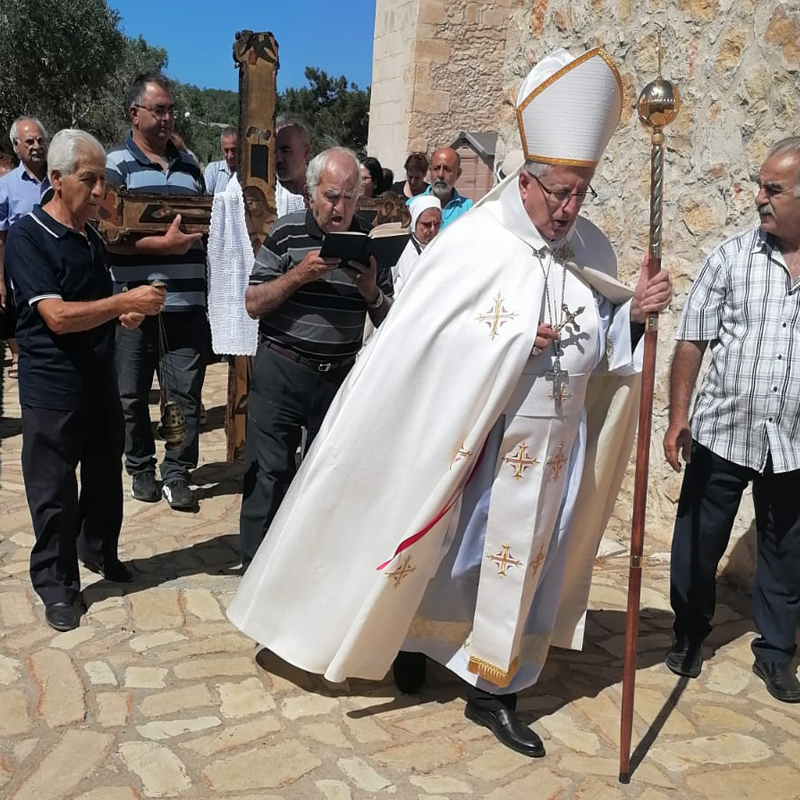
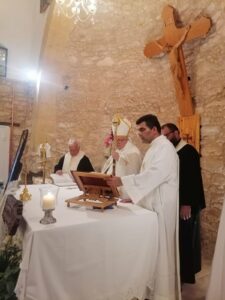
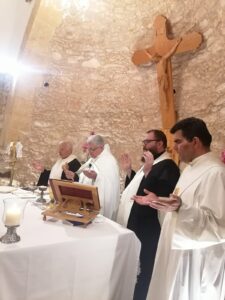
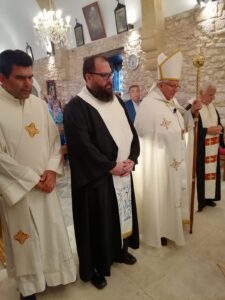
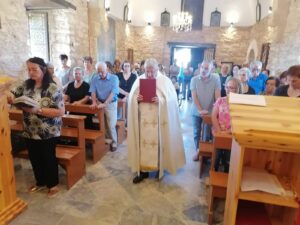
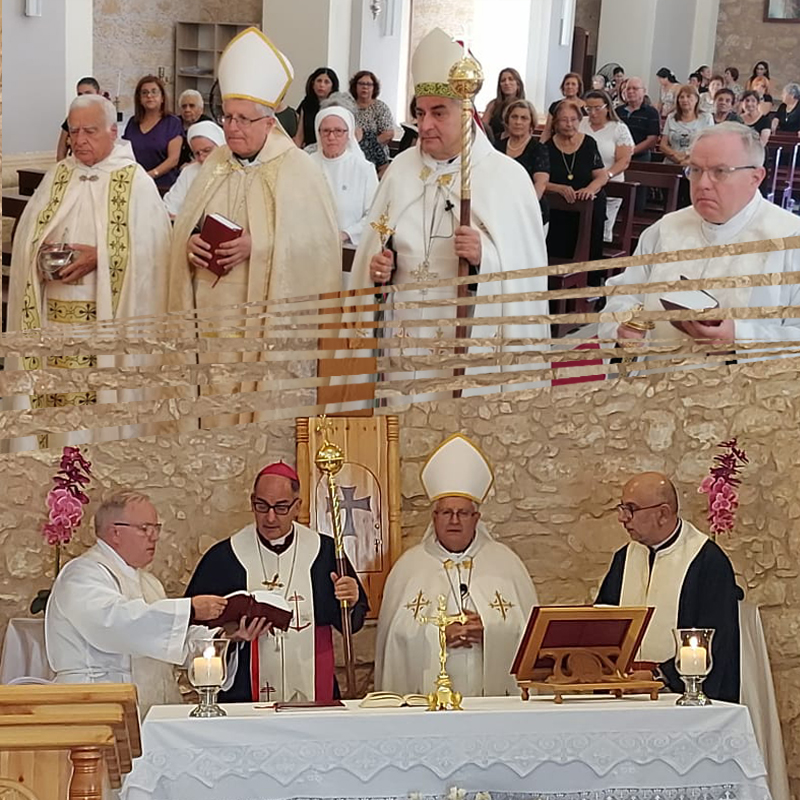
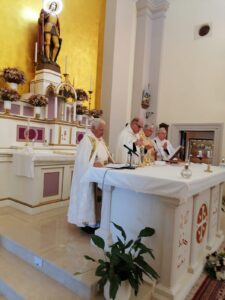
Wednesday evening, 13th of September 2023, The Maronite Archbishop of Cyprus, H.E. Msgr. Selim Sfeir, celebrated the liturgy of the Exaltation of the Holy Cross, at the Holy Cross Church of Karpasia. F. Andrea Katsioloudis and F. Antoine Succar celebrated with him, the Deacon Elias Liatsos served the liturgy.
The representative of the Maronites in the Parliament, H.E. Mr. Yannakis Moussa, as well as The Head of Humanitarian Issues department for Missing, Detained and Resettled persons Mrs. Anna Aristotelous attended the celebration.
And on Thursday morning, 14th of September 2023, H.E. celebrated at the same church.
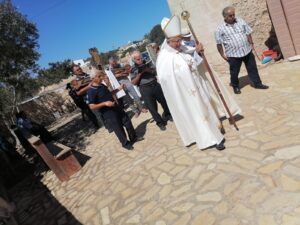
The Maronite faithful gathered around the Archbishop who headed the litany of the Old Holy Cross, the symbol of the village which was hold and carried on their shoulders.

Martha and Mary (Luke 10 : 38-42)

Dear brothers and sisters in Christ,

The Canonization of Blessed Giorgio Frassati and Blessed Carlos Acutis.

Today in the holy city of Rome, our beloved Holy Father, Pope Leo XIV will solemnly elevate for the whole Church two new saints, Giorgio Frassati and Carlos Acutis. Both of these young men died very young, yet in their brief journey, they show that living for Christ takes nothing away from life but fills it with meaning and joy.

The saints are the experts in listening. Like Mary of Bethany, the saints are attentive to the voice of Christ.  They hear Him in the reading of the Gospel, they hear Him in the voice of the Church’s teaching, they hear Him in the voices of the poor and the immigrant, they hear Him in the silence of the Blessed Sacrament.  The saints don’t just hear Jesus, they listen to Him. This work of listening is to discover the voice of Christ in those right beside us, in our families and our place of work. It's also about trying to hear the voice of Christ in our contemporaries, some of whom are far from the Church.  Even in their estrangement, they are creatures of Logos, of reason, and can be unwitting transmitters of the truth.  We need to have hearts and ears capable of hearing Christ speaking from the most unlikely places.

Poor Martha in her busy kitchen of Bethany could hear Christ speaking in the other room, but she was so distracted, she couldn’t listen.  She got focused on her problems, her difficulties and her failures.  She was listening to herself and only hearing Jesus from a distance.

The Divine Logos created the human body as a custom designed parable: we have two ears and one mouth.  God is showing us that we have to do twice as much listening as we do speaking and listening is twice as hard as talking.

May our Blessed Mother, who’s beautiful birthday we shall celebrate tomorrow (for us Maronites, we think of our Lady of Mankee!) on September 8th, intercede for all of us to be betters listeners!

† Selim Sfeir

Maronite Archbishop of Cyprus

Categories
Archbishop’s Teaching

Εορτή του Αρχαγγέλου Μιχαήλ

Λουκάς 14: 16 -24

Αγαπητά εν Χριστώ αδέλφια,

Τότε ο Ιησούς του είπε: «Κάποιος έδωσε ένα μεγάλο δείπνο και προσκάλεσε πολλούς. Όταν ήρθε η ώρα του δείπνου, έστειλε τον δούλο του να πει στους προσκεκλημένους: «Ελάτε, γιατί όλα είναι έτοιμα τώρα». Καθώς συμμετέχουμε σε αυτή την ευλογημένη γιορτή της ανανέωσης της θυσίας του Ιησού Χριστού, μας συνοδεύει, όπως αρέσκεται να λέει ο Άγιος Ιωάννης ο Χρυσόστομος, μια μεγάλη ομήγυρη αγγέλων.

Αυτή η εκκλησία, αφιερωμένη στον Αρχάγγελο Μιχαήλ, έχει σίγουρα το δικαίωμα να πιστεύει ότι αυτός ο μεγάλος στρατηλάτης των ουράνιων στρατευμάτων είναι παρών εδώ μαζί μας, προσφέροντας τη λατρεία του στην Αγία Τριάδα. Τον χαιρετούμε και τον ευχαριστούμε για την προστασία του. Ο Κύριός μας στο Ευαγγέλιο, μας εξιστορεί μια παραβολή για κάποιον που παρέθεσε ένα μεγάλο δείπνο. Ο Κύριός μας συνεχίζει περιγράφοντας πώς οι καλεσμένοι άρχισαν να βρίσκουν δικαιολογίες και να απαλλάσσονται από αυτό το μεγάλο συμπόσιο. Αυτή η παραβολή απευθυνόταν ως επίπληξη στους Ιουδαίους για την άρνησή τους να πιστέψουν και να δεχτούν τον Μεσσία τους. Ο Ιησούς Χριστός είναι η εκπλήρωση όλων των προφητειών και υποσχέσεων της Παλαιάς Διαθήκης. Ένα μέρος του Ισραήλ δέχτηκε τον Χριστό και έγινε η Καθολική Εκκλησία, αλλά η παραβολή είναι πολύ σαφής, πολλοί από τον ίδιο τον λαό του Κυρίου μας δεν Τον δέχτηκαν.

Θα ήθελα να προσαρμόσω αυτή την παραβολή στην παρούσα κατάσταση. Βρισκόμαστε εδώ, στην σεβάσμια παλιά εκκλησία του Αρχαγγέλου Μιχαήλ στον Ασώματο. Το συμπόσιο της Θυσίας του Κυρίου μας, η μεγαλύτερη από όλες τις γιορτές, είναι έτοιμο μπροστά μας. Είναι αλήθεια ότι μπορούμε να παρακολουθήσουμε τη Θεία Λειτουργία σε οποιοδήποτε άλλο μέρος, γιατί όπου ένας έγκυρα χειροτονημένος ιερέας με δικαιοδοσία, χρησιμοποιώντας τις εγκεκριμένες λέξεις της αφιέρωσης, με την πρόθεση να κάνει ό,τι κάνει η Εκκλησία, και χρησιμοποιώντας τα κατάλληλα συστατικά του ψωμιού και του κρασιού, προσφέρει τη Θυσία της Θείας Λειτουργίας, εκεί μπορούμε να παρακολουθήσουμε τη Θεία Λειτουργία και να λάβουμε την Θεία Κοινωνία. Αλλά θέλω να επιμείνω ότι είναι πολύ σημαντικό να παρακολουθούμε τη Θεία Λειτουργία εδώ στον Ασώματο και στα παραδοσιακά μαρωνιτικά χωριά μας όσο πιο συχνά μπορούμε.

Η Κατήχηση της Καθολικής Εκκλησίας, παράγραφος 2471, αναφέρει: «Ενώπιον του Πιλάτου, ο Χριστός διακηρύσσει ότι «ήρθε στον κόσμο για να μαρτυρήσει την αλήθεια». Ο χριστιανός δεν πρέπει λοιπόν να ντρέπεται να μαρτυρήσει τον Κύριό μας. Σε καταστάσεις που απαιτούν μαρτυρία της πίστης, ο χριστιανός πρέπει να την ομολογεί χωρίς αμφιβολία, ακολουθώντας το παράδειγμα του Αποστόλου Παύλου ενώπιον των δικαστών του».

Όταν σκεφτόμαστε καταστάσεις σε όλο τον κόσμο, μπορούμε εύκολα να φανταστούμε τους μακρινούς αδελφούς και αδελφές μας στον Χριστό να υποβάλλονται σε μια πραγματική δοκιμασία. Αλλά και εμείς εδώ στον Ασώματο αλλά και στην Αγία Μαρίνα έχουμε μια δοκιμασία, ένα είδος δοκιμασίας. Θα μαρτυρήσουμε τον Κύριό μας μπροστά στους γείτονές μας; Πολλοί από αυτούς που βρίσκονται τώρα σε αυτό το χωριό δεν είναι βαπτισμένοι, αλλά έχουν δικαίωμα στη μαρτυρία μας, στην κατάθεσή μας. Η μαρτυρία μας δεν είναι πολιτική ή ιδεολογική. Δεν είμαστε εδώ σε μια πράξη ανυπακοής ή αντίστασης. Είμαστε εδώ επειδή είμαστε μέρος του Σώματος του Χριστού, και ο Χριστός είναι πάντα στραμμένος προς τον Πατέρα. Κοιτάζοντας τον Πατέρα μαζί με τον Χριστό, βλέπουμε κάθε άνθρωπο ως αδελφό και αδελφή μας. Γι' αυτό καμία κυβέρνηση δεν πρέπει ποτέ να φοβάται το έργο της Εκκλησίας.

Ναι, μπορούμε να λάβουμε τα μυστήρια πιο εύκολα στις τοπικές ενοριακές εκκλησίες μας, αλλά αν παραμελούμε τις εκκλησίες του χωριού μας, παραμελούμε όλες τις ψυχές που ζουν εδώ. Ένα από τα συγκεκριμένα σημάδια της καρποφορίας των Μυστηρίων είναι η οικοδόμηση της ανθρώπινης αδελφότητας. Ολόκληρος ο κόσμος χρειάζεται περισσότερη αδελφότητα, φιλία και καλοσύνη. Η παρουσία μας εδώ πρέπει να γίνει κατανοητή από αυτή τη θέση. Βρισκόμαστε εδώ επειδή μόνο ο Αναστημένος Χριστός είναι ικανός να ανακουφίσει τα βάσανα της πληγωμένης ανθρωπότητας (Πάπας Φραγκίσκος). Πιστεύω ακράδαντα ότι αυτή η θέση θα προσελκύσει τους νέους μας να επιστρέψουν στα χωριά.

Αν κάνουμε το λάθος των προσώπων της παραβολής και βρούμε δικαιολογίες, όπως «η σειρά είναι πολύ μεγάλη», «όλο και λιγότεροι άνθρωποι πηγαίνουν», «δεν έχει νόημα»... αυτό συμβαίνει επειδή έχουμε χάσει την υπομονή μας με τον Θεό. Ο Θεός εργάζεται πάντα, και συχνά είναι σαν ψίθυρος και πολύ σιωπηλός, αλλά εργάζεται. Αν εγκαταλείψουμε τον Ασώματο, την Αγία Μαρίνα, την Καρπάσια ή τον Κορμακίτη, θα είναι ένα σημάδι ότι έχουμε κουραστεί να περιμένουμε τον Θεό να κάνει κάτι.

Όταν δούμε τους αγαπημένους μας προγόνους στην αιωνιότητα, θα είναι ανυπόμονοι να δουν πώς περάσαμε τη χριστιανική μας ζωή. Ας μην τους απογοητεύσουμε λέγοντας ότι κουραστήκαμε να περιμένουμε τον Θεό να δράσει.

Ας μας ανοίξει η Μαρία, Βασίλισσα των Αγγέλων και Βασίλισσα του Ασωμάτου, την πόρτα του Ιερού Οίκου της Ναζαρέτ, ώστε να ανακαλύψουμε πώς ένα μικρό σπίτι, σε ένα ξεχασμένο χωριό, μπορεί πράγματι να αλλάξει τον κόσμο. Αμήν.

+ Σελίμ Σφέιρ
Αρχιεπίσκοπος Μαρωνιτών Κύπρου
Categories
Archbishop’s Teaching

Feast of Saint Michael

Luke (14, 16-24)

Dear brothers and sisters in Christ,

“Then Jesus said to him, ‘Someone gave a great dinner and invited many.  At the time for the dinner he sent his slave to say to those who had been invited, “Come, for everything is ready now.”

As we join in this blessed celebration of the unbloody renewal of the Sacrifice of Jesus Christ, we are accompanied, as St. John Chrysostom loved to say, with a great host of angels.  This church, dedicated to St. Michael, surely has the right to believe that this great general of the heavenly hosts is present here with us, offering his adoration to the Blessed Trinity.  We salute him and thank him for his protection.

Our Lord in the gospel tells us a parable about someone who gave a great dinner.  Our Lord goes on to describe how the invited guests began to make excuses and exempted themselves from this great feast.  This parable was directed as a reproach to the Jews for their refusal to believe and accept their Messiah.  Jesus Christ is the fulfillment of all the prophecies and promises of the Old Testament.  A remnant of Israel did accept Christ and they became the Catholic Church, but the parable is very explicit, many of Our Lord’s own people did not accept Him.

I would like to update this parable to our own present situation.  Here we are in this venerable old church of St. Michael in Asomatos. The banquet of Our Lord’s Sacrifice, the greatest of all feasts, is set before us.

It is true, we can attend Mass in any other place, for wherever a validly ordained priest with jurisdiction, using the approved words of consecration, with the intention to do what the Church does, and using the appropriate matter of bread and wine, offers the Sacrifice of the Mass, there, we may attend the Mass and receive Holy Communion.  But I want to insist that it is very important to attend Mass here in Asomatos and in our traditional Maronite villages as often as we possibly can.

The Catechism of the Catholic Church paragraph 2471 states: “Before Pilate, Christ proclaims that he ‘has come into the world, to bear witness to the truth.’  The Christian is not to be ashamed then of testifying to our Lord.’  In situations that require witness to the faith, the Christian must profess it without equivocation, after the example of St. Paul before his judges.”

When we think of situations throughout the world, we can easily imagine our far away brothers and sisters in Christ being put to a real test.  But we here in Asomatos we too have a test, a trial of sorts.  Will we testify to our Lord, before our neighbors?  Many who are here in this village now, are not baptized but they have a right to our testimony, our witness.  Our testimony is not political or ideological.  We are not here in an act of defiance or opposition.  We are here because we are part of the Body of Christ, and Christ is always facing the Father.  By looking at the Father with Christ, we see every person as our brother and sister.  This is why no government should ever fear the work of the Church.

Yes, we can obtain the sacraments more conveniently in our local parish churches, but if we neglect our village churches, we are neglecting all the souls who live here.  One of the concrete signs of the fruitfulness of the Sacraments is the building of human fraternity.  The whole world needs more fraternity, friendship and kindness.  Our presence here must be understood from this position.  We are here because only the Risen Christ is capable of alleviating the sufferings of wounded humanity (Pope Francis).  I firmly believe that this position will attract our young people to return to the villages.

If we make the mistake of the persons in the parable of making excuses, “the checkpoint is too long” “there are fewer and fewer people going” “it is no use” … it is because we have lost patience with God.  God is always at work, and often it is like a whisper and very silent, but He is at work.

If we abandon Asomatos, or Karpasha or Kormakitis, it will be a sign that we have grown tired of waiting for God to do something.

When we see our beloved forebears in eternity, they will be eager to see how we have spent our Christian lives.  May we not disappoint them by saying we grew tired of waiting for God to act.

May Mary, Queen of the Angels, and Queen of Asomatos open for us the door of the Holy House of Nazareth so that we may discover how a tiny house, in forgotten village can indeed, change the world.

† Selim Sfeir

Maronite Archbishop of Cyprus

Categories
Archbishop’s Teaching

13η Κυριακή της Πεντηκοστής

Οι γυναίκες της Γαλιλαίας ακολουθούν τον Ιησού ( Λουκάς 8 / 1 - 15)


Αγαπητά εν Χριστώ αδέλφια,


Το ευαγγέλιο αυτής της Κυριακής είναι ένα πλούσιο κείμενο που πρέπει να μελετήσουμε αργά και με προσοχή. Ο ευαγγελιστής Λουκάς, υπό την έμπνευση του Αγίου Πνεύματος, προσπαθεί να μας διαφωτίσει σχετικά με την αποκατάσταση της Δημιουργίας που λαμβάνει χώρα με τη Λύτρωση του Ιησού Χριστού.


Μέχρι την έλευση του Χριστού, οι άνδρες και οι γυναίκες υπέφεραν τις συνέπειες της προπατορικής αμαρτίας στην συγκεκριμένη πραγματικότητα του φύλου τους. Οι άνδρες υπέφεραν τις συνέπειες της προπατορικής αμαρτίας από τα διαταραγμένα πάθη τους και το σκοτεινό μυαλό τους. Η κατάσταση αυτή ήταν τόσο σκοτεινή, ώστε οι άνδρες να βρίσκονται σε διαρκή πόλεμο με τον εαυτό τους και με τους άλλους, δημιουργώντας κοινωνίες βασισμένες στη δουλεία και τη σκληρότητα. Στις γυναίκες, οι συνέπειες της προπατορικής αμαρτίας εκδηλώνονταν με το να τις υποτιμούν και να τις μειώνουν συστηματικά. Κατηγορούμενες για τα πάντα, οι γυναίκες πριν από την έλευση του Χριστού ζούσαν μια κολασμένη ύπαρξη, αντιμετωπίζονταν ως σκλάβες της σαρκικής ηδονής και φθηνής εργασίας. Χωρίς τον Χριστό, ο κόσμος βρισκόταν σε μια τρομερή κατάσταση. Σήμερα μιλάμε για τα πολλά πλεονεκτήματα των σύγχρονων γυναικών, αλλά μια τέτοια συζήτηση είναι δυνατή μόνο επειδή το φως του Χριστού έχει φωτίσει την ανθρώπινη αξιοπρέπεια κατά τη διάρκεια των τελευταίων 2.000 ετών.


Ταυτόχρονα, ας έχουμε το θάρρος να απορρίψουμε ορισμένες ιδεολογίες που έχουν εισχωρήσει στο Σώμα του Χριστού και υπονοούν ότι οι γυναίκες και οι άνδρες είναι ακριβώς ίδιοι και ότι, για να μιλάμε για ισότητα, οι γυναίκες πρέπει να κάνουν όλα τα ίδια πράγματα με τους άνδρες. Πόσο θα γελούσαν οι πρώτες γυναίκες μαθήτριες του Χριστού με τέτοια ανοησία! Οι γυναίκες δεν είναι άνδρες και πρέπει να τους επιτρέπεται να ασκούν την ομορφιά των γυναικείων τους ιδιοτήτων στην υπηρεσία του Ευαγγελίου. Η δόξα της γυναίκας δεν είναι ότι μπορεί να κάνει τη δουλειά ενός άνδρα· η δόξα της γυναίκας είναι ότι δεν έχει καμία επιθυμία να κάνει ό,τι κάνει ένας άνδρας. Ο Χριστός, το Φως μας, λάμπει φωτεινά στο μονοπάτι των σύγχρονων γυναικών, χαρίζοντάς τους τη χάρη να απορρίψουν το πνεύμα της επανάστασης και του θύματος. Στον Χριστό, η γυναίκα φωτίζεται για να δει το μονοπάτι της και με τη χάρη του Αγίου Πνεύματος δεν βλέπει τη λέξη «υπηρεσία» ως σκλαβιά, αλλά αντιλαμβάνεται την πλήρη σημασία της ως τρόπο ταύτισης με τον Χριστό, «ο οποίος δεν ήρθε για να υπηρετηθεί, αλλά για να υπηρετήσει». ِΑμήν.


† Σελίμ Σφέιρ

Αρχιεπίσκοπος Μαρωνιτων Κύπρου

Categories
Archbishop’s Teaching

13th Sunday of Pentecost

The Galilean Women Follow Jesus (Luke 8:1-15)

Dear brothers and sisters in Christ,


The gospel of this Sunday is a richly embroidered passage which we must meditate upon slowly and with attention. The evangelist St. Luke, under the inspiration of the Holy Spirit, seeks to enlighten us to the restoration of Creation that takes place in the Redemption of Jesus Christ.

Until the coming of Christ, men and women suffered the effects of original sin in their own gender-specific reality. Men suffered the effects of original sin by their disordered passions, and their darkened minds. So dark was this condition, that men found themselves perpetually at war with themselves and with others, crafting societies built upon slavery and cruelty. In women, the effects of original sin manifested itself in being routinely put down and diminished. Blamed for everything, women before the coming of Christ, lived a hellish existence, treated like slaves of carnal pleasure and cheap labour. Without Christ, the world was in a terrible situation. Today we speak of the many advantages of modern women, but it is only because the light of Christ has illuminated human dignity throughout the last 2,000 years that such a conversation is possible.

At the same time, let us be courageous enough to reject certain ideologies have been smuggled into the Body of Christ that imply women and men are the exact same and that in order to speak of equality, women must do all the same things as men.  How the first women disciples of Christ would have laughed at such silliness!! Women are not men and they must be allowed to exercise the beauty of their feminine qualities in the service of the gospel.

The glory of woman is not that she can do a man’s job; the glory of woman is that she has no desire to do what a man does. Christ our Light shines his light brightly upon the path of modern women, bestowing grace upon them to reject the spirit of revolution and victimhood.  In Christ, woman is illuminated to see her path and with the grace of the Holy Spirit she does not see the word service as slavery but rather discerns the full meaning of it as way to identification with Christ, “who came not to be served, but to serve”.

† Selim Sfeir

Maronite Archbishop of Cyprus

Categories
Archbishop’s Teaching

12η Κυριακή της Πεντηκοστής

Η πίστη της Χαναναίας γυναίκας ( Ματθαίος 15 / 21 - 28)

Αγαπητά εν Χριστώ αδέλφια,

Σε ορισμένες μεταφράσεις του σημερινού ευαγγελίου, η πρωταγωνίστρια της

ιστορίας, η Χαναανίτισσα γυναίκα, ονομάζεται επίσης Συρο-Φοινικική

γυναίκα. Ως παιδιά της Μαρωνιτικής Εκκλησίας, είμαστε ευτυχείς που

συναντάμε αυτή τη γυναίκα. Είναι η μητέρα μας στην πίστη. Οι φοινικικές

ρίζες της, σε συνδυασμό με τη συριακή κληρονομιά της και την πίστη της στον

Χριστό, την καθιστούν την πρώτη Μαρωνίτισσα στο Ευαγγέλιο. Ο

Ευαγγελιστής Ματθαίος αποτυπώνει τέλεια την ουσία της πίστης αυτής της

γυναίκας.

1) Θα κάνει τα πάντα για τα παιδιά της. Αυτή η μητέρα δεν ζητάει τίποτα

για τον εαυτό της από τον Κύριο, αλλά για την καημένη κόρη της που

έχει κυριευτεί από δαίμονα. Για έναν Μαρωνίτη, δεν υπάρχει

μεγαλύτερη κοινότητα από την οικογένεια. Αν διαφωνήσαμε με ένα ή

δύο μέλη της οικογένειάς μας, πρέπει να προσπαθήσουμε να το

διορθώσουμε όσο καλύτερα μπορούμε. Το πνευματικό μας DNA είναι

τέτοιο που εκτιμά την οικογένεια πάνω από όλα. Πρέπει να κάνουμε ό,τι

μπορούμε για να επιδιορθώσουμε τους σπασμένους οικογενειακούς

δεσμούς. Και αυτή πηγαίνει ακόμη πιο μακριά: όταν πρόκειται για τη

μετάδοση της πίστης, αυτή η γυναίκα θα κάνει ό,τι χρειαστεί για να

σώσει την κόρη της. Ας κάνουμε όλοι το καθήκον μας για να

βοηθήσουμε τους νέους μας να γνωρίσουν το Ευαγγέλιο του Χριστού

και την καθολική μας πίστη.

Αντιλήφθηκε τον πνευματικό πόλεμο που μαίνονταν. Αυτή η υπέροχη

γυναίκα δεν έφυγε από τα προβλήματά της, αλλά πήγε κατευθείαν στον

Χριστό, επειδή αναγνώρισε ότι η ρίζα του προβλήματός της ήταν

πνευματική. Ως Μαρωνίτες, μπορούμε εύκολα να πέσουμε στον

υλικότητα των σύγχρονων μας και να πιστέψουμε ότι οι δυσκολίες μας

μπορούν να λυθούν μόνο πολιτικά ή οικονομικά. Πρέπει να είμαστε πιο

οξυδερκείς και να αναγνωρίσουμε ότι η ρίζα της παρούσας κρίσης είναι

πνευματική.

3) Είχε μια ιερή αποφασιστικότητα. Οι φοινικικές της ρίζες της έδωσαν μια

ενέργεια και μια επιμονή που δεν κατέρρευσαν μπροστά στο

φαινομενικό εμπόδιο της σιωπής του Θεού. Με «αδιάκοπη

αποφασιστικότητα» ακολούθησε τον Χριστό και δεν σταμάτησε να

ζητάει βοήθεια. Ως Μαρωνίτες, πρέπει να μάθουμε από αυτή την

πνευματική μας μητέρα να μην σταματάμε ποτέ να προσευχόμαστε,

ακόμα και αν οι προσευχές μας δεν απαντώνται αμέσως.

4) Έξυπνα μετέτρεψε την αδυναμία της σε πλεονέκτημα. Ο Χριστός της

υπενθύμισε ότι δεν ανήκε στον «εκλεκτό λαό» και ως εκ τούτου δεν

μπορούσε να έχει πρόσβαση στα θαύματα της ευσπλαχνίας Του. Αλλά αυτή

η έξυπνη γυναίκα μετέτρεψε την αδυναμία της σε πλεονέκτημα

χρησιμοποιώντας το μέσο που ο Χριστός δεν μπορούσε να αρνηθεί, την

ταπεινότητα. Ως Μαρωνίτες, ας μιμηθούμε την πνευματική μας μητέρα

ταπεινώνοντας συχνά τον εαυτό μας. Ας μην αφήσουμε την υπερηφάνεια

μας να επικρατήσει ούτε για μια στιγμή. Όταν παρακολουθείτε αυτό το

Ευαγγέλιο, ζητήστε από το Άγιο Πνεύμα να σας φωτίσει με ακόμη

περισσότερες γνώσεις για αυτή την αξιοθαύμαστη γυναίκα. Με αυτόν τον

τρόπο, θα γίνουμε όλοι καλύτεροι μαθητές του Χριστού, καλύτεροι

Μαρωνίτες. Αμήν.

† Σελίμ Σφέιρ

Αρχιεπίσκοπος Μαρωνιτών Κύπρου
Categories
Archbishop’s Teaching

12th Sunday of Pentecost

The Canaanite Woman’s Faith (Matthew 15:21-28)

Dear brothers and sisters in Christ,

In some translations of the gospel of today the protagonist of the story, the Canaanite Woman, is also called the Syro-Phonecian woman. As children of the Maronite Church, we are delighted to meet this woman. She is our mother in the faith; her Phoenician roots united to her Syriac heritage united to her faith in Christ makes her the porto-Maronite, the first Maronite in the Gospel. St. Matthew perfectly captures the essence of this woman’s faith.

What does St. Matthew tell us about this Syro-Phonecian woman, this proto-Maronite believer?

1) She will do anything for her children. This mother isn’t asking Our Lord for anything for herself but for her poor daughter who has been possessed by a demon. For a Maronite, there is no greater community than that of the family. If we have had a falling out with one or two members of our family, we must try to repair it as best we can. Our spiritual DNA is one that values family above everything; we must do everything we can to repair broken family ties. And she goes further: when it comes to transmitting the faith, this woman will do whatever it takes to help save her daughter. May we all do our part to help introduce our young people to the gospel of Christ and our Catholic faith.

2) She discerned the spiritual war going on. This wonderful woman didn’t run away from her problems but went to straight to Christ because she identified that the root of her problem was spiritual.

As Maronites, we can easily fall into the materialism of our contemporaries and think our difficulties can only be solved politically, or economically. We need to be more discerning and recognize the root of our present crisis is spiritual.

3) She had a holy determination. Her Phoenician roots gave her an energy and persistence that didn’t collapse in face of the apparent obstacle of God’s silence. With a ‘dogged determination’ she followed Christ and did not relent from asking for help. As Maronites, we must learn from this spiritual mother of ours to never cease praying even if our prayers are not immediately answered.

4) She cleverly turned her weakness to her advantage. Christ reminded her that she was not part of the ‘chosen people’ and therefore unable to access his miracles of mercy. But this clever woman turned her weakness to her advantage by using the currency that Christ could not refuse, humility. As Maronites lets imitate our spiritual mother by humbling ourselves often. Let us not let our pride have an easy time even for a single moment.

When you sit with this Gospel, ask the Holy Spirit to enlighten you with even more insights about this remarkable woman. In doing so, we will all become better followers of Christ, better Maronites.

† Selim Sfeir
Maronite Archbishop of Cyprus


Categories
Archbishop’s Teaching

Eleventh Sunday of Pentecost

Jesus and Zacchaeus the Tax Collector St. Luke 19:1-10 (Sunday August 17, 2025)

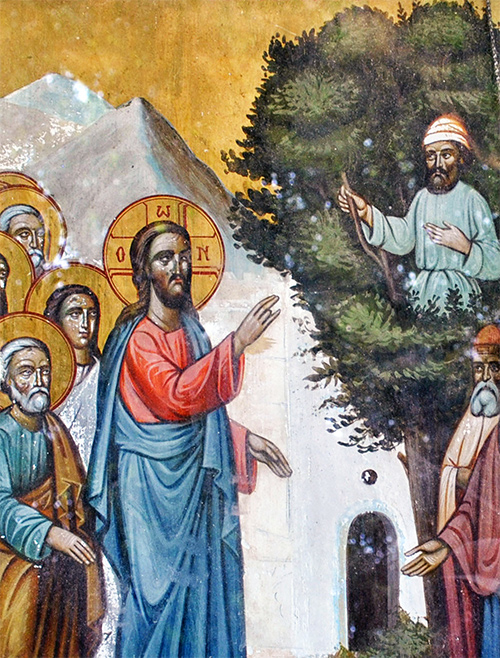
Today, the Holy Spirit opens for us a delightful event in the public life of Jesus Christ: Zacchaeus, a tax collector, who was determined to see Christ but was unable, because of the crowds, and his own physical limitations – he was short, so he climbed a Sycamore tree to catch a glimpse of this marvellous preacher. His astonishment must have been limitless when Christ caught sight of him and spoke kindly to him and invited himself to dinner at his house.

In first-century Palestine, the tax collector was a despised figure. Hired by the Romans to collect the taxes on the native population, the Romans made no objections to the personal enrichment of the tax collector as he added his own personal tax on the official tax. This made the tax collector loathsome and detested by the population. As perfect God and perfect man, Christ was not unaware of this taboo. Amazingly however, Christ seemed to be perfectly at ease with these characters, even calling a tax collector, St. Matthew to be part of the 12 apostles. Christ did not just merely tolerate these individuals but seemed to go out of his way to engage with them and include them in his work of Redemption.

Our Lord wanted to use their expertise in economic matters to explain in human terms what would be the spiritual economy of His Redemption. Everybody knows that if you spend money on something you should receive value in return. And this is something for each of us to meditate upon in the coming days: God does owe a reward to his faithful servants, because this has pleased God to offer such a reward.  He has not only offered it, but he has also promised it. It is His Will that virtuous living and child-like faith should result in eternal happiness and deliberate wickedness in eternal misery.  In His crazy love for His creatures, God has put Himself in debt because that is His Will.

Let’s spend this week thinking about the rewards that God has promised us if we spend ourselves in virtuous living.  Such beautiful thoughts will move us to become big spenders in this economy of Christ.

+Selim Sfeir

Maronite Archbishop of Cyprus

Categories
Archbishop’s Teaching

11η Κυριακή μετά την Πεντηκοστή

Ο Ιησούς και ο Ζακχαίος (Λουκάς 19: 1 – 10 )

Αγαπητά εν Χριστώ αδέλφια,
Σήμερα, το Άγιο Πνεύμα μας αποκαλύπτει ένα ευχάριστο γεγονός από τη δημόσια ζωή του Ιησού Χριστού: ο Ζακχαίος, ένας φοροεισπράκτορας, που ήταν αποφασισμένος να δει τον Χριστό, αλλά δεν μπορούσε, λόγω του πλήθους και των σωματικών του περιορισμών – ήταν κοντός, ανέβηκε σε μια συκομουριά για να δει αυτόν τον θαυματουργό διδάσκαλο. Η έκπληξή του πρέπει να ήταν απερίγραπτη όταν ο Χριστός τον είδε και του μίλησε ευγενικά και προσκλήθηκε για δείπνο στο σπίτι του.
Στην Παλαιστίνη του πρώτου αιώνα, ο φοροεισπράκτορας ήταν μια περιφρονημένη φιγούρα. Προσληφθείς από τους Ρωμαίους για να εισπράττει τους φόρους από τον ντόπιο πληθυσμό, οι Ρωμαίοι δεν είχαν καμία αντίρρηση για τον προσωπικό πλούτο του φοροεισπράκτορα, καθώς αυτός πρόσθετε τον δικό του προσωπικό φόρο στον επίσημο φόρο. Αυτό έκανε τον φοροεισπράκτορα απεχθή και μισητό από τον πληθυσμό. Ως τέλειος Θεός και τέλειος άνθρωπος, ο Χριστός δεν αγνοούσε αυτό το ταμπού. Παραδόξως όμως, ο Χριστός φαινόταν να αισθάνεται απόλυτα άνετα με αυτούς τους ανθρώπους, φτάνοντας μάλιστα στο σημείο να καλέσει έναν φοροεισπράκτορα, τον Ευαγγελιστή Ματθαίο, να γίνει μέλος των 12 αποστόλων. Ο Χριστός δεν αρκέστηκε απλώς να ανέχεται αυτούς τους ανθρώπους, αλλά φαινόταν να κάνει ό,τι μπορούσε για να τους προσεγγίσει και να τους συμπεριλάβει στο έργο της Λύτρωσης.

Ο Κύριός μας ήθελε να χρησιμοποιήσει την εμπειρία τους σε οικονομικά θέματα για να εξηγήσει με ανθρώπινους όρους ποια θα ήταν η πνευματική οικονομία της Λύτρωσής Του. Όλοι γνωρίζουν ότι αν ξοδέψεις χρήματα για κάτι, πρέπει να λάβεις αξία σε αντάλλαγμα. Και αυτό είναι κάτι που πρέπει να συλλογιστούμε όλοι μας τις επόμενες ημέρες: ο Θεός όντως οφείλει μια ανταμοιβή στους πιστούς υπηρέτες Του, επειδή αυτό ευχαριστεί τον Θεό να προσφέρει μια τέτοια ανταμοιβή. Όχι μόνο την προσφέρει, αλλά την έχει και υποσχεθεί. Είναι θέλησή Του η ενάρετη ζωή και η σαν παιδική πίστη να οδηγούν στην αιώνια ευτυχία και η σκόπιμη κακία στην αιώνια δυστυχία. Στην υπέροχη αγάπη Του για τα πλάσματά Του, ο Θεός έχει βάλει τον εαυτό Του σε οφειλή, επειδή αυτή είναι η θέλησή Του. Ας περάσουμε αυτή την εβδομάδα σκεπτόμενοι τις ανταποδόσεις που μας έχει υποσχεθεί ο Θεός αν αφιερωθούμε στην ενάρετη ζωή. Τέτοιες όμορφες σκέψεις θα μας ωθήσουν να γίνουμε μεγάλοι καταναλωτές σε αυτή την οικονομία του Χριστού. Αμήν.
† Σελίμ Σφέιρ
Αρχιεπίσκοπος Μαρωνιτών Κύπρου