Categories
Home Category Posts Home Category Posts New

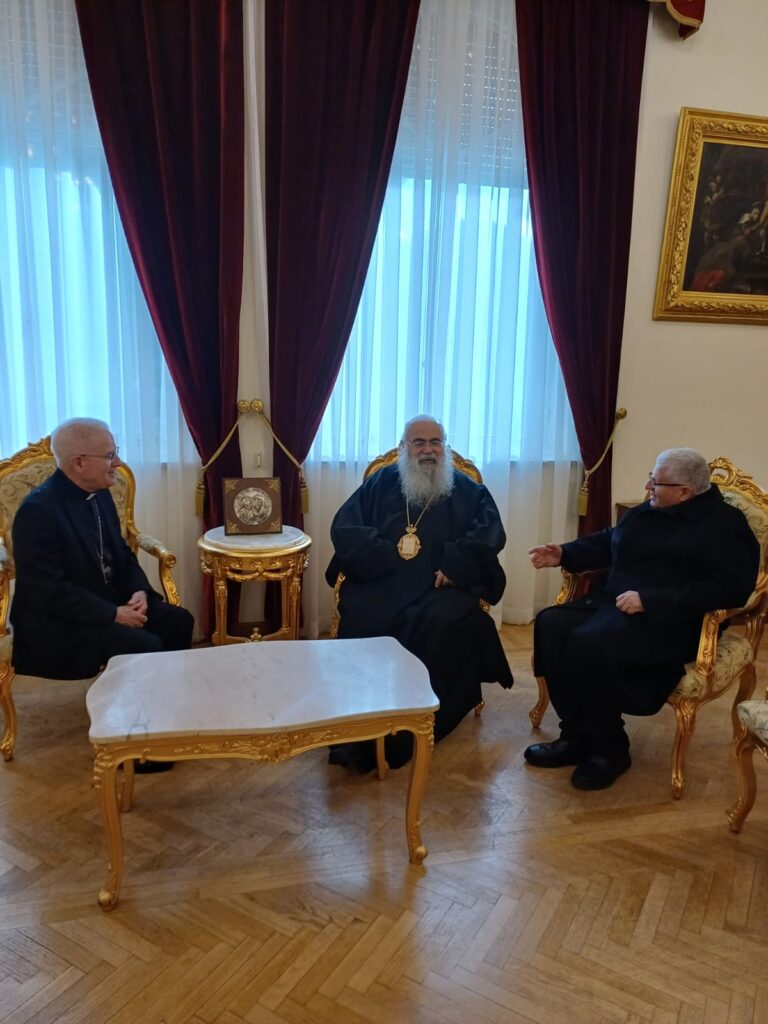
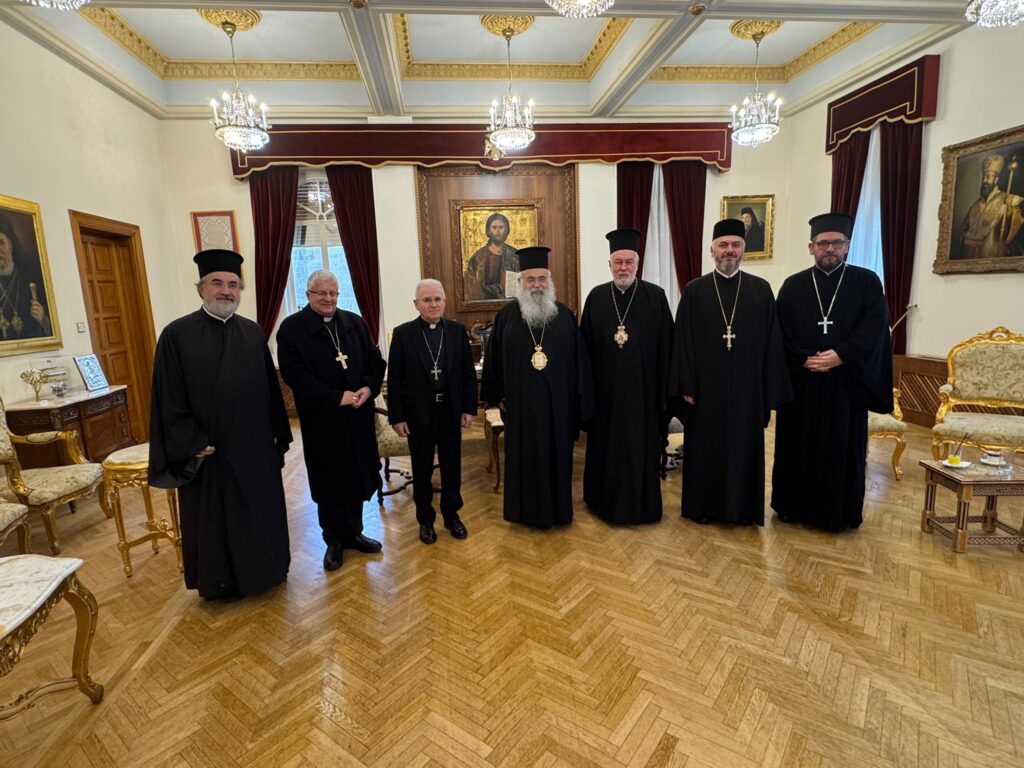
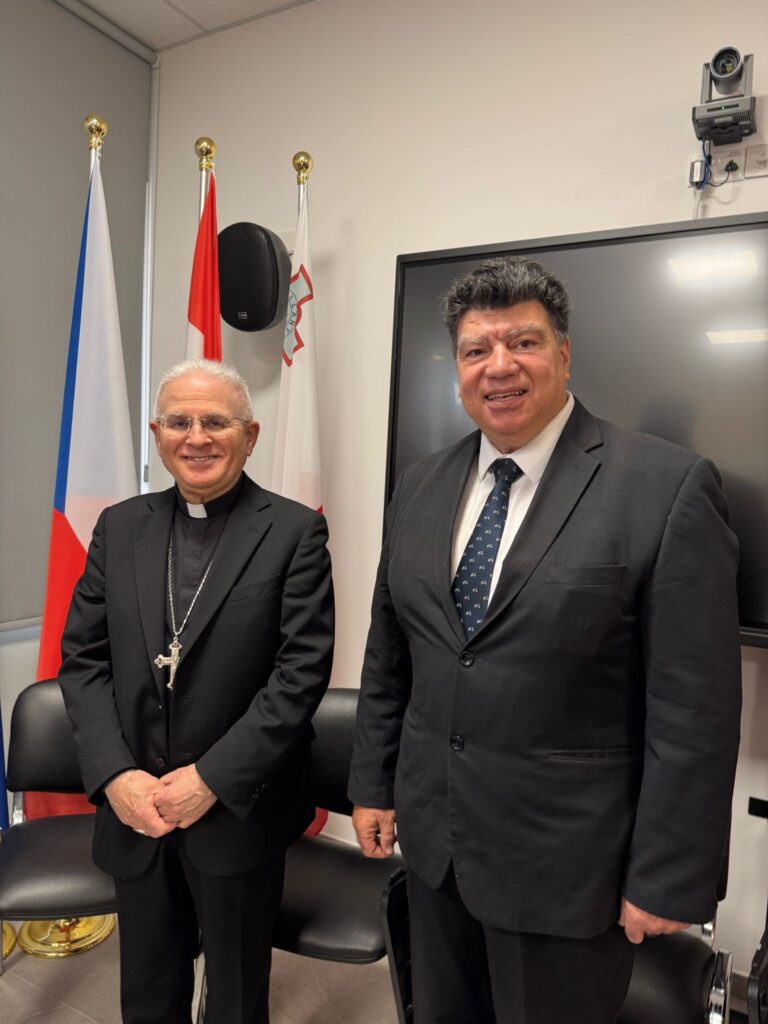
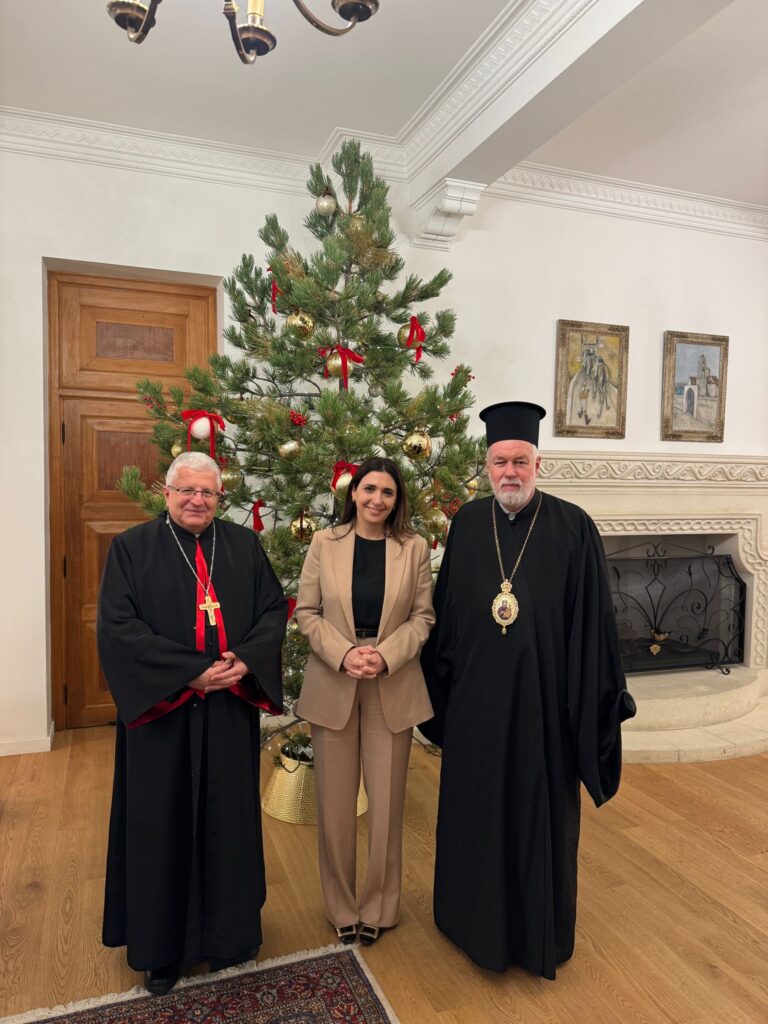
Assembly of Catholic Patriarchs and Bishops in Lebanon (APECL) November 11-17, 2025

Categories
Home Category Posts Home Category Posts New

Dr. Maria Skordi representing the Maronite Archeparchy of Cyprus in CCEE, Turin Italy

CCEE Culture Committee – Report – Cyprus

I bring to you the warm greetings of H.E. the Maronite Archbishop of Cyprus Mgr. Selim Sfeir.

In Cyprus, maronite Culture, is a living testament to resilience, dialogue and fidelity – a bridge between East and West, between Mediterranean and Europe. In celebrating this heritage, we honor a culture that has preserved its faith through exile and renewal, and that continues to contribute to the Christian story of Europe with humility and hope. Inspired by our Catholic faith, maronite culture can be developed in 7 points.

1. Heritage of Faith and Resilience

The Maronite culture in Cyprus represents one of the island’s richest spiritual and cultural treasures — a heritage that is both ancient and deeply alive. Since their arrival on the island in the 8th century, the Maronites brought with them the Eastern Christian heritage of the Maronite Church — a heritage born in the mountains of ancient Syria and Lebanon, shaped by the spirituality of Saint Maron, and nourished by the Syriac and Aramaic traditions of early Christianity.

They came carrying not only their faith but also a unique synthesis of languages, liturgy, and life — blending Syriac, Arabic, and later Greek influences — and in Cyprus, they found a new home. Here, through centuries of coexistence, the Maronites entered into a profound dialogue with Cypriot culture, giving birth to a shared identity that reflects both the East and the Mediterranean.

2. Faith Rooted in the Land

From the beginning, the Maronites established villages in the northern part of Cyprus, particularly around Kormakitis, Asomatos, Karpasha, and Ayia Marina. These villages became the beating heart of Maronite life — places where faith, language, and tradition intertwined.

Despite the many trials that history brought — conquests, migrations, and divisions — the Maronite community preserved its faith and identity through a strong sense of belonging. Their culture became, as we might say, a culture of rootedness and openness: deeply anchored in Christian faith, yet always ready to embrace dialogue, coexistence, and renewal.

This balance between tradition and openness is one of the most striking features of Maronite culture in Cyprus. It is a culture that never withdrew into itself, but continually sought ways to engage with others — with fellow Cypriots of different backgrounds, with the broader Church, and with the wider world.

3. Religious Culture

In the Maronite Diocese of Cyprus, religious culture holds a central place in the life of the faithful. Every Sunday, a main homily is delivered to nourish faith and unite the community around the Word of God, while a pastoral letter is issued every two weeks to guide believers in their daily lives.

The diocese also promotes education and Maronite heritage through the Christian Education Center, the Saint Ephrem Center in Nicosia, and a Center for Teaching the Arabic Language and Syriac hymns and traditions which helps preserve the language of tradition and liturgy.

On the cultural and historical level, I myself, oversees the diocesan archives and museums, which safeguard and highlight the Maronite identity in Cyprus through documents and sacred art. The archives are essential for preserving the Church’s memory, while the museums have an educational and spiritual mission, especially in presenting Maronite icons, studied and documented published work.

4. Education: The Foundation of Continuity

Education has always been central to the Maronite presence in Cyprus. Today, the Maronite Church continues its educational and cultural mission through various institutions that embody both the spirit of faith and the pursuit of knowledge.

At the forefront stands the Maronite School in Anthoupolis, Nicosia. This school is more than an educational institution — it is a living space where tradition meets modernity, where young Maronites and Cypriots alike, learn not only academic excellence but also the values of faith, respect, and service.

In the north of the island, the Maronite School of Kormakitisremains a symbol of steadfastness and belonging. It continues to serve as a reminder that education is also a form of preservation — a way to safeguard language, culture, and community life, especially in the historic villages that form the heart of Maronite identity. Together, both the Maronite School in Anthoupolis – Nicosia and the Maronite School in Kormakitis play a vital role in transmitting faith and culture to the new generations.

5. Center of Dialogue and Encounter

One of the most remarkable recent developments is the establishment of the Center for Cooperation and Dialogue in Kormakitis. This center stands as one of the most significant cultural and spiritual landmarks for the Maronites in Cyprus today.

Located in a serene natural setting, it was created with a clear mission: to promote dialogue among cultures and religions, and to build bridges between East and West. Through conferences, seminars, and cultural gatherings, the center has become a space of encounter, where scholars, religious leaders, and young people come together to exchange ideas and experiences.

In this sense, it perfectly embodies the spirit of Maronite culture — a spirit of openness, of peace, and of mutual understanding. It reminds us that culture and faith are not meant to divide, but to unite humanity in diversity.

6. Community Life and Pastoral Engagement

The vibrancy of the Maronite community is also sustained through its parishes and pastoral committees. Across Cyprus, these groups play a vital role in strengthening community bonds and promoting active participation in church and social life.

They organize educational programs, social outreach, and artistic activities that highlight the beauty of Maronite heritage — from sacred music and liturgical traditions to culinary customs and oral storytelling.

In doing so, they nurture not only the faith of the community but also its cultural dialogue with the wider Cypriot society. The Maronites, though a small minority, have long been known for their spirit of cooperation and service, contributing generously to the cultural and civic life of the island.

7. A Living Bridge Between Worlds

Through its schools, parishes, and cultural centers, the Maronite Church in Cyprus continues its mission of education, dialogue, and cultural exchange. This mission is not limited to preserving the past — it is about enlightening the present and building the future.

In an era often marked by fragmentation and misunderstanding, and Islamisation the Maronite community offers a living example of how faith can foster unity, peace, and coexistence. It shows us that faith and culture walk hand in hand, shaping individuals who are both deeply rooted in tradition and open to the world.

Thus, the Maronite culture in Cyprus remains what it has always been: a living bridge between past and present, between Lebanon and Cyprus, between faith and humanity. It stands as a witness to a civilization of dialogue and mutual respect, and to that eternal Christian message — the message of love that knows no boundaries.

Dr. Maria Skordi - Cyprus

Categories
Home Category Posts Home Category Posts New

Mater Populi fidelis – Doctrinal Note on some Marian titles

<a href="https://maroniteparchy.org.cy/wp-content/uploads/2025/MaryDocument.pdf">Click Me</a>

Categories
Home Category Posts Home Category Posts New

Celebrating the blessing of the new seeds at the ancient chapel of St. George with the Maronite Archbishop, November 3, 2025

Homily of His Excellency Selim Sfeir, Maronite Archbishop of Cyprus, Monday, November 3, 2025
Dear beloved friends, welcome to our beautiful Kormakitis!
On behalf of myself and on behalf of the Maronite representative in Parliament, Mr. Yannakis Moussa, the parish priest, and all the priests present among us, I warmly welcome you all: Your Excellencies the ambassadors, the mukhtars, the children of this beloved village, and all friends present with us today.
It is a great joy to see you all here in this place that unites us in God’s love and in love for one another. Today, the heart of Kormakitis beats strongly with joy because we are all gathered — in faith, in love, and in hope.Reflection on Sunday’s Gospel
“But who do you say that I am?”
(St. Matthew 16:13–20)
My dear brothers and sisters,
In today’s Gospel, Jesus leads His disciples to Caesarea Philippi, away from the crowds, to open a personal dialogue with them. He asks:
“Who do people say the Son of Man is?”
They answer: “Some say John the Baptist, others Elijah, others Jeremiah or one of the prophets.”
Then comes the most important question — one that is not only addressed to the disciples but to each of us today:
“But who do you say that I am?”
This is the question of faith — a question about our personal relationship with Jesus. We cannot rely only on what others say about Him, or on what we have inherited from tradition or education. Faith is not theoretical knowledge; it is a living encounter with Jesus Christ, one that transforms our hearts and becomes a living testimony.
Peter, inspired by the Holy Spirit, answers:
“You are the Christ, the Son of the living God.”
With this confession, Peter becomes the rock on which Christ builds His Church — not upon human power or authority, but upon true faith and the living presence of God among His people.
But, dear friends, Jesus does not ask us this question today merely for an answer in words. He invites us to look honestly within ourselves:
Is Christ truly at the center of my life?
Do I place Him at the heart of my decisions, in my family, in my work, in my parish?
Does my faith in Him lead me to trust, to peace, and to service toward others?
Today, like Peter, the Church is called to renew her faith every day. Faith is not a past event; it is a continuous journey. And the Lord continues to say to each of us:
“You are Peter, and upon this rock I will build my Church.”
That means upon your faith, your sincerity, and your genuine love.
Let us ask the Lord today to make our faith alive and fruitful — not merely words, but a courageous and joyful witness.
And let us remember: every time we confess our faith in Jesus Christ, the Son of the living God, we participate in the building of His Church and become living stones in the Temple of God.


Categories
Archbishop’s Teaching Home Category Posts Home Category Posts New

Homily of His Excellency Selim Sfeir, Maronite Archbishop of Cyprus, November 9, 2025

Sunday of the Renewal of the Church

<a href="https://maroniteparchy.org.cy/wp-content/uploads/2025/RENEWALEnglishNov92025.pdf">Click Me</a>

Categories
Archbishop’s Teaching Home Category Posts Home Category Posts New

Ομιλία το Σεβασμιώτατου Αρχιεπισκόπου Μαρωνιτων Κύπρου Κ. Σελίμ Σφειρ, 9 Νοέμβριο 2025

2η Κυριακή – Της Ανακαινίσεως της Εκκλησίας

<a href="https://maroniteparchy.org.cy/wp-content/uploads/2025/RENEWALGreekNov92025.pdf">Click Me</a>

Categories
Home Category Posts Home Category Posts New

The Second Ordinary Plenary Meeting 2025 of the Assembly of Catholic Ordinaries of the Holy Land

Homily of His Excellency Selim Sfeir Maronite Archbishop of Cyprus, November 5, 2025 at Our Lady of Grace Maronite Cathedral

Our beloved and late Holy Father Pope Francis wrote in 2018 in his beautiful apostolic exhortation Gaudete et Exsultate (Rejoice and Be Glad)”Do not be afraid of holiness. It will take away none of your energy, vitality or joy.”(§32). With all our planning and thinking of how to best serve the needs of our local churches, in this time of unprecedented difficulty, we need to hear again those words. They are an excellent explication of the words of the Gospel which we have just listened to: Sanctify them in the Truth!” All our problems, all our difficulties, and all our obstacles can be solved by this single truth: personal holiness. We might be afraid to spend more time in prayer, to give more time to the Divine Liturgy, to pray the divine office more slowly, to make a tiny sacrifice … we all have so many things to do: Everyone is looking to us. Let us be the first to live this expression: do not be afraid of holiness. It will give us the wisdom and the courage to carry forward this work to the glory of God. May our Lady, the first to give herself to this wonderful adventure of holiness intercede for us

<a href="https://maroniteparchy.org.cy/wp-content/uploads/2025/acohl-final-statement-nov-2025.pdf">Click Me</a>


Categories
Home Category Posts Home Category Posts New

Ανάμνηση των πιστών νεκρών ψυχών – 2 Νοέμβρη 2025 – στον Ασσοματο και στο Κοιμητήριο στο Ανθρουπολι

Categories
Archbishop’s Teaching Holy Mass Home Category Posts Home Category Posts New

Ποιμαντική Επιστολή – Επείγουσα Πρόσκληση για Συμμετοχή στη Θεία Λειτουργία

<a href="https://maroniteparchy.org.cy/wp-content/uploads/2025/GREEKPLSUNDAYMASS.pdf">Click Me</a>

Categories
Home Category Posts Home Category Posts New

‘Dilexit Te” Apostolic Exhortation of Pope Leo XIV