
4th Sunday after The Resurrection (John 21 : 1-14)
Homily of His Excellency Msgr. Selim Sfeir Maronite Archbishop of Cyprus
Dear brothers and sisters in Christ,
Jesus rose from the dead and appeared to the disciples on Resurrection Day and the following Sunday. Everyone was convinced of his resurrection, even Thomas, who doubted, touched and testified. But Jesus disappeared from them in his physical form, and now they are far from the empty tomb in Jerusalem, they are in Galilee. What to do now?
While they were in the Garden of Olives, before his arrest, Jesus said to his disciples, "After I have been raised, I will go before you into Galilee." (Matthew 26:32 and Mark 14:28) Then, at dawn on the day of Resurrection, the angel announces Jesus' resurrection to Mary Magdalene and the other Mary, and orders them to tell his disciples that he is going before them to Galilee. (Matthew 28:7 and Mark 16:7) As they were going to tell the disciples, Jesus met them and said, "Go and tell my brothers to go to Galilee: there they will see me." (Matthew 28:10) Indeed, the disciples went to Galilee to see Jesus. (Matthew 28:16) It is important to note here that Galilee is a region where live many pagans who do not know God.
The disciples waited for Jesus in Galilee, perhaps becoming impatient after this long wait, as their material responsibilities accumulate, they return to the fishing they had abandoned by following him. "Simon Peter said to them, 'I am going fishing. They said to him, 'We will go with you too. So they went out and got into a boat, and that night they caught nothing." They went back to their daily routine, the light of the resurrection behind them, as if nothing had happened. But this proved to be in vain.
This is where the Lord intervenes by manifesting himself to them, and I don't know if he came with the morning light, or if the morning light came when he appeared to them?
He came to remind them that they can no longer live as they did before the resurrection! He asked them if they had caught any fish in their nets, and the answer was negative, then he commanded them:
"Cast the net on the right side of the boat, and you will find. So they cast it, and they could no longer pull it out, because of the great quantity of fish." Here John remembers the wonderful miraculous catch on the same lake, and his heart cries out as he sees the scene repeated before him again, he says to Peter, "It is the Lord!" And perhaps Peter also remembers that Jesus, at that time, had given them instructions like the ones he gives them today to cast the net, and Peter's response was once, " Master, we have toiled all night and caught nothing; nevertheless at Your word I will let down the net.” And when they had done this, they caught a great number of fish, and their net was breaking." (Luke 5:5-6) What a way to revive the memory of faith.
Jesus came to remind them that on the same shore of the lake, he had called them, saying, "Follow me, and I will make you fishers of men." (Matthew 4:19 and Mark 1:17) That is, they were to bear witness to him and draw their nets full of men for the Kingdom.
We have now passed Easter three weeks ago, and perhaps, like the disciples, we are wondering: what to do now? Let's go back to our old activities!
Yes, we are back to our daily responsibilities, but let's not forget that we are not just "fishing" for our own lives, Jesus has called us to go out into "Galilee", into the land of those who do not yet know him, making us "fishers of men". Let us gather for the Risen One in our nets of witness a "catch". Let us draw men from the waters of the lake of life, so that they may be children of the Kingdom!
† Selim Sfeir
Maronite Archbishop of Cyprus

Περίοδος του Πάσχα 4η Κυριακή μετά την Ανάσταση (Ιωάννης 21 / 1 – 14)
Ομιλία του Σεβασμιοτάτου Αρχιεπισκόπου Μαρωνιτών Κύπρου Σελίμ Σφέιρ Η εμφάνιση του Ιησού στην λίμνη της Τιβεριάδας
Αγαπητά εν Χριστώ αδέλφια,
Ο Ιησούς αναστήθηκε από τους νεκρούς και εμφανίστηκε στους μαθητές την ημέρα της ανάστασης και την Κυριακή που ακολούθησε. Όλοι πείστηκαν για την ανάστασή Του, ακόμη και ο Θωμάς, ο οποίος αμφέβαλε, άγγιξε και μαρτύρησε. Αλλά ο Ιησούς εξαφανίστηκε από ανάμεσά τους με τη φυσική του μορφή και τώρα βρίσκονται μακριά από τον άδειο τάφο στην Ιερουσαλήμ, βρίσκονται στη Γαλιλαία. Τι να κάνουν τώρα;
Ενώ βρίσκονταν στον Κήπο των Ελαιών, πριν από τη σύλληψή Του, ο Ιησούς είπε στους μαθητές του: «Αφού αναστηθώ, θα πάω μπροστά σας στη Γαλιλαία». (Ματθαίος 26:32 και Μάρκος 14:28) Στη συνέχεια, τα ξημερώματα της Κυριακής της Ανάστασης, ο άγγελος ανακοινώνει την ανάσταση του Ιησού στη Μαρία Μαγδαληνή και την άλλη Μαρία, και τους δίνει εντολή να πάνε να πουν στους μαθητές Του ότι πηγαίνει μπροστά τους στη Γαλιλαία. (Ματθαίος 28:7 και Μάρκος 16:7) Καθώς πήγαιναν να το πουν στους μαθητές, ο Ιησούς τους συνάντησε και τους είπε: «Πηγαίνετε και πείτε στους αδελφούς μου να πάνε στη Γαλιλαία- εκεί θα με δουν». (Ματθαίος 28:10) Πράγματι, οι μαθητές πήγαν στη Γαλιλαία για να δουν τον Ιησού. (Ματθαίος 28:16) Είναι σημαντικό να σημειωθεί εδώ ότι η Γαλιλαία είναι μια περιοχή όπου ζουν πολλοί εθνικοί που δεν γνωρίζουν τον Θεό.
Οι μαθητές περίμεναν τον Ιησού στη Γαλιλαία, ίσως ανυπόμονοι μετά από αυτή τη μακρά αναμονή, καθώς οι υλικές τους ευθύνες συσσωρεύονταν, επέστρεψαν στο ψάρεμα που είχαν εγκαταλείψει ακολουθώντας Tον.
«Ο Σίμων Πέτρος τους είπε: »Πάω για ψάρεμα. Εκείνοι του είπαν: Θα πάμε κι εμείς μαζί σου. Έτσι βγήκαν έξω και μπήκαν σε μια βάρκα, και εκείνη τη νύχτα δεν έπιασαν τίποτα». Επέστρεψαν στην καθημερινότητά τους, με το φως της ανάστασης πίσω τους, σαν να μην είχε συμβεί τίποτα. Αλλά όλα αποδείχθηκαν μάταια.
Εδώ είναι που παρεμβαίνει ο Κύριος εκδηλώνοντας τον εαυτό Tου σε αυτούς, και δεν ξέρω αν ήρθε με το πρωινό φως ή αν το πρωινό φως ήρθε όταν τους εμφανίστηκε;
Ήρθε για να τους υπενθυμίσει ότι δεν μπορούν πλέον να ζουν όπως ζούσαν πριν από την ανάσταση! Τους ρώτησε αν είχαν πιάσει ψάρια στα δίχτυα τους, και η απάντηση ήταν αρνητική, τότε τους διέταξε: «Ρίξτε το δίχτυ στη δεξιά πλευρά της βάρκας και θα βρείτε. Έτσι το έριξαν, και δεν μπορούσαν να το ξανατραβήξουν, εξαιτίας της μεγάλης ποσότητας ψαριών». Εδώ ο Ιωάννης θυμάται την υπέροχη θαυματουργική ψαριά στην ίδια λίμνη και η καρδιά του φωνάζει καθώς βλέπει τη σκηνή να επαναλαμβάνεται μπροστά του ξανά, λέει στον Πέτρο: «Ο Κύριος είναι!». Και ίσως ο Πέτρος θυμάται επίσης ότι ο Ιησούς, τότε, τους είχε δώσει οδηγίες σαν αυτές που τους δίνει σήμερα για να ρίξουν το δίχτυ, και η απάντηση του Πέτρου ήταν κάποτε: «Δάσκαλε, δουλέψαμε όλη τη νύχτα χωρίς να πιάσουμε τίποτα- αλλά λόγω του λόγου Σου θα ρίξω το δίχτυ. Και όταν το έριξαν, έπιασαν πολλά ψάρια». (Λουκάς 5:5-6) Τι τρόπος για να αναζωογονηθεί η μνήμη της πίστης.
Ο Ιησούς ήρθε για να τους υπενθυμίσει ότι στην ίδια όχθη της λίμνης τους είχε καλέσει, λέγοντας: «Ακολουθήστε με, και θα σας κάνω ψαράδες ανθρώπων». (Ματθαίος 4:19 και Μάρκος 1:17) Δηλαδή, έπρεπε να δώσουν μαρτυρία γι' αυτόν και να τραβήξουν τα δίχτυα τους γεμάτα ανθρώπους για τη Βασιλεία.
Έχουμε πλέον περάσει το Πάσχα πριν από τρεις εβδομάδες και ίσως, όπως οι μαθητές, αναρωτιόμαστε: Τι πρέπει να κάνουμε τώρα; Ας επιστρέψουμε στις παλιές μας δραστηριότητες!
Ο Ιησούς μας κάλεσε να βγούμε στη «Γαλιλαία», στη γη εκείνων που δεν τον γνωρίζουν ακόμη, κάνοντάς μας «ψαράδες ανθρώπων». Ας μαζέψουμε μια «ψαριά» του Αναστημένου στα δίχτυα της μαρτυρίας μας. Ας τραβήξουμε ανθρώπους από τα νερά της λίμνης της ζωής, για να γίνουν παιδιά της Βασιλείας! Αμήν.
† Σελίμ Σφέιρ
Αρχιεπίσκοπος Μαρωνιτών Κύπρου

4ème Dimanche après la Résurrection
Homélie de Son Excellence Mgr. Selim Sfeir Archevêque Maronite de Chypre Apparition de Jésus sur le lac de Tibériade (Jean 21 : 1-14)
Chers frères et sœurs en Christ,
Jésus est ressuscité des morts et est apparu aux disciples le jour de la résurrection et le dimanche qui a suivi. Tout le monde a été convaincu de sa résurrection, même Thomas qui doutait, a touché et a témoigné. Mais Jésus a disparu d'entre eux dans sa forme physique, et maintenant ils sont loin du tombeau vide à Jérusalem, ils sont en Galilée. Que faire maintenant?
Alors qu'ils étaient dans le jardin des oliviers, avant son arrestation, Jésus dit à ses disciples: "Après que je serai ressuscité, je vous précèderai en Galilée." (Matthieu 26:32 et Marc 14:28) Puis, à l'aube du dimanche de la résurrection, l’ange annonce à Marie Madeleine et à l'autre Marie la résurrection de Jésus, et leur ordonne d'aller dire à ses disciples qu'il les précède en Galilée. (Matthieu 28:7 et Marc 16:7) Alors qu'elles se dirigeaient pour l’annoncer aux disciples, Jésus les rencontre et leur dit: "Allez dire à mes frères de se rendre en Galilée: c’est là qu’ils me verront." (Matthieu 28:10) En effet, les disciples sont allés en Galilée pour voir Jésus. (Matthieu 28:16) Il est important de noter ici que la Galilée est une région où vivent de nombreux païens qui ne connaissent pas Dieu.
Les disciples attendirent Jésus en Galilée, peut-être impatients après cette attente prolongée, alors que leurs responsabilités matérielles s'accumulent, ils retournent à la pêche qu'ils avaient abandonnée en le suivant. "Simon Pierre leur dit: Je vais pêcher. Ils lui dirent: Nous allons aussi avec toi. Ils sortirent et montèrent dans une barque, et cette nuit-là ils ne prirent rien." Ils sont retournés à la routine quotidienne, la lumière de la résurrection est derrière eux, comme si rien ne s'était passé. Mais cela s'est avéré être vain.
C'est là que le Seigneur intervient en se manifestant à eux, et je ne sais pas s'il est venu avec la lumière du matin, ou si la lumière du matin est venue lorsqu'il leur est apparu?
Il est venu leur rappeler qu'ils ne peuvent plus vivre comme avant la résurrection! Il leur a demandé s'ils avaient attrapé du poisson dans leurs filets, et la réponse fut négative, puis il leur ordonna:
"Jetez le filet du côté droit de la barque, et vous trouverez. Ils le jetèrent donc, et ils ne pouvaient plus le retirer, à cause de la grande quantité de poissons." Ici, Jean se souvient de la merveilleuse pêche miraculeuse sur le même lac et son cœur s'écrie quand il revit se répéter la scène devant lui, il dit à Pierre: "C'est le Seigneur!" Et peut-être que Pierre se souvient aussi que Jésus, à ce moment-là, leur avait donné des instructions comme celles qu'il leur donne aujourd'hui de jeter le filet, et la réponse de Pierre était jadis: "Maître, nous avons travaillé toute la nuit sans rien prendre; mais, sur ta parole, je jetterai le filet. L’ayant jeté, ils prirent une grande quantité de poissons." (Luc 5:5-6) Quelle manière de raviver la mémoire de foi.
Jésus est venu leur rappeler que sur la même rive du lac, il les avait appelés en disant: "Suivez-moi, et je vous ferai pêcheurs d’hommes." (Matthieu 4:19 et Marc 1:17) C'est-à-dire qu'ils devaient témoigner de lui et attirer leurs filets remplis d'hommes pour le Royaume.
Nous avons maintenant passé Pâques il y a trois semaines, et peut-être, comme les disciples, nous nous demandons: Que faire maintenant? Retournons à nos anciennes activités!
Oui, nous reprenons nos responsabilités quotidiennes, mais n'oublions pas que nous ne "pêchons" pas seulement pour notre propre vie, Jésus nous a appelés à sortir en "Galilée", au pays de ceux qui ne le connaissent pas encore, faisant de nous des "pêcheurs d'hommes". Rassemblons au Ressuscité dans nos filets de témoignage une "pêche". Tirons des hommes des eaux du lac de la vie, afin qu’ils soient des enfants du Royaume!
† Selim Sfeir
Archevêque Maronite de Chypre

3ème Dimanche après la Résurrection (Luc 24, 13-35)
Homélie de Son Excellence Mgr. Selim Sfeir Archevêque Maronite de Chypre Le chemin vers Emmaüs
Chers frères et sœurs en Christ,
"Mais leurs yeux étaient empêchés de le reconnaître." Luc 24:16
C'était le soir du jour de la résurrection. La résurrection avait eu lieu, le tombeau était vide, les femmes l'avaient vérifié, de même les disciples, mais Jésus était hors de vue. Où est-il
"Et voici, ce même jour, deux disciples allaient à un village nommé Emmaüs, éloigné de Jérusalem" ; ils quittent le lieu de la résurrection et partent loin de Jérusalem. Ils quittent les autres disciples réunis et partent seuls vers leur village alors que les yeux de l'Histoire dans son ensemble restent fixés jusqu'à aujourd'hui sur le mystère de la résurrection et du tombeau vide là-bas. Le mystère de la résurrection a fait perdre à leur boussole son intuition!
Ils marchent sur le faux chemin, se perdent, incapables de comprendre ce qui se passe autour d'eux. Là, sur le faux chemin, Dieu s'approche d'eux, marche avec eux et discute avec eux, " Mais leurs yeux étaient empêchés de le reconnaître."
Il leur parle et leur explique les Écritures, mais ils ne parviennent pas à le reconnaître. Pendant une marche de sept milles, il leur explique les Écritures de l'Ancien Testament, et comment elles se réfèrent à lui, mais leur esprit ne s'ouvre pas à le connaître. Pourquoi leurs yeux ne le reconnaissaient pas?
Alors que le jour déclinait et que le soir tombait, et qu'il continuait à leur parler en marchant, il feignit de partir plus loin, mais ils lui demandèrent de rester avec eux, alors il s'arrêta et entra pour rester avec eux.
L'Écriture nous dit : " Pendant qu`il était à table avec eux, il prit le pain; et, après avoir rendu grâces, il le rompit, et le leur donna." Ces paroles ne nous rappellent-elles pas un événement qui touche notre foi? Ne sont-ce pas ces "verbes" que le prêtre accomplit toujours lorsqu'il prononce les paroles de consécration sur l'autel de Dieu, ces paroles que Jésus a prononcées lors de la Cène sacramentaire?
Lorsqu'il " prit le pain; et, après avoir rendu grâces, il le rompit, et le leur donna. Alors leurs yeux s’ouvrirent, et ils le reconnurent." Et quand ils l'ont reconnu, ils ne sont pas restés à Emmaüs, mais " se levant à l`heure même, ils retournèrent à Jérusalem, et ils trouvèrent les onze, et ceux qui étaient avec eux, assemblés."
Tout au long du chemin, ils ne l'avaient pas reconnu, car ils avaient marché sur le faux chemin, laissant l'Église représentée par les apôtres réunis à Jérusalem, et s'éloignant du cœur de l'événement crucial, la résurrection, le fondement de la foi chrétienne.
Nous nous demandons souvent aujourd'hui : pourquoi Jésus ne reste-t-il pas avec nous, où est-il? Nous souhaitons qu'il soit toujours parmi nous!
Je vous dis aujourd'hui : revenons au tombeau vide, revenons à l'Église, sortons des chemins erronés que nous avons pris dans ce monde en laissant la résurrection derrière nous, revenons nous rassembler autour des apôtres et de l'autel de l'Église, pour trouver que Jésus est là, toujours avec nous.
Oui, il est avec nous car il a dit : " Car là où deux ou trois sont assemblés en mon nom, je suis au milieu d’eux." (Matthieu 18:20). Il est avec nous car il a promis : " Et voici, je suis avec vous tous les jours, jusqu’à la fin du monde." (Matthieu 28:20).
Il est avec nous dans le mystère de l'Eucharistie chaque fois que nous nous rassemblons pour rompre le pain, alors seulement, comme les yeux des disciples d'Emmaüs se sont ouverts, nos yeux s'ouvrent pour le reconnaître et le voir, et nous entrons en communion avec lui dans l’Eucharistie.
† Selim Sfeir
Archevêque Maronite de Chypre
3rd Sunday after The Resurrection (Luke 24:13-35)
Homily of His Excellency Msgr. Selim Sfeir Maronite Archbishop of Cyprus The road to Emmaus (Luke 24:13-35)
Dear brothers and sisters in Christ,
"But their eyes were prevented from recognizing him." Luke 24:16
It was the evening of the day of the resurrection. The resurrection had taken place, the tomb was empty, the women had verified it, so had the disciples, but Jesus was out of sight. But Jesus was out of sight. Where is he?
"And behold, that same day, two disciples were going to a village called Emmaus, far from Jerusalem"; they left the place of the resurrection and go far from Jerusalem. They leave the other disciples gathered there and set off alone for their village, while the eyes of history as a whole remain fixed to this day on the mystery of the resurrection and the empty tomb there. The mystery of the resurrection has made their compass lose its intuition!
They walk on the wrong path, getting lost, unable to understand what is happening around them. There, on the wrong path, God approaches them, walks with them and talks with them, "But their eyes were prevented from recognizing him."
He speaks to them and explains the Scriptures to them, but they fail to recognize him. During a seven-mile walk, he explains the Old Testament Scriptures to them, and how they refer to him, but their minds are not opened to know him. Why did their eyes not recognize him?
As the day waned and evening fell, and he continued to talk to them as he walked, he pretended to go further, but they asked him to stay with them, so he stopped and went in to stay with them.
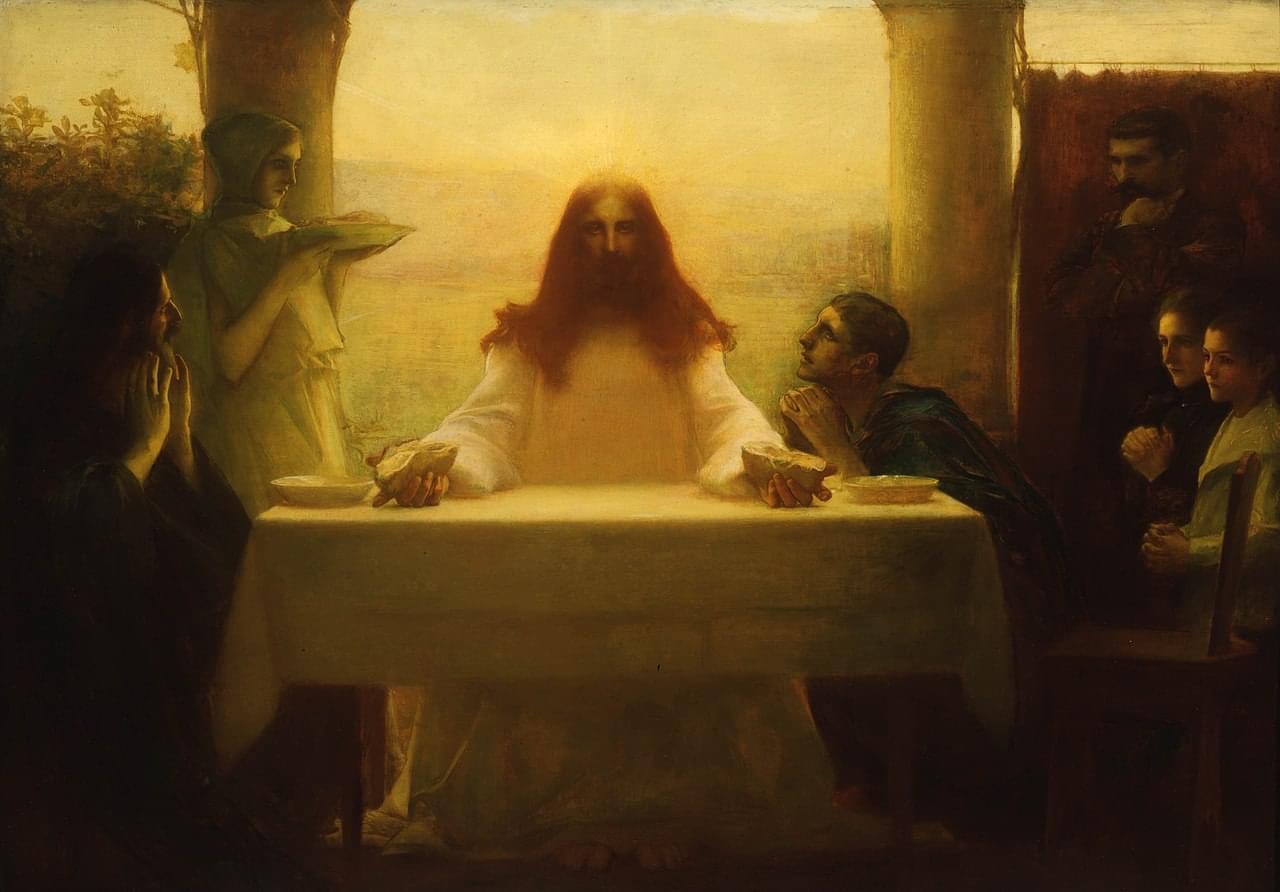
Scripture tells us, "While he was sitting at table with them, he took the bread; and when he had given thanks, he broke it and gave it to them." Do not these words remind us of an event that touches our faith? Are these not the "verbs" that the priest always performs when he pronounces the words of consecration on God's altar, words that Jesus pronounced at the sacramental Last Supper?
When he "took the bread, and when he had given thanks, he broke it and gave it to them. Then their eyes were opened, and they recognized him." And when they recognized him, they did not stay in Emmaus, but "rising at that same hour, they returned to Jerusalem, and found the eleven, and those who were with them, gathered together."
All along the way, they had not recognized him, for they had walked on the wrong way, leaving the Church represented by the apostles gathered in Jerusalem, and moving away from the heart of the crucial event, the resurrection, the foundation of the Christian faith.
We often ask ourselves today: why doesn't Jesus stay with us, where is he? We wish he were still always with us!
I say to you today: let us go back to the empty tomb, let us go back to the Church, let us come out of the wrong paths we have taken in this world, by leaving the resurrection behind us, let us go back and gather again around the apostles and the altar of the Church, to find that Jesus is there, always with us.
Yes, he is with us, for he said, "For where two or three are gathered in my name, there I am there with them." (Matthew 18:20).
He is with us because he promised, " I am with you all the days, until the completion of the age." (Matthew 28:20).
He is with us in the mystery of the Eucharist every time we gather to break bread, only then, as the eyes of the disciples on Emmaus were opened, our eyes are opened to recognize and see him, and we enter into communion with him in the Eucharist.
† Selim Sfeir
Maronite Archbishop of Cyprus

3η Κυριακή μετά την Ανάσταση
Ομιλία του Σεβασμιοτάτου Αρχιεπισκόπου Μαρωνιτών Κύπρου Σελίμ Σφέιρ Η πορεία προς Εμμαούς (Λουκάς 24 : 13 - 35)
Αγαπητά εν Χριστώ αδέλφια,
«Τα μάτια τους όμως εμποδίζονταν, έτσι που να μην τον αναγνωρίζουν.» Λουκ 24:16
Ήταν το βράδυ της ημέρας της Aνάστασης. Η Aνάσταση είχε πραγματοποιηθεί, ο τάφος ήταν άδειος, οι γυναίκες τον είχαν ελέγξει, το ίδιο και οι μαθητές, αλλά ο Ιησούς ήταν άφαντος. Πού βρισκόταν;
«Την ίδια ημέρα, δύο μαθητές πήγαιναν σε ένα χωριό που ονομαζόταν Εμμαούς, μακριά από την Ιερουσαλήμ.» Έφυγαν από τον τόπο της Aνάστασης και πήγαν μακριά από την Ιερουσαλήμ. Άφησαν τους άλλους μαθητές συγκεντρωμένους και πήγαν μόνοι τους στο χωριό τους, ενώ το επίκεντρο της ιστορίας παραμένει μέχρι σήμερα καρφωμένο στο μυστήριο της Ανάστασης και στον άδειο τάφο εκεί. Το μυστήριο της Ανάστασης έκανε την πυξίδα τους να χάσει τη διαίσθησή της!
Περπατούν σε λάθος δρόμο, χάνονται, αδυνατώντας να καταλάβουν τι συμβαίνει γύρω τους. Εκεί, στο λάθος μονοπάτι, ο Θεός τους πλησιάζει, περπατάει μαζί τους και μιλάει μαζί τους: «Τα μάτια τους όμως εμποδίζονταν, έτσι που να μην τον αναγνωρίζουν».
Τους μιλάει και τους εξηγεί τις Γραφές, αλλά δεν μπορούν να τον αναγνωρίσουν. Κατά τη διάρκεια ενός περιπάτου επτά μιλίων, τους εξηγεί τις Γραφές της Παλαιάς Διαθήκης και πώς αναφέρονται σε Αυτόν, αλλά το μυαλό τους δεν ανοίγει για να τον αναγνωρίσουν. Γιατί τα μάτια τους δεν τον αναγνώρισαν;
Καθώς η μέρα λιγόστευε και το βράδυ έπεφτε, και συνέχισε να τους μιλάει καθώς περπατούσε, προσποιήθηκε ότι θα προχωρούσε περισσότερο, αλλά εκείνοι του ζήτησαν να μείνει μαζί τους, οπότε σταμάτησε και μπήκε μέσα για να μείνει μαζί τους.
Η Γραφή μας λέει: «Ενώ ήταν στο τραπέζι μαζί τους, πήρε το ψωμί, και αφού το ευλόγησε, το έκοψε σε κομμάτια και τους έδωσε». Δεν μας θυμίζουν αυτά τα λόγια ένα γεγονός που αγγίζει την πίστη μας; Δεν είναι αυτά τα «βήματα» που εκτελεί πάντα ο ιερέας όταν προφέρει τα λόγια του καθαγιασμού στο θυσιαστήριο του Θεού, τα λόγια που πρόφερε ο Ιησούς στον μυστηριακό Μυστικό Δείπνο;
Όταν «πήρε το ψωμί, και αφού ευχαρίστησε, το έσπασε και το έδωσε σ' αυτούς. Τότε άνοιξαν τα μάτια τους και Τον αναγνώρισαν». Και όταν Τον αναγνώρισαν, δεν έμειναν στην Εμμαούς, αλλά «σηκώθηκαν την ίδια ώρα, επέστρεψαν στην Ιερουσαλήμ και βρήκαν τους έντεκα και όσους ήταν μαζί τους συγκεντρωμένους».
Σε όλη τη διαδρομή δεν Τον είχαν αναγνωρίσει, επειδή είχαν βαδίσει σε λάθος δρόμο, αφήνοντας την Εκκλησία που εκπροσωπούνταν από τους αποστόλους που είχαν συγκεντρωθεί στην Ιερουσαλήμ και απομακρυνόμενοι από την καρδιά του κρίσιμου γεγονότος, την Ανάσταση, το θεμέλιο της χριστιανικής πίστης.
Συχνά αναρωτιόμαστε σήμερα: γιατί ο Ιησούς δεν μένει μαζί μας, πού είναι; Μακάρι να ήταν ακόμα μαζί μας!
Σας λέω σήμερα: ας επιστρέψουμε στον άδειο τάφο, ας επιστρέψουμε στην Εκκλησία, ας βγούμε από τα λάθος μονοπάτια που έχουμε πάρει σε αυτόν τον κόσμο, αφήνοντας πίσω μας την ανάσταση, ας επιστρέψουμε και ας συγκεντρωθούμε γύρω από τους αποστόλους και την Αγία Τράπεζα της Εκκλησίας, για να διαπιστώσουμε ότι ο Ιησούς είναι εκεί, πάντα μαζί μας. Ναι, είναι μαζί μας, γιατί είπε: «Όπου δύο ή τρεις συγκεντρώνονται στο όνομά μου, εκεί είμαι εγώ ανάμεσά τους». (Ματ 18:20). Είναι μαζί μας, επειδή υποσχέθηκε: «Και ιδού, εγώ είμαι μαζί σας πάντοτε, μέχρι τη συντέλεια του αιώνος». (Ματ 28:20).
Είναι μαζί μας στο μυστήριο της Θείας Ευχαριστίας κάθε φορά που συγκεντρωνόμαστε για να κόψουμε τον άρτο, και μόνο τότε, όπως άνοιξαν τα μάτια των μαθητών στο δρόμο προς Εμμαούς, ανοίγουν και τα δικά μας μάτια για να Τον αναγνωρίσουμε και να τον δούμε, και μπαίνουμε σε κοινωνία μαζί του στην Θεία Ευχαριστία.
† Σελίμ Σφέιρ
Αρχιεπίσκοπος Μαρωνιτών Κύπρου

Sunday of Thomas (John 20, 26-31)
2nd Sunday after Resurrection, Homily of His Excellency Msgr. Selim Sfeir Maronite Archbishop of Cyprus
Dear brothers and sisters in Christ,
Jesus rose from the dead, yes, and appeared to the gathered disciples, but not to all of them, for Thomas was not with them. When the ten disciples informed Thomas of Jesus' appearance, he did not believe, but said, “Unless I see the nail marks in his hands, put my finger in the wounds left by the nails, and put my hand into his side, I won’t believe.” (John 20:25).
Thomas wrestled with his faith for a whole week, until the new Sunday came. What confirms to us that he was in internal conflict with his faith is that he was with the disciples and did not abandon them, and did not abandon the reunited Church. Jesus appeared to them again, addressed Thomas directly with the rebuke of love and not the love of rebuke, and said to him, “Put your finger here. Look at my hands. Put your hand into my side. No more disbelief. Believe!” (John 20:27)
None of the disciples had informed Jesus of Thomas' position or his response, but Jesus, present in Thomas' life, knows his most precise details and wants to heal him of his doubts.
Often we fall into great moments of doubt, where we lose our faith; we feel that God is far from us, and our eyes no longer see him despite his presence and silent protection over us. God's will is not that we remain in doubt; it is not his desire that we live in unbelief, but he leaves us a margin to return to ourselves, to constructive internal struggle, and then he reveals himself to us!
“Put forth your finger here, and see my hands; also put forth your hand, and put it into my side.” With this phrase, Jesus addresses us today as if he were saying to each of us, “I know your doubts, I understand your worries, if you want to believe in me, don't walk away, put your finger forward and touch me, and don't grope with the spirit of the world to come to faith. Open your eyes to my wounds, and do not focus on your wounds, for in my wounds you will find your healing!”
The world cannot lead you to Jesus because it does not know him, “He was in the world, and the world was made through him, and the world did not know him” (John 1:10), because the world cannot understand God through human logic. Jesus says: “The one who is from the earth belongs to the earth and speaks as one from the earth.“ (John 3:31) As for the apostle Paul, he tells us, ‘In God’s wisdom, he determined that the world wouldn’t come to know him through its wisdom. Instead, God was pleased to save those who believe through the foolishness of preaching.’ (1 Corinthians 1:21)
Jesus addresses Thomas with a phrase whose echoes still shake us, “Do not be unbelieving, but believe.” Just as he wanted Thomas to believe in him, he wants us to believe in him, but the path of faith he charts requires us to come close to him, to put our hands in his, through personal experience that the mind cannot comprehend, and to look at the wounds in his hands and see the marks of the nails.
Seeing these wounds leads our hearts to believe in the love that gave itself on the cross. And touching the nail marks opens our eyes to see what the world cannot. “Soon the world will no longer see me, but you will see me. Because I live, you will live too.” (John 14:19) So only do we say with Thomas to Jesus, “My Lord and my God!”
Amen.
† Selim Sfeir
Maronite Archbishop of Cyprus

Dimanche de Thomas (Jean 20, 26-31)
2ème Dimanche après la Résurrection Homélie de Son Excellence Mgr. Selim Sfeir Archevêque Maronite de Chypre
Chers frères et sœurs en Christ,
Jésus est ressuscité des morts, oui, et il est apparu aux disciples réunis, mais pas à tous, car Thomas n'était pas avec eux. Lorsque les dix disciples ont informé Thomas de l'apparition de Jésus, il n'a pas cru, mais il a dit : " Si je ne vois dans ses mains la marque des clous, et si je ne mets mon doigt dans la marque des clous, et si je ne mets ma main dans son côté, je ne croirai point." (Jean 20:25).
Thomas est resté en lutte avec sa foi pendant une semaine entière, jusqu'à ce que vienne le nouveau dimanche. Ce qui nous confirme qu'il était en conflit interne avec sa foi, c'est qu'il était avec les disciples et ne les a pas abandonnés, et n'a pas abandonné l'Église réunie. Jésus leur est apparu à nouveau, et il s'est adressé directement à Thomas avec la réprimande de l'amour et non pas avec l'amour de la réprimande, et lui a dit : " Avance ici ton doigt, et regarde mes mains; avance aussi ta main, et mets-la dans mon côté; et ne sois pas incrédule, mais crois." (Jean 20:27)
Aucun des disciples n'avait informé Jésus de la position de Thomas ni de sa réponse, mais Jésus, présent dans la vie de Thomas, connaît ses détails les plus précis et veut le guérir de ses doutes.
Souvent, nous tombons dans de grands moments de doute, où nous perdons notre foi ; nous sentons que Dieu est loin de nous, et nos yeux ne le voient plus malgré sa présence et sa protection silencieuse sur nous. La volonté de Dieu n'est pas que nous restions dans le doute, ce n'est pas son désir que nous vivions dans l'incrédulité, mais il nous laisse une marge de retour à nous-mêmes, à la lutte interne constructive, et ensuite il se révèle à nous!
"Avance ici ton doigt, et regarde mes mains; avance aussi ta main, et mets-la dans mon côté." Par cette phrase, Jésus s'adresse à nous aujourd'hui comme s'il disait à chacun de nous : "Je connais tes doutes, je comprends tes inquiétudes, si tu veux croire en moi, ne t'éloigne pas, avance ton doigt et touche-moi, et ne tâtonne pas avec l’esprit du monde pour arriver à la foi. Ouvre tes yeux sur mes blessures, et ne focalise pas sur tes blessures, car dans mes blessures tu trouveras ta guérison!"
Le monde ne peut pas vous conduire à Jésus car il ne le connaît pas, "Il était dans le monde, et le monde a été fait par lui, et le monde ne l’a point connu" (Jean 1:10), car le monde ne peut pas comprendre Dieu par la logique humaine. Jésus dit : " celui qui est de la terre est de la terre, et il parle comme étant de la terre. " (Jean 3:31) Quant à l'apôtre Paul, il nous dit: " Car puisque le monde, avec sa sagesse, n’a point connu Dieu dans la sagesse de Dieu, il a plu à Dieu de sauver les croyants par la folie de la prédication." (1 Corinthiens 1:21)
Jésus s'adresse à Thomas avec une phrase dont les échos nous secouent encore, " Ne sois pas incrédule, mais crois." Tout comme il voulait que Thomas croie en lui, il veut que nous croyions en lui, mais le chemin de la foi qu'il trace exige de s'approcher de lui, de mettre nos mains dans les siennes, par l'expérience personnelle que l'esprit ne peut pas comprendre, et de regarder les blessures de ses mains et de voir les traces des clous.
Voir ces blessures conduit nos cœurs à croire en l'amour qui s'est donné lui-même sur la croix. Et toucher la trace des clous ouvre nos yeux pour voir ce que le monde ne peut pas voir. "Encore un peu de temps, et le monde ne me verra plus; mais vous, vous me verrez, car je vis, et vous vivrez aussi." (Jean 14:19) Ainsi seulement nous disons avec Thomas à Jésus : "Mon Seigneur et mon Dieu !"
Amen.
† Selim Sfeir
Archevêque Maronite de Chypre

Κυριακή του Θωμά (Ιωάννης 20 / 26 – 31)
2η Κυριακή μετά την Ανάσταση Ομιλία του Σεβασμιοτάτου Αρχιεπισκόπου Μαρωνιτών Κύπρου Σελίμ Σφέιρ
Αγαπητά εν Χριστώ αδέλφια,
Ο Ιησούς αναστήθηκε από τους νεκρούς, ναι, και εμφανίστηκε στους συγκεντρωμένους μαθητές, αλλά όχι σε όλους, επειδή ο Θωμάς δεν ήταν μαζί τους. Όταν οι δέκα μαθητές διηγήθηκαν στον Θωμά την εμφάνιση του Ιησού, εκείνος δεν πίστεψε, αλλά είπε: «Εγώ αν δεν δω στα χέρια Tου τα σημάδια από τα καρφιά, κι αν δε βάλω το δάχτυλό μου στα σημάδια από τα καρφιά, και δε βάλω το χέρι μου στη λογχισμένη πλευρά Tου, δε θα πιστέψω». (Ιωα 20:25).
Ο Θωμάς αγωνιζόταν με την πίστη του για μια ολόκληρη εβδομάδα, μέχρι που ήρθε η νέα Κυριακή. Αυτό που μας επιβεβαιώνει ότι βρισκόταν σε εσωτερική διαμάχη με την πίστη του είναι ότι ήταν μαζί με τους μαθητές και δεν εγκατέλειψε ούτε αυτούς ούτε την επανενωμένη Εκκλησία. Ο Ιησούς τους εμφανίστηκε ξανά και μίλησε απευθείας στον Θωμά με την επίπληξη της αγάπης και όχι με την αγάπη της επίπληξης και Του είπε: «Άπλωσε εδώ το δάχτυλό σου και κοίταξε τα χέρια μου- άπλωσε επίσης το χέρι σου και βάλε το στην πλευρά μου- και μην είσαι άπιστος, αλλά πιστός.» (Ιωα 20:27)
Κανένας από τους μαθητές δεν είχε ενημερώσει τον Ιησού για τη θέση του Θωμά ή την αντίδρασή του, αλλά ο Ιησούς, παρών στη ζωή του Θωμά, γνωρίζει τις πιο ακριβείς λεπτομέρειές του και θέλει να τον θεραπεύσει από τις αμφιβολίες του.
Συχνά πέφτουμε σε μεγάλες στιγμές αμφιβολίας, όταν χάνουμε την πίστη μας- νιώθουμε ότι ο Θεός είναι μακριά μας, και τα μάτια μας δεν Τον βλέπουν πια, παρά την παρουσία Του και τη σιωπηλή προστασία Του πάνω μας. Το θέλημα του Θεού δεν είναι να παραμείνουμε στην αμφιβολία, δεν είναι επιθυμία Του να ζούμε στην απιστία, αλλά μας αφήνει ένα περιθώριο να επιστρέψουμε στον εαυτό μας, στην εποικοδομητική εσωτερική πάλη, και τότε μας αποκαλύπτεται!
«Άπλωσε το δάχτυλό σου εδώ, και δες τα χέρια μου- επίσης, άπλωσε το χέρι σου, και βάλε το στην πλευρά μου». Με αυτή τη φράση, ο Ιησούς απευθύνεται σήμερα σε εμάς, σαν να λέει στον καθένα μας: «Γνωρίζω τις αμφιβολίες σας, καταλαβαίνω τις ανησυχίες σας, αν θέλετε να πιστέψετε σε μένα, μην απομακρύνεστε, βάλτε το δάχτυλό σας μπροστά και αγγίξτε με, και μην ψηλαφείτε με το πνεύμα του κόσμου για να φτάσετε στην πίστη. Ανοίξτε τα μάτια σας στις πληγές μου και μην εστιάζετε στις δικές σας πληγές, γιατί στις πληγές μου θα βρείτε τη θεραπεία σας!»
Ο κόσμος δεν μπορεί να σας οδηγήσει στον Ιησού, επειδή δεν Τον γνωρίζει: «Αυτός ήταν μέσα στον κόσμο, και ο κόσμος έγινε μέσω αυτού, και ο κόσμος δεν τον γνώρισε» (Ιωα 1:10), επειδή ο κόσμος δεν μπορεί να κατανοήσει τον Θεό με την ανθρώπινη λογική. Ο Ιησούς είπε:
« Όποιος προέρχεται από τη γη, έχει ανθρώπινη προέλευση και μιλάει σαν ένας από τη γη.» (Ιωα 3:31) Όσο για τον Απόστολο Παύλο, μας λέει: «Επειδή ο κόσμος με τη σοφία του δεν γνώρισε τον Θεό με τη σοφία του Θεού, ευδόκησε ο Θεός να σώσει αυτούς που πιστεύουν με την αφροσύνη του κηρύγματος.» (Α΄ Κορ 1:21)
Ο Ιησούς απευθύνεται στον Θωμά με μια φράση της οποίας ο απόηχος εξακολουθεί να μας συγκλονίζει: «Μην είσαι άπιστος, αλλά πίστεψε». Όπως ακριβώς ήθελε ο Θωμάς να πιστέψει σ' Αυτόν, έτσι θέλει κι εμείς να πιστέψουμε σ' Αυτόν, αλλά το μονοπάτι της πίστης που χαράζει απαιτεί να έρθουμε κοντά Του, να βάλουμε τα χέρια μας στα δικά Του, μέσα από μια προσωπική εμπειρία που ο νους δεν μπορεί να κατανοήσει, και να κοιτάξουμε τις πληγές στα χέρια Του και να δούμε τα σημάδια των καρφιών.
Η θέαση αυτών των πληγών οδηγεί την καρδιά μας να πιστέψει στην αγάπη που δόθηκε πάνω στο σταυρό. Και το άγγιγμα των σημαδιών από τα καρφιά ανοίγει τα μάτια μας για να δούμε αυτό που ο κόσμος δεν μπορεί να δει. «Λίγο ακόμα, και ο κόσμος δεν θα με δει πια- εσείς όμως θα με δείτε, γιατί εγώ ζω, και θα ζήσετε κι εσείς».
(Ιωα 14:19) Έτσι μόνο λέμε μαζί με τον Θωμά στον Ιησού: «Ο Κύριός μου και ο Θεός μου!». Αμήν.
+ Σελίμ Σφέιρ
Αρχιεπίσκοπος Μαρωνιτών Κύπρου
Message de Pâques 2024 de Son Excellence Mgr Selim Jean Sfeir Archevêque Maronite de Chypre
Christ est ressuscité !
Chers frères et soeurs en Christ,
Christ est ressuscité !
Le Dieu de l'amour et de la vie a vaincu la mort et offre une vie nouvelle à quiconque
croit et identifie sa vie à Jésus-Christ ressuscité.
En ce jour saint de Pâques, alors que nous nous réunissons dans la joie et la gratitude,
réfléchissons tous à la signification profonde de la résurrection de notre Seigneur.
Pâques n'est pas seulement la célébration de la vie sur la mort, c'est aussi le
témoignage de la puissance de l'amour divin. C'est un rappel poignant que même
dans les moments les plus sombres de notre vie, il y a de l'espoir, il y a de la lumière,
il y a la possibilité d'une conversion et d'une transformation.
L'humanité connaît aujourd'hui de terribles tragédies qui découlent du mal humain.
Les guerres, les conflits, les conflits sanglants, la faim et la discorde frappent non
seulement notre région mais aussi la planète entière. L'égoïsme humain l'emporte
désormais sur l'unité, même au sein de la famille et de la société.
La résurrection du Christ nous enseigne que la réconciliation est possible, que la paix
est possible. En tant que disciples du Christ, baptisés au nom du Père, du Fils et du
Saint-Esprit, nous sommes appelés à être des ouvriers de paix, au service de l'unité
et de la compréhension mutuelle.
Jésus ressuscité est le seul à donner à l'homme l'espoir tangible que la bonté et
l'amour l'emportent toujours.
Mettons notre confiance en celui qui nous a ouvert le chemin de la vie, en celui qui
a donné sa vie pour nous afin de nous offrir la rédemption de nos péchés et de nos
faiblesses. En ce jour saint, engageons-nous à devenir meilleurs et devenir de
meilleurs chrétiens.
Que cette Pâque soit un temps de renouveau spirituel pour chacun d'entre nous.
Trouvons la force et le courage de pardonner, de guérir les blessures du passé et de
construire un avenir meilleur.
Souvenons-nous que la vraie victoire réside dans l'amour démesuré de Dieu.
Tournons-nous vers Celui qui nous a aimés jusqu'à se sacrifier et qui est ressuscité
pour nous donner une vie nouvelle. Abandonnons notre passé, ouvrons nos cœurs et
nos esprits, et empruntons le chemin de l'amour, de la bonté, de la réconciliation, de
la fraternité et de la solidarité.
Que la lumière et l'amour du Christ remplissent nos cœurs et guident nos actions afin
que les valeurs de paix, de justice et de réconciliation prévalent, non seulement à
Chypre et au Moyen-Orient, mais aussi dans le monde entier.
Que la paix et la grâce du Christ ressuscité soient avec vous tous, maintenant et à
jamais.
+ Selim Sfeir
Archevêque Maronite de Chypre
Martha and Mary (Luke 10 : 38-42)
Dear brothers and sisters in Christ,
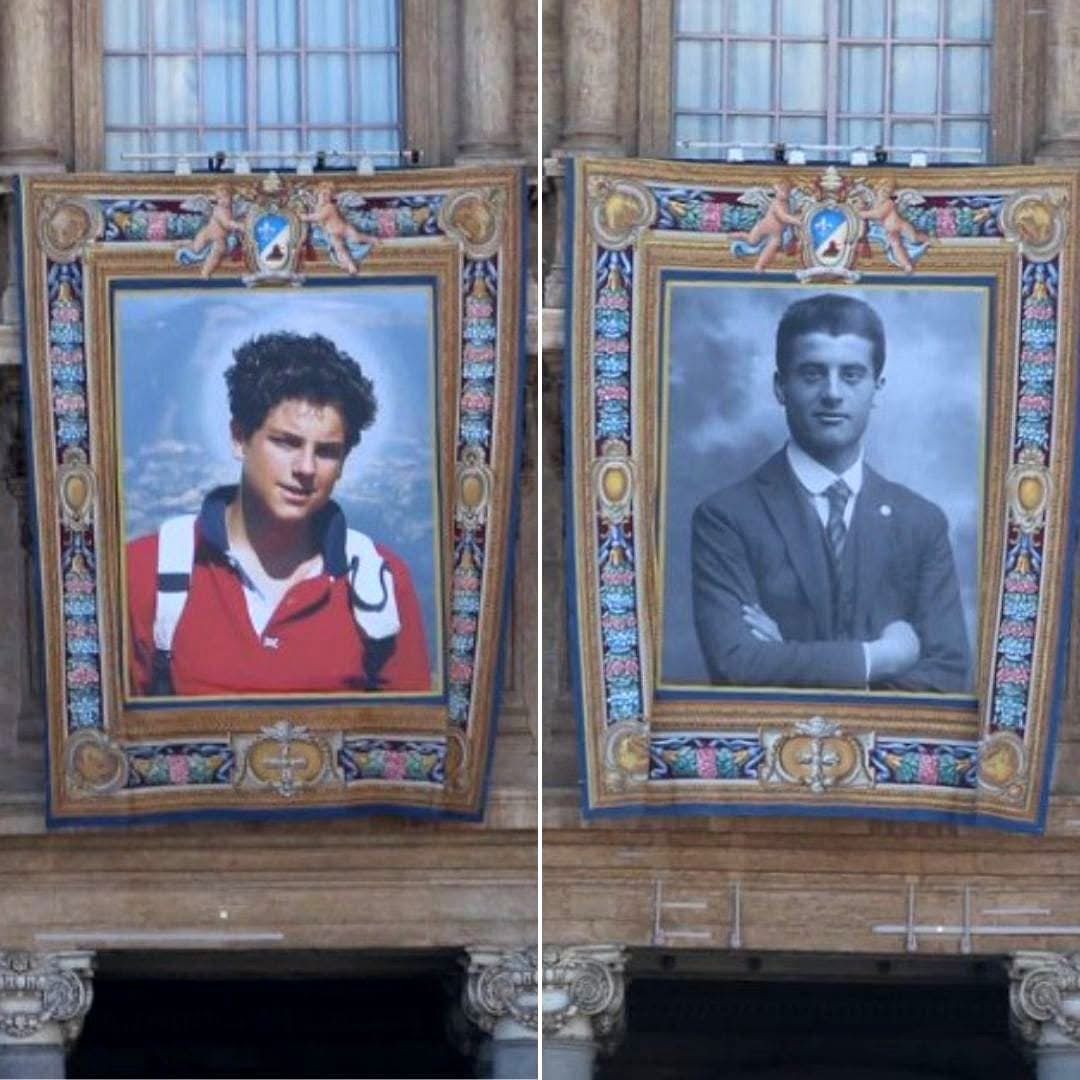
The Canonization of Blessed Giorgio Frassati and Blessed Carlos Acutis.
Today in the holy city of Rome, our beloved Holy Father, Pope Leo XIV will solemnly elevate for the whole Church two new saints, Giorgio Frassati and Carlos Acutis. Both of these young men died very young, yet in their brief journey, they show that living for Christ takes nothing away from life but fills it with meaning and joy.
The saints are the experts in listening. Like Mary of Bethany, the saints are attentive to the voice of Christ. They hear Him in the reading of the Gospel, they hear Him in the voice of the Church’s teaching, they hear Him in the voices of the poor and the immigrant, they hear Him in the silence of the Blessed Sacrament. The saints don’t just hear Jesus, they listen to Him. This work of listening is to discover the voice of Christ in those right beside us, in our families and our place of work. It's also about trying to hear the voice of Christ in our contemporaries, some of whom are far from the Church. Even in their estrangement, they are creatures of Logos, of reason, and can be unwitting transmitters of the truth. We need to have hearts and ears capable of hearing Christ speaking from the most unlikely places.
Poor Martha in her busy kitchen of Bethany could hear Christ speaking in the other room, but she was so distracted, she couldn’t listen. She got focused on her problems, her difficulties and her failures. She was listening to herself and only hearing Jesus from a distance.
The Divine Logos created the human body as a custom designed parable: we have two ears and one mouth. God is showing us that we have to do twice as much listening as we do speaking and listening is twice as hard as talking.
May our Blessed Mother, who’s beautiful birthday we shall celebrate tomorrow (for us Maronites, we think of our Lady of Mankee!) on September 8th, intercede for all of us to be betters listeners!
† Selim Sfeir
Maronite Archbishop of Cyprus