Categories
Archbishop’s Teaching

Third Sunday after the Holy Cross, October 5, 2025

Matthew 24 : 23-31

Dear brothers and sisters in Christ,

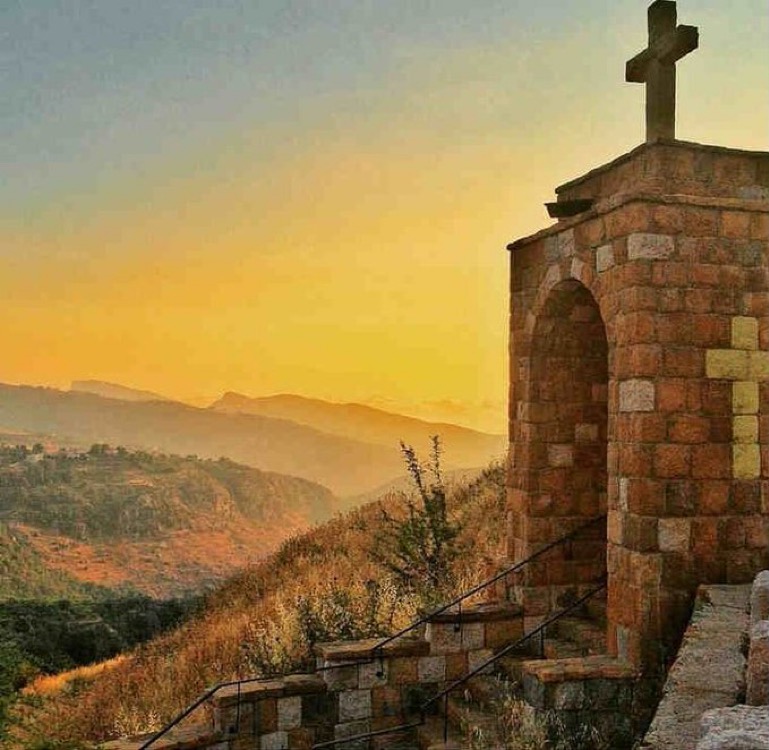
“Constantine beheld the Cross shining brightly in the sky. It made him victorious when fighting his foes.”

History tells us that the Emperor Constantine, before the Battle of the Milvian Bridge (October 28, 312) had a vision of a cross (or Chi-Rho) in the sky. Alongside this vision came the words (recorded by the historian Eusebius) “In this sign, you will conquer”. Constantine ordered his soldiers to mark their shields with the Chi-Rho (the first two letters of “Christ” in Greek: X (Chi) and R (Rho).

The Emperor Constantine won the battle against Maxentius, which he attributed to the power of the God of the Christians.This event imprinted itself on Christian history, because after this event, Constantine ended the persecution of Christians with the Edict of Milan (313 AD) not only making Christianity legal in the Roman Empire but establishing it as the religion of the empire.

This event of Constantine marks a pivotal moment in Christian history, and symbolizes the power and transformation begun at the Cross on Good Friday. The victory that Christ obtained on the Cross is not limited to purely spiritual terms, but has consequences in everyday life, in the organization of societies and the building of civilization. When nations, families and cultures exult in Christ, everything is elevated, and the truth of the human person is honored. Sadly, history is littered with false Messiahs who have promised a paradise on earth without Christ, the Tree of Life.

Can we re-build the Garden of Eden without Christ, the Tree of Life?

No, we cannot. In fact, every effort to do so has resulted in the exact opposite. Without Christ, man only creates a living hell.
“When we attempt to live without God, what results is not heaven, but rather a desert of emptiness and death.” – Deus Caritas Est, Benedict XVI

† Selim Sfeir
Maronite Archbishop of Cyprus


Categories
Archbishop’s Teaching

In Union with the Holy Father, Pope Leo XIV

SJS 129 Letter for the Month of Rosary

Categories
Archbishop’s Teaching

2η Κυριακή της Ανυψώσεως του Τιμίου Σταυρού

Ματθαίος 24: 1-14

Αγαπητά εν Χριστώ αδέλφια,

«Ο σταυρός Σου, Κύριε, είναι το κλειδί για τον παράδεισο και μας ανοίγει τις πύλες που έκλεισε η αμαρτία του Αδάμ!»

Οι αναγνώσεις της Θείας Λειτουργίας μας οδηγούν στο τέλος του κόσμου και σε όλα τα σημάδια της έλευσης του. Η πρώτη γενιά των χριστιανών πίστευε ότι η «Ημέρα του Κυρίου» ήταν επικείμενη. Ο λόγος για την προσδοκία τους ήταν πολύ απλός: όλα όσα περιγράφει ο Χριστός στο Ευαγγέλιο ήταν παρόντα σε εκείνη τη γενιά· στην πραγματικότητα, όσα περιγράφει ο Χριστός εξακολουθούν να συμβαίνουν. Επομένως, από την έλευση του Χριστού, ζούμε στις «τελευταίες ημέρες». Πρέπει να είμαστε έτοιμοι, με την πόρτα της καρδιάς μας ανοιχτή για την έλευση Του.

Αφού οι πρώτοι γονείς μας έσπασαν τη φιλία με τον Θεό και αρνήθηκαν να υπακούσουν στην εντολή Του να μην « φάνε από το δέντρο της γνώσης του καλού και του κακού», η ιστορία έφτασε σε αδιέξοδο, «όλοι γεννηθήκαμε με την αμαρτία που είναι ο θάνατος της ψυχής» (CCC#403). Αυτή η καταστροφική κατάσταση στην οποία βρισκόταν ο άνθρωπος, λόγω της ανυπακοής και της υπερηφάνειας, είχε κλείσει τις πύλες του παραδείσου και είχε καταστήσει την ανθρώπινη ζωή βαριά και οδυνηρή. Ο Χριστός ήρθε και με το θάνατό Του και την ανάστασή Του άνοιξε τις πύλες του παραδείσου με το ξύλο του Σταυρού Του, σύμβολο της υπακοής και της ταπεινότητάς Του. Ο Σταυρός έχει γίνει όχι μόνο το κλειδί για τον παράδεισο, αλλά και το κλειδί για την κατανόηση της ανθρώπινης ζωής και της κοσμικής ιστορίας.

Το παλιό κλειδί της παλιάς εκκλησίας του Αγίου Γεωργίου στην Κορμακίτη ήταν επιδέξια σφυρηλατημένο, ώστε όχι μόνο να ανοίγει την πόρτα του παρεκκλησιού, αλλά και να μας εξηγεί την κατήχησή μας. Αν κοιτάξετε προσεκτικά το κλειδί, η μεταλλική εγκοπή που αλληλεπιδρά με την κλειδαριά έχει ένα μικροσκοπικό σταυρό στο κέντρο της. Τι όμορφο παράδειγμα της πίστης μας. Μόνο ο Σταυρός του Χριστού μπορεί να ανοίξει τις πύλες του παραδείσου και μόνο ο Σταυρός του Χριστού μπορεί να αποκαλύψει το νόημα της ανθρώπινης ιστορίας.

Συχνά χάνουμε τα κλειδιά μας και τα ψάχνουμε με απογοήτευση. Αλλά το κλειδί του Σταυρού βρίσκεται στο κέντρο του κόσμου· μόνο εκείνοι που έχουν χάσει το νόημα της ζωής μπορούν να το χάσουν. Ας υψώσουμε τα μάτια μας προς τον Σταυρό και ας βρούμε το νόημα της ύπαρξής μας και την ελπίδα της μελλοντικής δόξας. Αμήν.

† Σελίμ Σφέιρ

Αρχιεπίσκοπος Μαρωνιτών Κύπρου

Categories
Archbishop’s Teaching

Second Sunday after Holy Cross

Matthew 24:1-14

Dear brothers and sisters in Christ,

“Your cross, O Lord, is the key to paradise and unlocks the gates for us that were closed by Adam’s sin!”

The readings of the Divine Liturgy point us to the end of the world and all the signs of its arrival.  The first generation of Christians thought that the ‘Day of the Lord’ was imminent.  The reason for their expectation was quite simple, everything that Christ describes in the Gospel was present to that generation; in fact, what Christ described is still taking place.  Therefore, ever since the coming of Christ, we have been living in the ‘last days’.  We must stand ready, with the door of our heart open for his coming.

After our first parents broke friendship with God and refused submission to his command to not ‘eat of the tree of knowledge of good and evil’ history was at a standstill, “we were all born afflicted with a sin which is the death of the soul” (CCC#403).  This catastrophic situation that man was in, because of disobedience and pride, had closed the gates of paradise and rendered human life burdensome and painful.  Christ came and by his death and resurrection opened the gates of paradise by the wood of his Cross, a symbol of his obedience and humility.  The Cross has become not only the key to paradise, but also the key to understanding human life and cosmic history.

The antique key of the old church of St. George in Kormakitis was expertly forged so as to not only open the door of the chapel but also to explain to us our catechism.  If you look closely at the key, the metal notch which interacts with the lock has a tiny cross in its center.  What a beautiful example of our faith.  Only the Cross of Christ can open the gates of paradise, and only the Cross of Christ can open the meaning of human history.

Frequently we lose our keys and look in frustration for them.  But the key of the Cross is at the center of the world; it can only be lost by those who have lost the meaning of life.  May we lift our eyes to the Cross and find the meaning to our existence and the hope of future glory.

† Selim Sfeir

Maronite Archbishop of Cyprus

Categories
Archbishop’s Teaching

Πρώτη Κυριακή μετά την ανύψωση του Τιμίου Σταυρού.

Μάρκος 10 / 35 -45

Αγαπητά εν Χριστώ αδέλφια,


Η Κατήχηση της Καθολικής Εκκλησίας αποτυπώνει με όμορφο τρόπο το μυστήριο του έργου της Λύτρωσης του Χριστού #607: «Η επιθυμία να αγκαλιάσει το σχέδιο του Πατέρα Tου για τη λυτρωτική αγάπη ενέπνευσε ολόκληρη τη ζωή του Ιησού, καθώς το λυτρωτικό πάθος Tου ήταν ο ίδιος ο λόγος της Ενσάρκωσής Tου».


Όταν διαβάζουμε αυτά τα λόγια, μας κάνουν να σκεφτούμε τους φτωχούς αποστόλους Ιάκωβο και Ιωάννη που ήθελαν να αναρριχηθούν σε υψηλές θέσεις στη βασιλεία. Δεν είχαν καταλάβει τη λογική της βασιλείας. Είπαν ότι ήταν ικανοί να πιουν από το ποτήριο του Χριστού, αλλά δεν μπορούσαν να φανταστούν τα παθήματα και τον θάνατο που θα υποστεί ο Χριστός. Η μαθηματική λογική της Βασιλείας είναι ότι αν θέλεις να ανέβεις ψηλά, πρέπει να κατέβεις πολύ χαμηλά: αν θέλεις να βασιλέψεις με τον Χριστό, πρέπει να υποφέρεις με τον Χριστό.


Στην αυστηρή και σκληρή πραγματικότητά του, ο Σταυρός του Χριστού δεν είναι κάτι αρνητικό, είναι κάτι θετικό – δεν είναι μικρό πράγμα να ανακαλύψουμε ότι ο Σταυρός είναι το παγκόσμιο σύμβολο του πλεονεκτήματος. Ο Σταυρός είναι ένα σύμβολο της λυτρωτικής Αγάπης του Θεού. Ο Σταυρός είναι ένα σύμβολο ευλογίας και εύνοιας. Ο Σταυρός είναι ένα απαραίτητο μέσο πνευματικής καρποφορίας.


Γιατί λοιπόν φοβόμαστε τον Σταυρό; Γιατί παραπονιόμαστε όταν αντιμετωπίζουμε τα δεινά; Έχουμε ξεχάσει πώς λυτρωθήκαμε; Έχουμε ξεχάσει ότι ο Σταυρός είναι ένα πλεονέκτημα, όχι ένα μειονέκτημα; Έχουμε ξεχάσει ότι μόνο μέσω του Σταυρού είμαστε πνευματικά γόνιμοι;

Όταν προκύπτουν δυσκολίες, ασθένειες ή προβλήματα, ας μην υποκύψουμε στον παράπονο. Ας αγαπήσουμε τον Σταυρό και ας τρέξουμε προς αυτόν, αντί να απομακρυνθούμε από αυτόν.


Με τον Σταυρό σταθερά στους ώμους μας, θα γίνουμε ένα με τον Χριστό και θα αγκαλιάσουμε το σχέδιο του Πατέρα για τη λυτρωτική αγάπη. Τα παθήματά μας και οι χαρές μας, ενωμένα με τον Χριστό, θα κάνουν τον δρόμο ευκολότερο για τους άλλους και θα τους προσφέρουν τη χάρη της Σωτηρίας. Αμήν.


† Σελίμ Σφέιρ

Αρχιεπίσκοπος Μαρωνιτών Κύπρου


Categories
Archbishop’s Teaching

First Sunday after Holy Cross

St. Mark (10:35-45)

Dear brothers and sisters in Christ,

The Catechism of the Catholic Church expresses beautifully the mystery of Christ’s work of Redemption #607: “The desire to embrace his Father’s plan of redeeming love inspired Jesus’ whole life, for his redemptive passion was the very reason for his Incarnation.”

When we read these words, they make us think of the poor apostles James and John who wanted to ascend to high office in the kingdom. Hidden from their eyes was the mathematics of the Kingdom. They said they were able to drink of the chalice of Christ, but they could not have imagined the suffering and death that Christ would endure. The mathematics of the Kingdom is if you wish to go high, you must go very low: if you wish to reign with Christ, you must suffer with Christ.

In its stark and brutal reality, the Cross of Christ is not something negative, it is something positive – it is no small thing to discover that the Cross is the universal plus sign. The Cross is a sign of God’s redeeming Love; the Cross is a sign of blessing and favor; the Cross is an indispensable means of spiritual fruitfulness.

Why then do we fear the Cross? Why do we complain in the face of suffering? Have we forgotten how we were redeemed? Have we forgotten that the Cross is a plus, not a minus? Have we forgotten that it is only by the Cross that we are spiritually fruitful?

When hardship, sickness, or difficulties arise, let us not give into complaining. Let us love the Cross and run towards it, not away from it.
With the Cross firmly on our shoulders, we will become one with Christ and embrace the Father’s plan of redeeming love. Our sufferings and joys united to Christ, will make the path easier for others and obtain for them the grace of salvation.

† Selim Sfeir
Maronite Archbishop of Cyprus


Categories
Archbishop’s Teaching

The Exaltation of the Glorious Cross

John 12 /20-32

Dear brothers and sisters in Christ,

“The message about the cross is foolishness to those who are perishing, but to us who are being saved it is the power of God.”

In 1857, a piece of graffiti was uncovered in a building in Rome, on the Palatine Hill. Archeologists dated it from the first century A.D. The image depicts a human-like figure affixed to a cross and possessing the head of a donkey. To the left of the image is a young man – apparently intended to represent Alexamenos – as a Roman soldier or guard, raising one hand in a gesture possibly suggesting worship. Beneath the cross is a crude caption written in Greek as “Alexamenos worshipping his god”. The graffiti stands as testimony to the anti-Christian sentiment of ancient Rome and the mockery of the Cross of Christ.

We need to recover just how shocking the proclamation of the Cross was to the ancient world; this will help us to proclaim the message to our modern age. Death by crucifixion was the most humiliating death one could experience: the pain was limitless as it could go on for days and only the vilest criminals were subjected to it. That Christians chose to worship their God on a Cross was unlike any other religion in human history! It was a complete break from all other religious testimonies.

Man lost all his preternatural gifts, because of his disobedience at the foot of the Tree of Knowledge of Good and Evil in the garden of Eden. But through Christ’s obedience on the Wood of the Cross, man has received even greater gifts. What had been the source of man’s downfall has become the source of his restoration. Two trees, two Adams, two different results.

On this great feast of the Holy Cross during this Jubilee Year, we must be filled with a lot of hope, because this equation is the design of the Divine Logos. What appears to be the source of our downfall, can in fact, be the source of our restoration.
The thing that humiliates you, the events that break you, can in fact be a great grace and a source of endless blessings. We must not give into despair or wrong thinking. God who has saved you by the wood of the Cross, will also restore you by the very things in your life that give you the most grief.

We ask Our Lady who studied the Cross of Christ most perfectly to help us understand this Divine Science.

† Selim Sfeir
Maronite Archbishop of Cyprus


Categories
Archbishop’s Teaching

Η ανύψωση του ένδοξου Σταυρού

Ιωάννης 12 / 20 – 32

Αγαπητά εν Χριστώ αδέλφια,

«Το μήνυμα του σταυρού είναι ανοησία για όσους χάνονται, αλλά για εμάς που σωζόμαστε είναι η δύναμη του Θεού».

Το 1857, ένα γκράφιτι αποκαλύφθηκε σε ένα κτίριο στη Ρώμη, στον Λόφο Παλατίνο. Οι αρχαιολόγοι το χρονολόγησαν στον 1ο αιώνα μ.Χ. Η εικόνα απεικονίζει μια ανθρωποειδή μορφή στερεωμένη σε ένα σταυρό με κεφάλι γαϊδάρου. Στα αριστερά της εικόνας βρίσκεται ένας νεαρός άνδρας – προφανώς ο Αλεξαμένους – ως Ρωμαίος στρατιώτης ή φρουρός, που υψώνει το ένα χέρι σε μια χειρονομία που πιθανώς υποδηλώνει λατρεία. Κάτω από το σταυρό υπάρχει μια χονδροειδής λεζάντα γραμμένη στα ελληνικά που λέει «Ο Αλεξαμένους λατρεύει τον θεό του». Το γκράφιτι αποτελεί μαρτυρία του αντιχριστιανικού αισθήματος της αρχαίας Ρώμης και της διακωμώδησης του Σταυρού του Χριστού.

Πρέπει να συνειδητοποιήσουμε πόσο συγκλονιστική ήταν η διακήρυξη του Σταυρού για τον αρχαίο κόσμο. Αυτό θα μας βοηθήσει να διακηρύξουμε το μήνυμα στη σύγχρονη εποχή. Ο θάνατος με σταύρωση ήταν ο πιο ταπεινωτικός θάνατος που μπορούσε να βιώσει κάποιος: ο πόνος ήταν ατελείωτος, καθώς μπορούσε να διαρκέσει για μέρες, και μόνο οι πιο άθλιοι εγκληματίες υποβάλλονταν σε αυτόν. Το γεγονός ότι οι χριστιανοί επέλεξαν να λατρεύουν τον Θεό τους πάνω σε ένα Σταυρό ήταν κάτι που δεν είχε προηγούμενο σε καμία άλλη θρησκεία στην ιστορία της ανθρωπότητας! Ήταν μια πλήρης ρήξη με όλες τις άλλες θρησκευτικές μαρτυρίες.
Ο άνθρωπος έχασε όλα τα υπερφυσικά του χαρίσματα, λόγω της ανυπακοής του στους πρόποδες του Δέντρου της Γνώσης του Καλού και του Κακού στον κήπο της Εδέμ. Αλλά μέσω της υπακοής του Χριστού στο Ξύλο του Σταυρού, ο άνθρωπος έλαβε ακόμη μεγαλύτερα χαρίσματα. Αυτό που ήταν η πηγή της πτώσης του ανθρώπου έγινε η πηγή της αποκατάστασής του. Δύο δέντρα, δύο Αδάμ, δύο διαφορετικά αποτελέσματα.

Σε αυτή τη μεγάλη γιορτή του Τιμίου Σταυρού, κατά τη διάρκεια αυτού του Ιωβηλαίου Έτους, πρέπει να γεμίσουμε με μεγάλη ελπίδα, διότι αυτή η εξίσωση είναι το σχέδιο του Θείου Λόγου. Αυτό που φαίνεται να είναι η πηγή της πτώσης μας, μπορεί στην πραγματικότητα να είναι η πηγή της αποκατάστασής μας. Αυτό που σας ταπεινώνει, τα γεγονότα που σας συντρίβουν, μπορεί στην πραγματικότητα να είναι μια μεγάλη χάρη και πηγή ατελείωτων ευλογιών. Δεν πρέπει να υποκύψουμε στην απελπισία ή σε λανθασμένες σκέψεις. Ο Θεός που σας έσωσε με το ξύλο του Σταυρού, θα σας αποκαταστήσει επίσης με τα ίδια τα πράγματα στη ζωή σας που σας προκαλούν τη μεγαλύτερη θλίψη.

Ζητάμε από την Παναγία, που μελέτησε τον Σταυρό του Χριστού με τον πιο τέλειο τρόπο, να μας βοηθήσει να κατανοήσουμε αυτή τη Θεία Επιστήμη. Αμήν.

† Σελίμ Σφέιρ
Αρχιεπίσκοπος Μαρωνιτών Κύπρου

Categories
Archbishop’s Teaching

14η Κυριακή της Πεντηκοστής

Η Μάρθα και η Μαρία ( Λουκάς 10 / 38 - 42)

Αγαπητά εν Χριστώ αδέλφια,

Η Αγιοκατάταξη των Μακαρίων Τζόρτζιο Φρασσάτι και Κάρλο Ακουτίς

Σήμερα, στην αγία πόλη της Ρώμης, ο αγαπημένος μας Άγιος Πατέρας, ο Πάπας Λέων ΙΔ΄, θα ανακηρύξει επίσημα για όλη την Εκκλησία δύο νέους αγίους, τον Τζόρτζιο Φρασσάτι και τον Κάρλο Ακουτίς. Και οι δύο νέοι αυτοί άνδρες έφυγαν από τη ζωή πολύ νέοι· όμως μέσα στη σύντομη πορεία τους, δείχνουν ότι το να ζει κανείς για τον Χριστό δεν αφαιρεί τίποτε από τη ζωή, αλλά την γεμίζει με νόημα και χαρά.

Οι άγιοι είναι οι ειδικοί της ακρόασης. Όπως η Μαρία της Βηθανίας, οι άγιοι είναι προσεκτικοί στη φωνή του Χριστού. Τον ακούν στην ανάγνωση του Ευαγγελίου, Τον ακούν στη διδασκαλία της Εκκλησίας, Τον ακούν στις φωνές των φτωχών και των μεταναστών, Τον ακούν στη σιωπή του Παναγίου Μυστηρίου. Οι άγιοι δεν αρκούνται να ακούνε τον Ιησού· Τον προσέχουν. Αυτό το έργο της ακρόασης είναι η ανακάλυψη της φωνής του Χριστού σε όσους βρίσκονται δίπλα μας, στις οικογένειές μας και στον χώρο εργασίας μας. Είναι ακόμη και η προσπάθεια να ακούσουμε τη φωνή του Χριστού στους συγχρόνους μας, μερικοί από τους οποίους βρίσκονται μακριά από την Εκκλησία. Ακόμα και στην αποξένωσή τους, είναι πλάσματα του Λόγου, της λογικής, και μπορούν, χωρίς να το γνωρίζουν, να μεταδίδουν την αλήθεια. Χρειαζόμαστε καρδιές και αυτιά ικανά να ακούν τον Χριστό που μιλά από τα πιο απίθανα μέρη.

Η καημένη η Μάρθα, μέσα στη γεμάτη μέριμνες κουζίνα της Βηθανίας, μπορούσε να ακούει τον Χριστό να μιλά στο άλλο δωμάτιο, αλλά ήταν τόσο αποσπασμένη που δεν μπορούσε να Τον προσέξει. Είχε επικεντρωθεί στα προβλήματά της, στις δυσκολίες και τις αποτυχίες της. Άκουγε τον εαυτό της και μόνο από απόσταση τον Ιησού.

Ο Θείος Λόγος δημιούργησε το ανθρώπινο σώμα ως μια εξατομικευμένη παραβολή: έχουμε δύο αυτιά και ένα στόμα. Ο Θεός μας δείχνει ότι πρέπει να ακούμε διπλάσια απ’ όσο μιλάμε· και ότι η ακρόαση είναι διπλάσια δύσκολη από την ομιλία.

Είθε η Ευλογημένη Μητέρα μας, της οποίας την όμορφη γέννηση θα εορτάσουμε αύριο (για εμάς τους Μαρωνίτες, θυμόμαστε την Κυρία μας της Μαρκί!) στις 8 Σεπτεμβρίου, να πρεσβεύει για όλους μας ώστε να γίνουμε καλύτεροι ακροατές! Αμήν.

+ Σελίμ Σφέιρ

Αρχιεπίσκοπος Μαρωνιτών Κύπρου

Categories
Archbishop’s Teaching

14th Sunday of Pentecost

6η Κυριακή της Ανυψώσεως του Τιμίου Σταυρού ( Ματθαίος 25 / 14 – 30)

Περίοδος της Ανυψώσεως του Τιμίου Σταυρού

Ομιλία του Σεβασμιωτάτου Αρχιεπισκόπου Μαρωνιτών
Κύπρου κ.κ. Σελίμ Σφέιρ

6η Κυριακή της Ανυψώσεως του Τιμίου Σταυρού
( Ματθαίος 25 / 14 - 30)

Αξιοποίηση των δώρων του Θεού στο έπακρο

Ο Ιησούς είπε στους μαθητές του αυτή την παραβολή: «Η
βασιλεία του Θεού μοιάζει μ' έναν άνθρωπο ο οποίος φεύγοντας
για ταξίδι, κάλεσε τους δούλους του και τους εμπιστεύτηκε τα
υπάρχοντά του. Σ' άλλον έδωσε πέντε τάλαντα, σ' άλλον δύο, σ'
άλλον ένα, στον καθένα ανάλογα με την ικανότητά του, κι έφυγε
αμέσως για το ταξίδι. Αυτός που έλαβε τα πέντε τάλαντα, πήγε
και τα εκμεταλλεύτηκε και κέρδισε άλλα πέντε. Κι αυτός που
έλαβε τα δύο τάλαντα, κέρδισε επίσης άλλα δύο. Εκείνος όμως
που έλαβε το ένα τάλαντο, πήγε κι έσκαψε στη γη και έκρυψε τα
χρήματα του κυρίου του.
Ύστερα από ένα μεγάλο χρονικό διάστημα, γύρισε ο κύριος
εκείνων των δούλων και έκανε λογαριασμό μαζί τους.
Παρουσιάστηκε τότε εκείνος που είχε λάβει τα πέντε τάλαντα και
του έφερε άλλα πέντε. «Κύριε», του λέει, «μου εμπιστεύτηκες
πέντε τάλαντα· κοίτα, κέρδισα μ' αυτά άλλα πέντε». Ο κύριός του
του είπε: «εύγε, καλέ και έμπιστε δούλε! Αποδείχτηκες
αξιόπιστος στα λίγα, γι' αυτό θα σου εμπιστευτώ πολλά. Έλα να
γιορτάσεις μαζί μου.» Παρουσιάστηκε κι ο άλλος με τα δύο
τάλαντα και του είπε: «κύριε, μου εμπιστεύτηκες δύο τάλαντα·
κοίτα, κέρδισα άλλα δύο.» Του είπε ο κύριός του: «εύγε, καλέ και
έμπιστε δούλε! Αποδείχτηκες αξιόπιστος στα λίγα, γι' αυτό θα
σου εμπιστευτώ πολλά. Έλα να γιορτάσεις μαζί μου.»
Παρουσιάστηκε κι εκείνος που είχε λάβει το ένα τάλαντο και του
είπε: «κύριε, ήξερα πως είσαι σκληρός άνθρωπος. Θερίζεις εκεί
όπου δεν έσπειρες και συνάζεις καρπούς εκεί που δε φύτεψες. Γι'
αυτό φοβήθηκα και πήγα κι έκρυψα το τάλαντό σου στη γη.
Ορίστε τα λεφτά σου.» Ο κύριός του του αποκρίθηκε: «δούλε
κακέ και οκνηρέ, ήξερες πως θερίζω όπου δεν έσπειρα, και
συνάζω καρπούς απ' όπου δε φύτεψα! Τότε έπρεπε να βάλεις τα
χρήματά μου στην τράπεζα, κι εγώ όταν θα γυρνούσα πίσω, θα
τα έπαιρνα με τόκο. Πάρτε του, λοιπόν, το τάλαντο και δώστε το
σ' αυτόν που έχει τα δέκα τάλαντα. Γιατί σε καθέναν που έχει, θα
του δοθεί με το παραπάνω και θα 'χει περίσσευμα ενώ απ' όποιον
δεν έχει, θα του πάρουν και τα λίγα που έχει. Κι αυτόν τον
άχρηστο δούλο πετάξτε τον έξω στο σκοτάδι. Εκεί θα κλαίνε, και
θα τρίζουν τα δόντια.»

Αγαπητά εν Χριστώ αδέλφια,

1. Ο Θεός με εμπιστεύεται.
Όπως ο κύριος εμπιστεύεται την περιουσία του στους
δούλους του, έτσι και ο Θεός μου έχει εμπιστευτεί πολλά
πράγματα: τη ζωή, τη νοημοσύνη, τη μόρφωση, τα υλικά αγαθά
κ.λπ. Μου τα έχει δώσει, επειδή περιμένει να τα χρησιμοποιήσω
για να παράγουν καρπούς. Σε έναν δούλο ο κύριος δίνει πέντε
τάλαντα, σε έναν άλλο δύο τάλαντα και στον τρίτο ένα. Στον
καθένα δίνεται ό,τι είναι ικανός να επενδύσει. Με τον ίδιο τρόπο,
ο Θεός μου δίνει ακριβώς ό,τι είμαι σε θέση να επενδύσω. Ο
καθένας από εμάς είναι πιστός στο βαθμό που δοξάζει τον Θεό
χρησιμοποιώντας τα ταλέντα του στο μέτρο των δυνατοτήτων
του!

2. Παίρνοντας ρίσκα.
Ο δούλος στον οποίο δόθηκαν πέντε τάλαντα σπεύδει να τα
χρησιμοποιήσει για να κερδίσει άλλα πέντε. Παίρνει ένα ρίσκο.
Όταν αρχίζει να ασχολείται με τις υποθέσεις του δεν είναι
σίγουρος αν θα χάσει όλο ή μέρος του κεφαλαίου ή αν θα έχει
κέρδος. Αλλά μόνο επειδή παίρνει ένα ρίσκο μπορεί να
παρουσιάσει στον κύριό του δέκα τάλαντα όταν επιστρέψει.
Ο Θεός θέλει να παίρνουμε ρίσκο με αυτά που μας
εμπιστεύεται. Με άλλα λόγια, μπορούμε να εκθέσουμε τον εαυτό
μας σε πιθανή αποτυχία, σε απώλεια. Αν δεν πάρουμε το ρίσκο,
μπορεί να μην παράγουμε ποτέ τους καρπούς που περιμένει ο
Θεός από εμάς.
Αυτό για το οποίο επικρίνεται αυτός ο υπηρέτης είναι ο
εγωισμός και η τεμπελιά του, επειδή ζούσε αποτραβηγμένος στην
ύπαρξή του.
Αυτό είναι που μας προκαλεί σχετικά με τον τρόπο ζωής μας
ως χριστιανοί. Αυτό που συνέβη σε αυτόν τον υπηρέτη μπορεί να
συμβεί στον καθένα από εμάς, αν αποφασίσουμε να ζήσουμε τη
ζωή μας για τον εαυτό μας και όχι για τον Θεό. Όποιος αναζητά
τον εαυτό του αρνούμενος να δώσει και να μοιραστεί τα ταλέντα
του, βρίσκεται χωρίς τον Θεό και οδεύεται προς την καταστροφή
του.

3. Θα του δοθούν ακόμη περισσότερα.
Φαίνεται μάλλον άδικο ο δούλος που έχει δέκα τάλαντα να
λαμβάνει το τάλαντο του τεμπέλη. Δεν έχει ήδη αρκετά; Δεν είναι
να παίρνεις από τους φτωχούς για να δίνεις στους πλούσιους; Ο
Χριστός σίγουρα μας διδάσκει ένα μάθημα για την πνευματική
ζωή. Ό,τι δεν αναπτύσσεται, πεθαίνει. Αν η πνευματική μας ζωή
μένει στάσιμη, θα πεθάνει και η λίγη πνευματική ζωή που μπορεί
να είχαμε θα εξαφανιστεί. Από την άλλη πλευρά, όταν η
πνευματική μας ζωή είναι ζωντανή, αναπτύσσεται, παράγει όλο
και περισσότερους καρπούς. Παράγει καρπούς σε αφθονία.

Προσευχή : Σε ευχαριστώ Κύριε για όλα τα ταλέντα και τις
ιδιότητες που μου έδωσες. Βοήθησέ με να μη φοβάμαι να
επενδύσω όλα αυτά τα ταλέντα για να παράγω καρπούς για το
βασίλειό Σου. Δώσε μου τον αποστολικό ζήλο, τη γενναιοδωρία
και την επιμονή να παράγω καρπούς σε αφθονία.Αμήν.

+ Σελίμ Σφέιρ
Αρχιεπίσκοπος Μαρωνιτών Κύπρου

6th Sunday of the time of the Exaltation of the Holy Cross Mattew 25 / 14 -30

The Time of the Exaltation of the Holy Cross

Homily of His Excellency Msgr Selim Sfeir
Maronite Archbishop of Cyprus

6th Sunday of the time of the Exaltation of the Holy Cross
Mattew 25 / 14 -30

Let's make the most of God's gifts

Dear brothers and sisters in Christ,

1. God trusts me.
Just as a master entrusts his slaves with his property, God has entrusted
me with several gifts: life, intelligence, education, material possessions,
and so on. He has given them to me because He expects me to use them
to bear fruit. To one slave, the master gives five talents, to another two
talents, and to the third, one talent. To each, he gives what he is capable
of investing. Likewise, God gives me exactly what I am able to invest.
Each of us is faithful to the extent that we praise God by making the best
use of our talents!

2. Taking risks.
The slave who was given five talents hurried to put them to make them
yield more, in order to gain five more. He takes a risk. When he starts
doing business, he is not sure whether he will lose all or part of his capital,
or whether he will make a profit. But it is only because he takes a risk that
he can present ten talents to his master upon his returns.
God wants us to take risks with what he entrusts to us. This means that we
may expose ourselves to possible failure and loss. If we do not take risks,
we may never produce the fruit that God expects from us.
What is reproached to this servant is his selfishness and laziness, because
he lived in isolation, focused only on his own existence.
This is a challenge to our Christian way of life. What happened to this
servant can happen to any of us, if we decide to live our lives for ourselves
and not for God. Anyone who seeks himself by refusing to give and share
his talents, ends up isolated from God, and on path to his own ruin.

3. More will be given to him.
It seems rather unfair that the slave who has ten talents receives the lazy
man's talent. Doesn't he already have enough? Isn't this taking from the
poor to give to the rich? Christ is surely teaching us a lesson about the
spiritual life. What does not grow, dies. If our spiritual life stagnates, it
will die, and the little spiritual life we may have had will disappear. On
the other hand, when our spiritual life is vibrant and growing, it produces
more and more fruit. It produces fruit in abundance.

Prayer
Thank you Lord for all the talents and qualities you have given me. Help
me not to be afraid to invest these talents to produce fruit for your
kingdom. Grant me the apostolic zeal, generosity and perseverance to bear
fruit in abundance.

† Selim Sfeir
Maronite Archbishop of Cyprus

6ème Dimanche du temps de l’Exaltation de la Sainte Croix Matthieu 25 / 14 -30

Le Temps de l’Exaltation de la Sainte Croix

Homélie de Son Excellence Mgr. Selim Sfeir
Archevêque Maronite de Chypre

6ème Dimanche du temps de l’Exaltation de la Sainte Croix
Matthieu 25 / 14 -30

Utilisons au mieux les dons de Dieu

Chers frères et sœurs en Christ,

1. Dieu a confiance en moi.
De même que le maître confie à ses esclaves sa propriété, de même Dieu
m’a confié plusieurs biens : la vie, l’intelligence, l’éducation, les
possessions matérielles, etc. Il me les a données parce qu’il attend que je
les utilise pour produire du fruit. A un esclave le maître remet cinq talents,
à l’autre deux talents et au troisième un. A chacun il est donné ce qu’il est
capable d’investir. De même Dieu me donne exactement ce que je suis
capable d’investir. Chacun de nous est fidèle dans la mesure où il loue
Dieu en utilisant ses talents au mieux !

2. Prendre du risque.
L’esclave à qui on a donné cinq talents se dépêche de les faire fructifier
afin d’en gagner cinq de plus. Il prend un risque. Quand il commence à
faire des affaires il n’est pas sûr s’il perdra tout ou une partie du capital
ou s’il fera un profit. Mais c’est seulement parce qu’il prend un risque
qu’il peut présenter à son maître dix talents quand il revient.
Dieu veut que nous prenions un risque avec ce qu’il nous confie. C’est-à-
dire qu’on peut s’exposer à un échec possible, à une perte. Si nous ne
prenons pas de risque, nous ne produirons peut-être jamais le fruit que
Dieu attend de nous.
Ce qui est reproché à ce serviteur, c'est son égoïsme et sa paresse, car il a
vécu replié sur sa propre existence.
Voilà qui nous interpelle sur notre façon de vivre en chrétiens. Ce qui
arrive à ce serviteur peut arriver à chacun d'entre nous si nous décidons
de vivre notre vie pour nous-mêmes et non pour Dieu. Quiconque se
cherche lui-même en refusant de donner et de partager ses talents, se
retrouve lui-même, sans Dieu, et pour sa propre ruine.

3. Plus encore lui sera donné.
Il semble assez injuste que l’esclave qui a dix talents reçoive le talent du
paresseux. N’a-t-il pas déjà assez ? N’est-ce pas prendre aux pauvres pour
donner aux riches ? Le Christ nous donne sûrement une leçon sur la vie
spirituelle. Ce qui ne croît pas, meurt. Si notre vie spirituelle stagne elle
mourra et le peu de vie spirituelle que nous avons peut-être eue
disparaîtra. D’un autre côté, quand notre vie spirituelle est vibrante,
grandissante, elle produit de plus en plus de fruit. Elle produit du fruit en
abondance.

Prière
Merci Seigneur pour tous les talents, toutes les qualités que tu m'as
donnés. Aide-moi à ne pas avoir peur d’investir tous ces talents pour
produire des fruits pour ton royaume. Accorde-moi le zèle apostolique, la
générosité et la ténacité afin de produire du fruit en abondance.

† Selim Sfeir
Archevêque Maronite de Chypre

Apostolic Exhortation “C’EST LA CONFIANCE” of the Holy Father FRANCIS

APOSTOLIC EXHORTATION
C’EST LA CONFIANCE
OF THE HOLY FATHER
FRANCIS
ON CONFIDENCE IN THE MERCIFUL LOVE OF GOD
FOR THE 150th ANNIVERSARY OF THE BIRTH OF
SAINT THERESE OF THE CHILD JESUS AND THE HOLY FACE

https://www.vatican.va/content/francesco/en/apost_exhortations/documents/20231015-santateresa-delbambinogesu.html

1. “C’est la confiance et rien que la confiance qui doit nous conduire à l’Amour”. “It is confidence and nothing but confidence that must lead us to Love”. [1]

2. These striking words of Saint Therese of the Child Jesus and the Holy Face say it all. They sum up the genius of her spirituality and would suffice to justify the fact that she has been named a Doctor of the Church. Confidence, “nothing but confidence”, is the sole path that leads us to the Love that grants everything. With confidence, the wellspring of grace overflows into our lives, the Gospel takes flesh within us and makes us channels of mercy for our brothers and sisters.

3. It is confidence that sustains us daily and will enable us to stand before the Lord on the day when he calls us to himself: “In the evening of this life, I shall appear before you with empty hands, for I do not ask you, Lord, to count my works. All our justice is stained in your eyes. I wish, then, to be clothed in your own Justice and to receive from your Love the eternal possession of yourself”. [2]

4. Saint Therese is one of the best known and most beloved saints in our world. Like Saint Francis of Assisi, she is loved by non-Christians and nonbelievers as well. In addition, she has been recognized by UNESCO as one of the most significant figures for contemporary humanity. [3] We would do well to delve more deeply into her message as we commemorate the 150th anniversary of her birth in Alençon (2 January 1873) and the centenary of her beatification. [4] Yet I have not chosen to issue this Exhortation on either of those dates, or on her liturgical Memorial, so that this message may transcend those celebrations and be taken up as part of the spiritual treasury of the Church. Its publication on the liturgical Memorial of Saint Teresa of Avila is a way of presenting Saint Therese of the Child Jesus and the Holy Face as the mature fruit of the reform of the Carmel and of the spirituality of the great Spanish saint.

5. The earthly life of Saint Therese was brief, a mere twenty-four years, and completely ordinary, first in her family and then in the Carmel of Lisieux. The extraordinary burst of light and love that she radiated came to be known soon after her death, with the publication of her writings and thanks to the countless graces bestowed on the faithful who invoked her intercession.

6. The Church quickly recognized her great significance and the distinctiveness of her evangelical spirituality. Therese met Pope Leo XIII during a pilgrimage to Rome in 1887 and asked his permission to enter the Carmel at the age of fifteen. Not long after her death, Saint Pius X, sensing her spiritual grandeur, stated that she would become the greatest saint of modern times. Therese was declared Venerable in 1921 by Pope Benedict XV, who, in praising her virtues, saw them embodied in her “little way” of spiritual childhood. [5] She was beatified a century ago and then canonized on 17 May 1925 by Pope Pius XI, who thanked the Lord for granting that she be the first Blessed whom he raised to the honour of the altars and the first Saint whom he canonized. [6] In 1927, the same Pope declared her the Patroness of the Missions. [7] Therese was proclaimed one of the patron saints of France in 1944 by Venerable Pius XII, [8] who on several occasions developed the theme of spiritual childhood. [9] Saint Paul VI liked to recall that he was baptized on 30 September 1897, the day of her death, and on the centenary of her birth he wrote a Letter on her teaching to the Bishop of Bayeux and Lisieux. [10] On 2 June 1980, during his first Apostolic Journey to France, Saint John Paul II visited the Basilica dedicated to her, and in 1997 declared her a Doctor of the Church. [11] He also referred to Therese as “an expert in the scientia amoris”. [12] Pope Benedict XVI returned to the subject of her “science of love” and proposed it as “a guide for all, especially those in the people of God who carry out their ministry as theologians”. [13] Finally, in 2015, I had the joy of canonizing her parents, Louis and Zelie, during the Synod on the Family. More recently, I devoted one of my weekly General Audience talks to Saint Therese, as part of a cycle of catecheses on apostolic zeal. [14]

1. Jesus for others

7. In the name that Therese chose as a religious, Jesus stands out as the “Child” who manifests the mystery of the Incarnation, and the “Holy Face” of the one who surrendered himself completely on the Cross. She is “Saint Therese of the Child Jesus and the Holy Face”.

8. The name of Jesus was constantly on her lips, as an act of love, even to her last breath. She had also written these words in her cell: “Jesus is my one love”. It was her interpretation of the supreme statement of the New Testament: “God is love” (1 Jn 4:8.16).

A missionary soul

9. As with every authentic encounter with Christ, this experience of faith summoned her to mission. Therese could define her mission in these words: “I shall desire in heaven the same thing as I do now on earth: to love Jesus and to make him loved”. [15] She wrote that she entered Carmel “to save souls”. [16] In a word, she did not view her consecration to God apart from the pursuit of the good of her brothers and sisters. She shared the merciful love of the Father for his sinful son and the love of the Good Shepherd for the sheep who were lost, astray and wounded. For this reason, Therese is the Patroness of the missions and a model of evangelization.

10. The final pages of her Story of a Soul [17] are a missionary testament. They express her appreciation of the fact that evangelization takes place by attraction [18], not by pressure or proselytism. It is worthwhile reading her own words in this regard: “ Draw me, we shall run after you in the odour of your ointments. O Jesus! It is not even necessary to say: When drawing me, draw the souls whom I love! This simple statement, ‘Draw me’ suffices. I understand, Lord, that when a soul allows herself to be captivated by the odour of your ointments, she cannot run alone; all the souls whom she loves follow in her train; this is done without constraint, without effort, it is a natural consequence of her attraction for you. Just as a torrent, throwing itself with impetuosity into the ocean, drags after it everything it encounters in its passage, in the same way, O Jesus, the soul who plunges into the shoreless ocean of your Love, draws with her all the treasures she possesses. Lord, you know it, I have no other treasures than the souls it has pleased you to unite to mine”. [19]

11. In this passage, Therese quotes the words of the bride to the bridegroom in the Song of Songs (1:3-4), following the profound interpretation found in the writings of the doctors of Carmel, Saint Teresa of Avila and Saint John of the Cross. The bridegroom is Jesus, the Son of God who united himself to our humanity in the Incarnation and redeemed it on the Cross. There, from his open side, he gave birth to the Church, his beloved bride, for which he gave his life (cf. Eph 5:25). What is striking is that Therese, conscious of her own impending death, did not approach this mystery merely as a source of personal consolation, but in a fervent apostolic spirit.

The grace that sets us free from self-absorption

12. We see something similar when Therese speaks of the working of the Holy Spirit, which immediately takes on a missionary hue: “That is my prayer. I ask Jesus to draw me to the flames of his love, to unite me so closely to him that he live and act in in me. I feel that the more the fire of love burns within my heart, the more I shall say ‘Draw me’: the more also the souls who will approach me (poor little piece of iron, useless if I withdraw from the divine furnace), the more these souls will run swiftly in the odour of the ointments of their Beloved, for a soul that is burning with love cannot remain inactive”. [20]

13. In the heart of Therese, the grace of baptism became this impetuous torrent flowing into the ocean of Christ’s love and dragging in its wake a multitude of brothers and sisters. This is what happened, especially after her death. It was her promised “shower of roses”. [21]

2. The little way of trust and love

14. One of the most important insights of Therese for the benefit of the entire People of God is her “little way”, the path of trust and love, also known as the way of spiritual childhood. Everyone can follow this way, whatever their age or state in life. It is the way that the heavenly Father reveals to the little ones (cf. Mt 11:25).

15. In the Story of a Soul, [22] Therese tells how she discovered the little way: “I can, then, in spite of my littleness, aspire to holiness. It is impossible for me to grow up, and so I must bear with myself such as I am, with all my imperfections. But I want to seek out a means of going to heaven by a little way, a way that is very straight, very short, and totally new”. [23]

16. To describe that way, she uses the image of an elevator: “the elevator which must raise me to heaven is your arms, O Jesus! And for this, I had no need to grow up, but rather I had to remain little and become this more and more”. [24] Little, incapable of being confident in herself, and yet firmly secure in the loving power of the Lord’s arms.

17. This is the “sweet way of love” [25] that Jesus sets before the little and the poor, before everyone. It is the way of true happiness. In place of a Pelagian notion of holiness, [26] individualistic and elitist, more ascetic than mystical, that primarily emphasizes human effort, Therese always stresses the primacy of God’s work, his gift of grace. As a result, she could say: “I always feel, however, the same bold confidence of becoming a great saint, because I don’t count on my merits, since I have none, but I trust in him who is Virtue and Holiness. God alone, content with my weak efforts, will raise me to himself and make me a saint, clothing me in his infinite merits”. [27]

Apart from all merit

18. This way of speaking is in no way opposed to the traditional Catholic teaching on the increase of grace, namely, that once gratuitously justified by sanctifying grace, we are changed and enabled to cooperate by our good works in a process of growth in holiness. Through this “elevation”, we can possess real merits by virtue of the development of the grace received.

19. Therese, for her part, wished to highlight the primacy of God’s action; she encourages us to have complete confidence as we contemplate the love of Christ poured out to the end. At the heart of her teaching is the realization that, since we are incapable of being certain about ourselves, [28] we cannot be sure of our merits. Hence, it is not possible to trust in our own efforts or achievements. The Catechism chose to quote the words that Saint Therese addressed to the Lord: “I will appear before you with empty hands”, [29] in order to express that “the saints have always had a lively awareness that their merits were pure grace”. [30] This conviction gives rise to a joyful and tender gratitude.

20. It is most fitting, then, that we should place heartfelt trust not in ourselves but in the infinite mercy of a God who loves us unconditionally and has already given us everything in the Cross of Jesus Christ. [31] For this reason, Therese never uses the expression, common enough in her day, “I will become a saint”.

21. Even so, her boundless confidence encourages all who feel frail, limited and sinful to let themselves be elevated and transformed in order to reach greater heights. “If all weak and imperfect souls felt what the least of souls feels, that is, the soul of your little Therese, not one would despair of reaching the summit of the mount of love. Jesus does not demand great actions from us, but simply surrender and gratitude”. [32]

22. This insistence of Therese on God’s initiative leads her, when speaking of the Eucharist, to put first not her desire to receive Jesus in Holy Communion, but rather the desire of Jesus to unite himself to us and to dwell in our hearts. [33] In her Act of Oblation to Merciful Love, saddened by her inability to receive communion each day, she tells Jesus: “Remain in me as in a tabernacle”. [34] Her gaze remained fixed not on herself and her own needs, but on Christ, who loves, seeks, desires and dwells within.

Daily abandonment

23. The confidence that Therese proposes has to do with more than our individual sanctification and salvation. It has an integral meaning that embraces the totality of concrete existence and finds application in our daily lives, where we are often assailed by fears, the desire for human security, the need to have everything under control. Here we see the importance of her invitation to a holy “abandonment”.

24. The complete confidence that becomes an abandonment in Love sets us free from obsessive calculations, constant worry about the future and fears that take away our peace. In her final days, Therese insisted on this: “We who run in the way of love shouldn’t be thinking of suffering that can take place in the future; it’s a lack of confidence”. [35] If we are in the hands of a Father who loves us without limits, this will be the case come what may; we will be able to move beyond whatever may happen to us and, in one way or another, his plan of love and fullness will come to fulfilment in our lives.

Fire burning in the night

25. Therese experienced faith most powerfully and surely in the midst of the dark night and especially amid the darkness of Calvary. Her witness culminated in the final months of her life, in the great “trial against the faith” [36] that began at Easter of 1896. In her account, [37] she directly relates this period of testing to the painful reality of the atheism of her time. The last years of the nineteenth century were the “golden age” of modern atheism as a philosophical and ideological system. When she wrote that Jesus allowed her soul “to be invaded by the thickest darkness”, [38] she was evoking the darkness of atheism and the rejection of the Christian faith. In union with Jesus, who took upon himself all the darkness of the sin of the world when he willed to drink from the cup of the Passion, Therese came to appreciate its underlying sense of despair and sheer emptiness. [39]

26. Yet darkness cannot overcome the light: Therese had been conquered by the One who came as light into the world (cf. Jn 12:46). [40] Her account reveals the heroic nature of her faith, her triumph in spiritual combat with the most powerful temptations. She felt herself a sister to atheists, seated with them at table, like Jesus who sat with sinners (cf. Mt 9:10-13). She interceded for them, ever renewing her own act of faith, in constant loving communion with the Lord: “I run toward my Jesus. I tell him I am ready to shed my blood to the last drop to profess faith in the existence of heaven. I tell him, too, that I am happy not to enjoy this beautiful heaven on this earth so that he will open it for all eternity to poor unbelievers”. [41]

27. Together with faith, Therese experienced a deep and boundless trust in God’s infinite mercy: “confidence that must lead us to Love”. [42] Even in her darkness, she experienced the complete trust of a child that finds refuge, unafraid, in the embrace of its father and mother. For Therese, the one God is revealed above all else in his mercy, which is the key to understanding everything else that can be said of him: “To me he has granted his infinite mercy and through it I contemplate and adore the other divine perfections! All of these perfections appear to be resplendent with love, even his Justice (and perhaps this even more so than the others) seems to me clothed in love”. [43] This is one of the loftiest insights of Therese, one of her major contributions to the entire People of God. In an extraordinary way, she probed the depths of divine mercy, and drew from them the light of her limitless hope.

A most firm hope

28. Before entering the Carmel, Therese had felt a remarkable spiritual closeness to one of the most unfortunate of men, the criminal Henri Pranzini, sentenced to death for a triple murder for which he was unrepentant. [44] By having Masses offered for him and praying with complete confidence for his salvation, she was convinced that she was drawing him ever closer to the blood of Jesus, and she told God that she was sure that at the last moment he would pardon him “even if he went to his death without any signs of repentance”. As the reason for her certainty, she stated: “I was absolutely confident in the mercy of Jesus”. [45] How great was her emotion when she learned that Pranzini, after mounting the scaffold, “suddenly, seized by an inspiration, turned, took hold of the crucifix the priest was holding out to him and kissed the sacred wounds three times![46] This intense experience of hoping against all hope proved fundamental for her: “After this unique grace, my desire to save souls grows each day”. [47]

29. Therese was conscious of the tragic reality of sin, yet she remained constantly immersed in the mystery of Christ, certain that “where sin increased, grace abounded all the more” ( Rom 5:20). The sin of the world is great but not infinite, whereas the merciful love of the Redeemer is indeed infinite. Therese testifies to the definitive victory of Jesus, through his passion, death and resurrection, over all the powers of evil. Filled with confidence, she dared to explain: “Jesus, allow me to save very many souls; let no soul be lost today… Jesus, pardon me if I say anything I should not say. I only want to give you joy and to console you”. [48] This now leads us to consider another aspect of the breath of fresh air that is the message of Saint Therese of the Child Jesus and the Holy Face.

3. I will be love

30. As “greater” than faith and hope, charity will never pass away (cf. 1 Cor 13:8-13). It is the supreme gift of the Holy Spirit and “the mother and the root of all the virtues”. [49]

Charity as a personal attitude of love

31. The Story of a Soul is a testimonial to charity, in which Therese offers us a commentary on Jesus’ new commandment: “that you love one another as I have loved you” ( Jn 15:12). [50] Jesus thirsts for this response to his love. Indeed, he “did not fear to beg for a little water from the Samaritan woman. He was thirsty. But when he said ‘Give me to drink’, it was the love of his poor creature that the Creator of the universe was seeking. He was thirsty for love”. [51] Therese wished to respond to the love of Jesus, to offer him love in return for love. [52]

32. The symbolism of spousal love emphasizes the mutual self-gift of the bridegroom and the bride. Thus, inspired by the Song of Songs (2:16), Therese writes, “I think that the Heart of my Spouse is mine alone, just as mine is his alone, and I speak to him then in the solitude of this delightful heart to heart, while waiting to contemplate him one day face to face”. [53] Although the Lord loves us together as a people, at the same time charity works in a most personal way: “heart to heart”.

33. Therese possessed complete certainty that Jesus loved her and knew her personally at the time of his Passion: “He loved me and gave himself for me” ( Gal 2:20). As she contemplated Jesus in his agony, she told him: “You saw me”. [54] In the same way, she said to the Child Jesus in the arms of his Mother: “With your little hand that caressed Mary, you upheld the world and gave it life, and you thought of me”. [55] So too, at the beginning of the Story of a Soul, she contemplated the love of Jesus for all humanity and for each individual, as if he or she were the only one in the world. [56]

34. The act of love – repeating the words, “Jesus I love you” – which became as natural to Therese as breathing, is the key to her understanding of the Gospel. With that love, she immersed herself in all the mysteries of the life of Christ, making herself his contemporary and placing herself within the Gospel together with Mary and Joseph, Mary Magdalene and the apostles. Together with them, she penetrated to the depths of the love of the Heart of Jesus. Let us take one example: “When I see Magdalene walking up before the many guests, washing with her tears the feet of her adored Master, whom she is touching for the first time, I feel that her heart has understood the abysses of love and mercy of the Heart of Jesus, and, sinner though she is, this Heart of love was not only disposed to pardon her, but to lavish on her the blessings of divine intimacy, to lift her to the highest summits of contemplation”. [57]

The greatest love in supreme simplicity

35. At the end of the Story of a Soul, Therese presents us with her Act of Oblation to Merciful Love. [58] Once she surrendered completely to the working of the Spirit, she received, quietly and unobtrusively, an abundant outpouring of living water: “rivers, or better, the oceans of graces that flooded my soul”. [59] This is the mystical life that, apart from any extraordinary phenomena, offers itself to all the faithful as a daily experience of love.

36. Therese practised charity in littleness, in the simplest things of daily life, and she did so in the company of the Virgin Mary, from whom she learned that “to love is to give everything. It’s to give oneself”. [60] While preachers in those days often celebrated Mary’s grandeur in ways that made her seem far removed from us, Therese showed, starting with the Gospel, that Mary is the greatest in the kingdom of heaven because she is the least (cf. Mt 18:4), the one closest to Jesus in his abasement. She saw that, if the apocrypha are full of striking and amazing feats, the Gospels show us a lowly and poor life lived in the simplicity of faith. Jesus himself wanted Mary to be the example of a soul that seeks him with a simple faith. [61] Mary was the first to experience the “little way” in pure faith and humility. Consequently, Therese did not hesitate to write:

“Mother full of grace, I know that in Nazareth
You live in poverty, wanting nothing more.
No rapture, miracle or ecstasy
Embellish your life, O Queen of the Elect!…

The number of little ones on earth is truly great.
They can raise their eyes to you without trembling.
It’s by the ordinary way, incomparable Mother,
That you like to walk to guide them to heaven”. [62]

37. Therese does tell us of certain moments of grace experienced amid the simplicity of daily life, like the sudden insight she had when accompanying a sick and somewhat irascible sister. Even so, those experiences of a more intense charity came about in the most ordinary ways. “One winter night I was carrying out my little duty as usual; it was cold, it was night. Suddenly I heard off in the distance the harmonious sound of a musical instrument. I then pictured a well-lighted drawing room, brilliantly gilded, filled with elegantly dressed young ladies conversing together and conferring upon each other all sorts of compliments and other worldly remarks. Then my glance fell upon the poor invalid whom I was supporting. Instead of the beautiful strains of music I heard only her occasional complaints, and instead of the rich gildings I saw only the bricks of our austere cloister, hardly visible in the glimmering light. I cannot express in words what happened in my soul; what I know is that the Lord illumined it with rays of truth, which so far surpassed the dark brilliance of earthly feasts that I could not believe my happiness. Ah! I would not have exchanged the ten minutes employed in carrying out my humble office of charity to enjoy a thousand years of worldly feasts”. [63]

In the heart of the Church

38. From Saint Teresa of Avila, Therese inherited a great love for the Church and was able to plumb the depths of this mystery. We see this in her discovery of the “heart of the Church”. In a lengthy prayer to Jesus, [64] written on 8 September 1896, the sixth anniversary of her religious profession, the saint confided to the Lord that she felt driven by an immense desire, a passion for the Gospel that no vocation, by itself, could satisfy. And so, in seeking her “place” in the Church, she turned to chapters 12 and 13 of the First Letter of Saint Paul to the Corinthians.

39. There, in Chapter 12, the apostle employs the metaphor of the body and its members to explain that the Church embraces a great variety of hierarchically ordered charisms. Yet this description was not enough for Therese. She continued her search and read the “hymn to charity” in Chapter 13. There she came upon the eminent answer to her question, and wrote this memorable page: “Considering the mystical body of the Church I had not recognized myself in any of the members described by Saint Paul, or rather I desired to see myself in them all. Charity gave me the key to my vocation. I understood that if the Church had a body composed of different members, the most necessary and most noble of all could not be lacking to it, and so I understood that the Church had a Heart, and that this Heart was burning with love. I understood it was love alone that made the Church’s members act, that if Love ever became extinct, apostles would not preach the Gospel and martyrs would not shed their blood. I understood that Love comprised all vocations, that love was everything, that it embraced all times and places… in a word: that it was eternal! Then, in the excess of my delirious joy, I cried out: O Jesus, my Love... my vocation, at last I have found it… my vocation is Love! Yes, I have found my place in the Church, and it is you, O my God, who have given me this place; in the heart of the Church, my Mother, I shall be Love. Thus I shall be everything, and thus my dream will be realized”. [65]

40. This heart was not that of a triumphalistic Church, but of a loving, humble and merciful Church. Therese never set herself above others, but took the lowest place together with the Son of God, who for our sake became a slave and humbled himself, becoming obedient, even to death on a cross (cf. Phil 2:7-8).

41. This discovery of the heart of the Church is also a great source of light for us today. It preserves us from being scandalized by the limitations and weaknesses of the ecclesiastical institution with its shadows and sins, and enables us to enter into the Church’s “heart burning with love”, which burst into flame at Pentecost thanks to the gift of the Holy Spirit. It is that heart whose fire is rekindled with each of our acts of charity. “I shall be love”. This was the radical option of Therese, her definitive synthesis and her deepest spiritual identity.

A shower of roses

42. After centuries in which countless saints expressed with great fervour and eloquence their desire to “go to heaven”, Saint Therese could acknowledge, with utter sincerity: “At the time I was having great interior trials of all kinds, even to the point of asking myself whether heaven really existed”. [66] At another time, she said: “When I sing of the happiness of heaven and of the eternal possession of God, I feel no joy in this, for I sing simply what I want to believe”. [67] What had happened? Therese was hearing God’s call to put fire into the heart of the Church more than to think of her own personal happiness.

43. The transformation that was taking place enabled her to pass from a fervent desire for heaven to a constant, burning desire for the good of all, culminating in her dream of continuing in heaven her mission of loving Jesus and making him loved. As she wrote in one of her last letters: “I really count on not remaining inactive in heaven. My desire is to work still for the Church and for souls”. [68] And in those very days she said, even more directly: “My heaven will be spent on earth until the end of the world. Yes, I want to spend my heaven in doing good on earth”. [69]

44. In those words, Therese expressed her most assured response to the singular gift that the Lord was granting her, the remarkable light that God was shedding upon her. In this way, she arrived at her ultimate personal synthesis of the Gospel, one that began with complete trust and ended in total abandonment for the sake of others. She had no doubt about the fruitfulness of that abandonment: “I think of all the good that I would like to do after my death”. [70] “God would not have given me the desire of doing good on earth after my death, if he didn’t will to realize it”. [71] “It will be like a shower of roses”. [72]

45. She had come full circle. “C’est la confiance”. It is trust that brings us to love and thus sets us free from fear. It is trust that helps us to stop looking to ourselves and enables us to put into God’s hands what he alone can accomplish. Doing so provides us with an immense source of love and energy for seeking the good of our brothers and sisters. And so, amid the suffering of her last days, Therese was able to say: “ I count only on love”. [73] In the end, only love counts. Trust makes roses blossom and pours them forth as an overflow of the superabundance of God’s love. Let us ask, then, for such trust as a free and precious gift of grace, so that the paths of the Gospel may open up in our lives.

4. At the heart of the Gospel

46. In Evangelii Gaudium, I urged a return to the freshness of the source, in order to emphasize what is essential and indispensable. I now consider it fitting to take up that invitation and propose it anew.

The Doctor of synthesis

47. This Exhortation on Saint Therese allows me to observe that, in a missionary Church, “the message has to concentrate on the essentials, on what is most beautiful, most grand, most appealing and at the same time most necessary. The message is simplified, while losing none of its depth and truth, and thus becomes all the more forceful and convincing”. [74] The luminous core of that message is “the beauty of the saving love of God made manifest in Jesus Christ who died and rose from the dead”. [75]

48. Not everything is equally central, because there is an order or hierarchy among the truths of the Church, and “this holds true as much for the dogmas of faith as for the whole corpus of the Church’s teaching, including her moral teaching”. [76] The centre of Christian morality is charity, as our response to the unconditional love of the Trinity. Consequently, “works of love directed towards one’s neighbour are the most perfect manifestation of the interior grace of the Spirit”. [77] In the end, only love counts.

49. The specific contribution that Therese offers us as a saint and a Doctor of the Church is not analytical, along the lines, for example, of Saint Thomas Aquinas. Her contribution is more synthetic, for her genius consists in leading us to what is central, essential and indispensable. By her words and her personal experience she shows that, while it is true that all the Church’s teachings and rules have their importance, their value, their clarity, some are more urgent and more foundational for the Christian life. That is where Therese directed her eyes and her heart.

50. As theologians, moralists and spiritual writers, as pastors and as believers, wherever we find ourselves, we need constantly to appropriate this insight of Therese and to draw from it consequences both theoretical and practical, doctrinal and pastoral, personal and communal. We need boldness and interior freedom to do so.

51. At times, the only quotes we find cited from this saint are secondary to her message, or deal with things she has in common with any other saint, such as prayer, sacrifice, Eucharistic piety, and any number of other beautiful testimonies. Yet in this way, we could be depriving ourselves of what is most specific about her gift to the Church. We forget that “each saint is a mission, planned by the Father to reflect and embody, at a specific moment in history, a certain aspect of the Gospel”. [78] Indeed, “to recognize the word that the Lord wishes to speak to us through one of his saints, we do not need to get caught up in details… What we need to contemplate is the totality of their life, their entire journey of growth in holiness, the reflection of Jesus Christ that emerges when we grasp their overall meaning as a person”. [79] This is all the more true in the case of Saint Therese, since we are dealing with a “Doctor of synthesis”.

52. From heaven to earth, the timely witness of Saint Therese of the Child Jesus and the Holy Face endures in all the grandeur of her little way.

In an age that urges us to focus on our ourselves and our own interests, Therese shows us the beauty of making our lives a gift.

At a time when the most superficial needs and desires are glorified, she testifies to the radicalism of the Gospel.

In an age of individualism, she makes us discover the value of a love that becomes intercession for others.

At a time when human beings are obsessed with grandeur and new forms of power, she points out to us the little way.

In an age that casts aside so many of our brothers and sisters, she teaches us the beauty of concern and responsibility for one another.

At a time of great complexity, she can help us rediscover the importance of simplicity, the absolute primacy of love, trust and abandonment, and thus move beyond a legalistic or moralistic mindset that would fill the Christian life with rules and regulations, and cause the joy of the Gospel to grow cold.

In an age of indifference and self-absorption, Therese inspires us to be missionary disciples, captivated by the attractiveness of Jesus and the Gospel.

53. A century and a half after her birth, Therese is more alive than ever in the pilgrim Church, in the heart of God’s people. She accompanies us on our pilgrim way, doing good on earth, as she had so greatly desired. The most lovely signs of her spiritual vitality are the innumerable “roses” that Therese continues to strew: the graces God grants us through her loving intercession in order to sustain us on our journey through life.

Dear Saint Therese,
the Church needs to radiate the brightness,
the fragrance and the joy of the Gospel.
Send us your roses!
Help us to be, like yourself,
ever confident in God’s immense love for us,
so that we may imitate each day
your “little way” of holiness.
Amen.

Given in Rome, in the Basilica of Saint John Lateran, on 15 October, the Memorial of Saint Teresa of Avila, in the year 2023, the eleventh of my Pontificate.


FRANCIS


[1] SAINT THERESE OF THE CHILD JESUS AND THE HOLY FACE, Letter 197 to Sister Marie of the Sacred Heart (17 September 1896): Letters II, p. 1000. The English citations of the Saint’s writings are taken from the translations of her works published by the Institute of Carmelite Studies (ICS), Washington, D.C.: Story of a Soul (1996); Letters I: 1877-1890 (1996); Letters II: 1890-1897 (1988); Prayers (1997); Poetry (1996); Her Last Conversations (1977).

[2] Prayer 6, Act of Oblation to Merciful Love (9 June 1895): Prayers, p. 54; Story of a Soul, pp. 276-277.

[3] For the two-year period 2022-2023, UNESCO recognized Saint Therese as a person to be celebrated on the 150th anniversary of her birth.

[4] 29 April 1923.

[5] Cf. Decretum super Virtutibus (14 August 1921): AAS 13 (1921), 449-452.

[6] Homily for the Canonization (17 May 1925): AAS 17 (1925), 211.

[7] Cf. AAS 20 (1928), 147-148.

[8] Cf. AAS 36 (1944), 329-330.

[9] Cf. PIUS XII, Letter to Mgr François-Marie Picaud, Bishop of Bayeux and Lisieux (7 August 1947); Radio Message for the Consecration of the Basilica of Lisieux (11 July 1954): AAS 46 (1954), 404-407.

[10] Cf. Letter to Mgr Jean-Marie-Clément Badré, Bishop of Bayeux and Lisieux on the occasion of the Centenary of the Birth of Saint Therese of the Child Jesus (2 January 1973): AAS 65 (1973), 12-15.

[11] Cf. AAS 90 (1998), 409-413, 930-944.

[12] Apostolic Letter Novo Millennio Ineunte (6 January 2001), 42: AAS 93 (2001), 296.

[13] Catechesis (6 April 2011), L’Osservatore Romano (7 April 2011), 8.

[14] Catechesis (7 June 2023): L’Osservatore Romano (7 June 2023), 2-3.

[15] Letter 220 to l’Abbé Bellière (24 February 1897), Letters II, p. 1060.

[16] Ms A, 69v: Story of a Soul, p. 149.

[17] Cf. Ms C, 33v-37r: Story of a Soul, pp. 253-259.

[18] Cf. Apostolic Exhortation Evangelii Gaudium (24 November 2013), 14, 264: AAS 105 (2013), 1025-1026.

[19] Ms C, 34r: Story of a Soul, p. 254.

[20] Ibid., 36r:, Story of a Soul, p. 257.

[21] Last Conversations, Yellow Notebook (9 June 1897, 3), p. 62.

[22] Cf. Ms C, 2v-3r: Story of a Soul, pp. 207-208.

[23] Ibid., 2v: p. 207.

[24] Ibid., 3r: p. 208.

[25] Cf. Ms A, 84v: p. 181.

[26] Cf. Apostolic Exhortation Gaudete et Exsultate (19 March 2018), 47-62: AAS 110 (2018), 1124-1129.

[27] Ms A, 32r: Story of a Soul, p. 72.

[28] This was explained by the Council of Trent: “Whoever considers himself, his personal weakness, and his lack of disposition may fear and tremble about his own grace” ( Decree on Justification, IX: DS 1534). It is taken up by the Catechism of the Catholic Church, which teaches that it is not possible to have certitude by looking to ourselves or our own actions (cf. No. 2005). The certitude born of trust does not come from ourselves, nor can our own consciousness ground that security, which is not based on introspection. In the words of Saint Paul: “I do not judge myself. I am not aware of anything against myself, but I am not thereby acquitted. It is the Lord who judges me” ( 1 Cor 4:3-4). Saint Thomas Aquinas explains it in the following way: since grace “does not perfectly heal man” (ST I-II, q. 109, art. 9, ad 1), “in the intellect there remains the darkness of ignorance” ( ibid., resp.)

[29] Prayer 6 (9 June 1895): Prayers, p. 54.

[30] Catechism of the Catholic Church, No. 2011.

[31] This was also clearly stated by the Council of Trent: “No devout man should doubt God’s mercy” ( Decree on Justification, IX: DS 1534); “All should place their firmest hope in God’s help” ( ibid., XIII: DS 1541).

[32] Ms B, 1v: Story of a Soul, p. 188.

[33] Cf. Ms A, 48v: Story of a Soul, pp. 104-105; Letter 92 to Marie Guérin (30 May 1889): Letters I, pp. 567-569.

[34] Prayer 6 (9 June 1895): Story of a Soul, p. 276.

[35] Last Conversations, Yellow Notebook (23 July 1897, 3): p. 106.

[36] Ms C, 31r: Story of a Soul, p. 250.

[37] Cf. Ms C, 5r-7v: Story of a Soul, pp. 211-214.

[38] Cf. ibid, 5v: Story of a Soul, p. 211.

[39] Cf. ibid., 6v: Story of a Soul, p. 213.

[40] Cf. Encyclical Letter Lumen Fidei (29 June 2013), 17: AAS 105 (2013), 564-565.

[41] Ms C, 7r: Story of a Soul, pp. 213-214.

[42] Cf. Letter 197 to Sister Marie of the Sacred Heart (17 September 1896): Letters II, p. 1000.

[43] Ms A, 83v: Story of a Soul, p. 180.

[44] Cf. Ms A, 45v-46v: Story of a Soul, pp. 98-101.

[45] Ibid., 46r: Story of a Soul, p. 100.

[46] Ibid.

[47] Ibid., 46v: Story of a Soul, p. 100.

[48] Prayer 2 (8 September 1890): Prayers, p. 38.

[49] Summa Theologiae, I-II, q. 62, art. 4.

[50] Cf. Ms C, 11v-31r: Story of a Soul, pp. 219-250.

[51] Ms B, 1v: Story of a Soul, p. 189.

[52] Cf. Ms B, 4r: Story of a Soul, p. 195.

[53] Letter 122 to Céline (14 October 1890): Letters II, p. 709.

[54] PN 24, 21: Poetry, p. 128.

[55] PN 24, 6: ibid., p. 124.

[56] Cf. Ms A, 3r: Story of a Soul, pp. 14-15.

[57] Letter 247 to l’Abbé Bellière (21 June 1897): Letters II, p. 1133.

[58] Cf. Prayer 6 (9 June 1895): Prayers, pp. 53-55; Story of a Soul, pp. 276-277.

[59] Ms A, 84r: Story of a Soul, p. 181.

[60] PN 54, 22: Poetry, p. 219.

[61] PN 54, 15: ibid., p. 218.

[62] PN 54, 17: ibid., p. 218.

[63] Ms C, 29v-30r: Story of a Soul, pp. 248-249.

[64] Cf. Ms B, 2r-5v: Story of a Soul, pp. 190-200.

[65] Ms B, 3v: ibid., p. 194.

[66] Ms A, 80v: Story of a Soul, p. 173. This was not a lack of faith. Saint Thomas Aquinas taught that in faith, both the intelligence and the will are operative. The adherence of the will can be very solid and well rooted, while the intelligence can be darkened. Cf. De Veritate 14,1.

[67] Ms C, 7v: Story of a Soul, p. 214.

[68] Letter 254 to Père Adolphe Roulland (14 July 1897): Letters II, p. 1142.

[69] Last Conversations, Yellow Notebook (17 July 1897), p. 102.

[70] Ibid. (13 July 1897, 17), p. 102.

[71] Ibid. (18 July 1897, 1), p. 102.

[72] Last Conversations, Yellow Notebook (9 June 1897, 3), p. 62.

[73] Letter 242 to Sister Marie of the Trinity (6 June 1897): Letters II, p. 1121.

[74] Apostolic Exhortation Evangelii Gaudium (24 November 2013), 35: AAS 105 (2013), 1034.

[75] Ibid., 36: AAS 105 (2013), 1035.

[76] Ibid.

[77] Ibid., 37: AAS 105 (2013), 1035.

[78] Apostolic Exhortation Gaudete et Exsultate (19 March 2018), 19: AAS 110 (2018), 1117.

[79] Ibid., 22: AAS 110 (2018), 1117.


Copyright © Dicastero per la Comunicazione - Libreria Editrice Vaticana

5η Κυριακή της Ανυψώσεως του Τιμίου Σταυρού ( Ματθαίος 25 / 1 – 13)

Περίοδος της Ανυψώσεως του Τιμίου Σταυρού

Ομιλία του Σεβασμιωτάτου Αρχιεπισκόπου Μαρωνιτών
Κύπρου κ.κ. Σελίμ Σφέιρ

5η Κυριακή της Ανυψώσεως του Τιμίου Σταυρού
( Ματθαίος 25 / 1 - 13)

«Ο ερχομός της βασιλείας του Θεού θα μοιάζει με ό,τι έγινε
με δέκα παρθένες. Αυτές πήραν τα λυχνάρια τους και βγήκαν να
προϋπαντήσουν το γαμπρό. Πέντε απ' αυτές ήταν συνετές και
πέντε άμυαλες. Οι άμυαλες πήραν τα λυχνάρια τους, μα δεν
πήραν μαζί τους και λάδι. Απεναντίας, οι συνετές πήραν μαζί με
τα λυχνάρια τους και λάδι στα δοχεία τους. Επειδή όμως ο
γαμπρός αργοπορούσε, νύσταξαν όλες και κοιμήθηκαν. Κατά τα
μεσάνυχτα ακούστηκε μια φωνή: «έρχεται ο γαμπρός· βγείτε να
τον προϋπαντήσετε!» Όλες, λοιπόν, οι παρθένες σηκώθηκαν και
τακτοποίησαν τα λυχνάρια τους. Οι άμυαλες είπαν τότε στις
συνετές: «δώστε μας από το λάδι σας, γιατί τα λυχνάρια μας
σβήνουν». Οι συνετές όμως απάντησαν: «όχι, γιατί δε θα φτάσει
και για μας και για σας· καλύτερα, πηγαίνετε στους πωλητές ν'
αγοράσετε για δικό σας». Αλλά ενώ πήγαιναν ν' αγοράσουν λάδι,
ήρθε ο γαμπρός. Τότε οι έτοιμες παρθένες μπήκαν μαζί του στη
γιορτή του γάμου, και έκλεισε η πόρτα. Ύστερα από λίγο
φτάνουν και οι υπόλοιπες παρθένες κι άρχισαν να φωνάζουν:
«κύριε, κύριε, άνοιξέ μας!» Εκείνος όμως τους αποκρίθηκε:
«αλήθεια σας λέω, δε σας ξέρω». Να είστε, λοιπόν, άγρυπνοι,
γιατί δεν ξέρετε ούτε την ημέρα ούτε την ώρα που θα έρθει ο Υιός
του Ανθρώπου».

Αγαπητά εν Χριστώ αδέλφια,

1. Ο χαρακτήρας των παρθένων
Τι όμορφο ξεκίνημα! Όλες μαζί, αυτές οι παρθένες βγήκαν να
συναντήσουν τον γαμπρό. Εμφανισιακά, αυτές οι νεαρές κοπέλες
είναι όλες ίδιες: κρατούν στα χέρια τους μια άναπτη λυχνία,
σταματούν στο δρόμο, νυστάζουν και αποκοιμούνται μέσα στη
νύχτα. Στην πραγματικότητα, υπάρχει μια ουσιώδης διαφορά
μεταξύ τους: πέντε είναι «σοφές» και έχουν λάδι για να
τροφοδοτήσουν τη λυχνία τους όταν το χρειάζονται, και πέντε
είναι «ανόητες» και δεν έχουν καθόλου. «Όπως ο νυμφίος
καθυστέρησε....» Αυτή είναι η σκέψη τους, η ίδια με εκείνη του
κακού δούλου στο προηγούμενο κεφάλαιο, ο οποίος «έλεγε μέσα
στην καρδιά του: «Ο αφέντης μου καθυστερεί τον ερχομό Tου.»
Υπάρχει πράγματι καθυστέρηση; Όχι, λέει ο Απόστολος Πέτρος:
«Ο Κύριος δεν είναι αργός στην υπόσχεση, όπως νομίζουν
μερικοί ότι είναι αργός, αλλά υπομονετικός...» (Β΄ Πέτρου 3:9).
Αυτή είναι η εποχή της υπομονής του Θεού. Είναι επίσης η
δοκιμασία της επιμονής μας και η ώρα να μάθουμε υπομονή. Στις
προσευχές μας, λοιπόν, ας προσέχουμε να μη χρησιμοποιούμε
μάταιες και ψεύτικες επαναλήψεις όπως: «Αν ο Κύριος
καθυστερήσει περισσότερο...!»
Αυτή την ανυπομονησία τη συναντάμε ήδη στους πρόποδες του
Σινά, όταν «ο λαός είδε ότι ο Μωυσής καθυστέρησε να κατέβει
από το βουνό» (Έξ. 32:1). Ποιο ήταν το αποτέλεσμα; Η
ειδωλολατρία του χρυσού μόσχου!
«Όλοι νύσταξαν και αποκοιμήθηκαν» Ο ύπνος δεν έρχεται
μονομιάς, αλλά, μετά από μια περίοδο απραξίας ή κούρασης,
καταλαμβάνει σταδιακά το μυαλό μας. Συχνά χρειαζόμαστε αυτή
την προτροπή, γιατί όσοι κοιμούνται είναι σαν νεκροί και χωρίς
φως: «Ξυπνήστε, όσοι κοιμάστε, και σηκωθείτε από τους
νεκρούς, και ο Χριστός θα λάμψει επάνω σας» (Εφεσ. 5:11-14).
Για να είμαστε σε θέση να παρακολουθούμε και να
περιμένουμε τον Κύριο, πρέπει να είμαστε αφοσιωμένοι σ' Αυτόν
και το Άγιο Πνεύμα να μας δίνει την πνευματική ενέργεια που
τόσο απεγνωσμένα χρειαζόμαστε για να περπατάμε ταπεινά με
τον Θεό. Γνωρίζω ότι ο Κύριος έρχεται για να αναζητήσει τους
δικούς Του, είναι μια αλήθεια του Λόγου που ήρθε ξανά στο φως
τον 19ο αιώνα. Αλλά δεν μου αρκεί να τη γνωρίζω, πρέπει επίσης
να την πιστέψω και να τη ζήσω. Είμαι πραγματικά σαν μια από
εκείνες τις σοφές νεαρές γυναίκες που είχαν λάδι στο λυχνάρι
τους; Το λάδι είναι μια εικόνα του Αγίου Πνεύματος, του θεϊκού
προσώπου που κατοικεί στον πιστό (Ρωμ. 8:9)- μιλάει για τη
θεϊκή ζωή και τη ζωντανή πίστη (Ιωάννης 3:5). Είναι επίσης το
έργο του Αγίου Πνεύματος να μας αφυπνίζει, κάνοντάς μας να
βλέπουμε τη δόξα του Κυρίου όπως ο Πέτρος, ο Ιωάννης και ο
Ιάκωβος, οι οποίοι «ήταν αυτόπτεις μάρτυρες της
μεγαλοπρέπειάς Του» (Β΄ Πέτρου 1:16).

2. Η κραυγή του μεσονυκτίου
«Στη μέση της νύχτας, ακούστηκε μια κραυγή: «Ιδού, ο
νυμφίος! Βγείτε έξω να τον συναντήσετε!» Τα κορίτσια
ξύπνησαν με ένα ξάφνιασμα. Οι πέντε που είχαν πάρει λάδι
άναψαν τα λυχνάρια τους και μπήκαν «μαζί Του» στο γάμο. Για
τις άλλες πέντε ήταν πολύ αργά. Πολύ αργά για να «αγοράσουν»
λάδι από τη μόνη διαθέσιμη πηγή. Δεν μπορείς να υπολογίζεις
στους άλλους, γιατί: «Δεν μπορεί ποτέ ένας άνθρωπος να
εξαγοράσει τον αδελφό του, ούτε να δώσει στον Θεό τα λύτρα
του» (Ψαλμ. 49:7)- δεν μπορείς να αγοράσεις τη σωτηρία με
χρήματα (Ησαΐας 55:1), γιατί δεν έχει τιμή! Σήμερα είναι επίσης
η μέρα να μιλήσετε με τον φίλο σας, τον γείτονά σας, γιατί
σήμερα είναι η μέρα της σωτηρίας. Αύριο μπορεί να είναι πολύ
αργά.

3. Η είσοδος στο γάμο
«Ήρθε ο νυμφίος,» και όσοι ήταν έτοιμοι μπήκαν μαζί Του
στο γάμο- και η πόρτα ήταν κλειστή. Ο καιρός της χάριτος
τελείωσε. Δεν υπάρχει «δεύτερη ευκαιρία.» Δεν έχει νόημα να
έχεις το όνομα του Θεού στο στόμα σου: δεν αποτελεί απόδειξη
της πραγματικότητας της θεϊκής ζωής σε έναν άνθρωπο. Πολλοί
θα πουν: «Κύριε, Κύριε...», αλλά η απάντηση θα είναι: «Δεν σε
γνώρισα ποτέ- φύγε μακριά μου, εσύ που ασκείς ανομία.»
Το κεντρικό μήνυμα αυτών των στίχων είναι μια πρόσκληση
να είμαστε έτοιμοι να βγούμε έξω και να συναντήσουμε τον
Κύριο, ο οποίος ο ίδιος μας ενθαρρύνει λέγοντας: «Ας είναι
περιζωσμένες οι οσφύες σας και αναμμένα τα λυχνάρια σας- να
είστε σαν άνθρωποι που περιμένουν τον Κύριό τους....» (Λουκάς
12:35).

Προσευχή : Σ' αγαπώ, Κύριε, με όλη μου την καρδιά. Θέλω να
απαρνηθώ την αμαρτία και τη νοοτροπία του κόσμου και να
αγαπώ τον πλησίον μου όπως τον εαυτό μου.
Βοήθησέ με να έχω την καρδιά μου σε εγρήγορση, να προσέχω
την πίστη μου και να μην αφήσω ποτέ τη φλόγα της αγάπης σου
μέσα μου να σβήσει.
Είθε το λυχνάρι μου να είναι πάντα αναμμένο, έτοιμο να λάμψει
για τη δόξα Σου. Σου εμπιστεύομαι την πίστη και τη ζωή μου,
Κύριε, και σε ευχαριστώ για τη συνεχή χάρη και την άνευ όρων
αγάπη Σου. Αμήν.

+ Σελίμ Σφέιρ
Αρχιεπίσκοπος Μαρωνιτών Κύπρου

5th Sunday of the time of the Exaltation of the Holy Cross Matthew 25 / 1 -13

The Time of the Exaltation of the Holy Cross

Homily of His Excellency Msgr Selim Sfeir
Maronite Archbishop of Cyprus

5th Sunday of the time of the Exaltation of the Holy Cross
Matthew 25 / 1 -13

Dear brothers and sisters in Christ,

1. The character of virgins
What a beautiful start! All together, these virgins have gone out to meet
the bridegroom. In appearance, they all look the same: they carry an unlit
lamp in their hands, stop along the way, doze off and fall asleep in the
night. In reality, however, there is an essential difference between them:
five are "wise" and have oil to feed their lamp when needed, and five are
"foolish" and have none. "How long the bridegroom delayed...". This is
their thought, the same as that of the wicked slave in the previous chapter,
who "said in his heart: My master delays coming... " Is there really a
delay? No, says the apostle Peter : "The Lord is not being slow in doing
what he promised—the way some people understand slowness. But God
is being patient... (2P 3:9). This is the time of God's patience. It is also the
test of our perseverance, and the time to learn patience. In our prayers,
therefore, let us be careful not to use vain and false repetitions such as :
"If the Lord delays any longer...!
We already find this impatience at the foot of Sinai, when "The people
saw that a long time had passed and Moses had not come down from the
mountain" (Ex. 32:1). What was the result? The idolatry of the golden calf!
"They all dozed off and fell asleep". Sleep does not come all at once, but
after a period of idleness or weariness, it gradually takes hold of our
minds. We often need this exhortation, for he who sleeps is as good as
dead and without light: "Wake up, you who are sleeping! Rise from death,
and Christ will shine on you" (Eph. 5:11-14).
To be able to watch and wait for the Lord, our affections must be
committed to Him, and the Holy Spirit must give us that spiritual energy
we so desperately need to walk humbly with God. I know that the Lord
comes to seek His own; this is a truth of the Word that was brought to
light again in the 19th century. However, it is not enough for me to know
it, I have to believe it and live it. Am I really like one of those wise young
girls with oil in her lamp? Oil is an image of the Holy Spirit, the divine
person who dwells in the believer (Rm. 8:9); it speaks of divine life and living
faith (John 3:5). It is also the Holy Spirit's job to awaken us, making us see the
glory of the Lord like Peter, John and James who " saw the greatness of
Jesus with his own eyes. " (2 P. 1:16).

2. The midnight cry
"In the middle of the night, a cry rang out: "Behold the bridegroom; go
out to meet him! The girls awake with a start. The five who had taken oil
light their lamps and enter "with him" into the wedding. For the other five,
it is too late. Too late to "buy" oil from the only source available. You
cannot count on the others, because: "But no one has enough to buy back
a life, and you cannot bribe God" (Ps. 49:7); you cannot buy salvation with
money (Is. 55:1), because it has no price! Today is also the day to talk to your

friend, your neighbour, because today is the day of salvation. Tomorrow
may be too late.

3. The entrance to the wedding
The bridegroom came: those who were ready went in with him to the
wedding; and the door was shut. The time of grace is over. There are no
"second chances". It is no use having God's name on your lips: it is no
proof of the reality of divine life in a man. Many will say : "Lord, Lord...",
but the answer will be: "I never knew you; go away from me, you who
practice iniquity".
The central message of these verses is a call to be ready to go out and meet
the Lord, who encourages us by saying: "Be ready! Be fully dressed and
have your lights shining. Be like servants who are waiting for their
master...". (Luke 12:35-36).

Prayer
I love you, Lord, with all my heart. I want to renounce sin and the
mentality of the world, and love my neighbour as myself.
Help me to keep my heart vigilant, to watch over my faith and never let
the flame of your love in me go out.
May my lamp always be lit, ready to shine for your glory. I entrust my
faith and my life to you, Lord, and I thank you for your constant grace
and unconditional love.

† Selim Sfeir
Maronite Archbishop of Cyprus

5ème Dimanche du temps de l’Exaltation de la Sainte Croix Matthieu 25 / 1 -13

Le Temps de l’Exaltation de la Sainte Croix

Homélie de Son Excellence Mgr. Selim Sfeir
Archevêque Maronite de Chypre

5ème Dimanche du temps de l’Exaltation de la Sainte Croix
Matthieu 25 / 1 -13

Chers frères et sœurs en Christ,

1. Le caractère des vierges
Quel beau départ ! Toutes ensemble, ces vierges sont sorties à la rencontre
de l’époux. En apparence, ces jeunes filles sont toutes semblables : elles
portent une lampe éteinte à la main, s’arrêtent en chemin, s’assoupissent
et s’endorment dans la nuit. En réalité, une différence essentielle les
distingue : cinq sont « sages » et ont de l'huile pour alimenter leur lampe
au moment voulu et cinq sont « folles » et n'en ont pas. « Comme l'époux
tardait… ». C’est leur pensée, la même que celle du méchant esclave du
chapitre précédent, qui « dit en son cœur : Mon maître tarde à venir… ».
Y a-t-il vraiment du retard ? Non, dit l’apôtre Pierre : « Le Seigneur ne
tarde pas en ce qui concerne la promesse, comme certains estiment qu’il
y a du retard ; mais il est patient… (2 Pier. 3 : 9). C’est le temps de la patience
de Dieu. C'est aussi le test de notre persévérance, et le temps de
l'apprentissage de la patience. Veillons donc, dans nos prières, à ne pas
user de vaines et fausses redites telles que : Si le Seigneur tarde encore…!

Nous trouvons déjà cette impatience au pied du Sinaï quand « le peuple
vit que Moïse tardait à descendre de la montagne » (Ex. 32 : 1). Qu’en est-il
résulté ? L’idolâtrie du veau d’or !
« Elles s'assoupirent toutes et s'endormirent ». Le sommeil ne vient pas
d'un seul coup mais, après un temps de désœuvrement ou de lassitude, il
gagne peu à peu nos esprits. Nous avons souvent besoin de cette
exhortation car celui qui dort est comme mort et sans lumière : « Réveille-
toi, toi qui dors, relève-toi d'entre les morts, et le Christ luira sur toi » (Eph.
5 : 11-14).
Pour pouvoir veiller et attendre le Seigneur, il faut que nos affections
soient engagées pour Lui et que le Saint Esprit nous donne cette énergie
spirituelle dont nous éprouvons le besoin impérieux pour marcher
humblement avec Dieu. Je sais que le Seigneur vient chercher les siens,
c'est une vérité de la Parole qui a été remise en lumière au 19ème siècle.
Mais il ne suffit pas que je le sache, il faut aussi que je le croie et que je
le vive. Suis-je réellement comme une de ces jeunes filles sages et avisées
qui a de l'huile dans sa lampe ? L'huile est une image du Saint Esprit,
personne divine qui habite dans le croyant (Rm. 8 : 9) ; elle parle de vie divine
et de foi vivante (Jean 3 : 5). C'est aussi le travail du Saint Esprit de nous
réveiller, en nous faisant voir la gloire du Seigneur comme Pierre, Jean et
Jacques qui « ont été témoins oculaires de sa majesté » (2 Pier. 1 : 16).

2. Le cri de minuit
« Au milieu de la nuit, un cri retentit : Voici l'époux ; sortez à sa rencontre
! ». Les jeunes filles se réveillent en sursaut. Les cinq qui avaient pris de
l’huile allument leur lampe et entrent « avec lui » aux noces. Pour les cinq
autres, c'est trop tard. Trop tard pour aller « acheter » de l'huile à la seule
source existante. Impossible de compter sur les autres car : « Un homme
ne pourra en aucune manière racheter son frère, ni donner à Dieu sa rançon
» (Ps. 49 : 7) ; impossible d'acheter le salut avec de l’argent (Es. 55 : 1), parce qu'il
n'a pas de prix ! C'est aujourd'hui aussi qu'il faut parler à son ami, à son
voisin, car c'est aujourd'hui le jour du salut. Demain ce peut être trop tard.

3. L’entrée aux noces
« L’époux arriva : celles qui étaient prêtes entrèrent avec lui aux noces ;
et la porte fut fermée ». Le temps de la grâce est terminé. Il n'y a pas de «
deuxième chance ». Il ne sert à rien d'avoir le nom de Dieu à la bouche :
ce n'est pas une preuve de la réalité de la vie divine dans un homme.
Beaucoup diront : « Seigneur, Seigneur... », mais il leur sera répondu : «
Je ne vous ai jamais connus ; allez-vous-en loin de moi, vous qui pratiquez
l’iniquité ».
Le message central de ces versets est un appel à être prêt à partir à la
rencontre du Seigneur qui nous encourage lui-même en nous disant : «
Que vos reins soient ceints et vos lampes allumées ; soyez vous-mêmes
semblables à des hommes qui attendent leur maître… » (Luc 12 : 35).

Prière
Je t'aime, Seigneur, de tout mon cœur. Je veux renoncer au péché et à la
mentalité du monde, et aimer mon prochain comme moi-même.
Aide-moi à garder mon cœur vigilant, à veiller sur ma foi et à ne jamais
laisser s'éteindre la flamme de ton amour en moi.
Que ma lampe soit toujours allumée, prête à briller pour ta gloire. Je te
confie ma foi et ma vie, Seigneur, et je te remercie pour ta constante grâce
et ton amour inconditionnel.

† Selim Sfeir
Archevêque Maronite de Chypre

Μια Ημέρα Προσευχής

Λευκωσία, 13η Οκτωβρίου 2023

Κάλεσμα για προσευχή και νηστεία

Αγαπητά εν Χριστώ αδέλφια,

Μαζί με την Α.Ε. Καρδινάλιο Pierbattista Pizzaballa, καλούμε όλες τις ενορίες, τις θρησκευτικές κοινότητες και όλους τους πιστούς σε μια ημέρα προσευχής και νηστείας για την ειρήνη και τη συμφιλίωση την Τρίτη 17 Οκτωβρίου.

Θα μπορούσαν να οργανωθούν επίσης, ώρες προσευχής με ευχαριστιακή λατρεία και το ροδάριο στην Υπεραγία Θεοτόκο. Στις ενορίες, στις θρησκευτικές κοινότητες και στις οικογένειες, θα είναι δυνατόν να οργανωθούν στιγμές κοινής προσευχής, ζητώντας από τον Κύριο να θέσει τέρμα στη βία και να εγκαθιδρύσει την ειρήνη.

Έτσι βρισκόμαστε όλοι μαζί, παρά τα πάντα, σε μια κοινή προσευχή, για να μεταφέρουμε στον Θεό Πατέρα τη δίψα μας για ειρήνη, δικαιοσύνη και συμφιλίωση.

Με τις προσευχές μου.

+ Σελήμ Σφέιρ

Αρχιεπίσκοπος Μαρωνιτών Κύπρου

Synod Round Tables

SYNOD ROUND TABLES
In this assembly, the synod hall has a different layout from what used to be in the other synods before. The amphitheater format used in other synod assemblies has been abandoned and the use of round tables has been adopted, where 12 people at each table sit side by side, face to face, eye to eye, comprising of bishops, priests, Religious men and women and lay men and women. They are brought together by the common languages in which they can communicate, so that they can dialogue and discern together. The panel of the Risen Christ by Nervi and the Salus Populi Romani icon have been used to decorate the ‘new’ Synod Hall, where the Working Groups and the General Congregations will take place.

Martha and Mary (Luke 10 : 38-42)

Dear brothers and sisters in Christ,

The Canonization of Blessed Giorgio Frassati and Blessed Carlos Acutis.

Today in the holy city of Rome, our beloved Holy Father, Pope Leo XIV will solemnly elevate for the whole Church two new saints, Giorgio Frassati and Carlos Acutis. Both of these young men died very young, yet in their brief journey, they show that living for Christ takes nothing away from life but fills it with meaning and joy.

The saints are the experts in listening. Like Mary of Bethany, the saints are attentive to the voice of Christ.  They hear Him in the reading of the Gospel, they hear Him in the voice of the Church’s teaching, they hear Him in the voices of the poor and the immigrant, they hear Him in the silence of the Blessed Sacrament.  The saints don’t just hear Jesus, they listen to Him. This work of listening is to discover the voice of Christ in those right beside us, in our families and our place of work. It's also about trying to hear the voice of Christ in our contemporaries, some of whom are far from the Church.  Even in their estrangement, they are creatures of Logos, of reason, and can be unwitting transmitters of the truth.  We need to have hearts and ears capable of hearing Christ speaking from the most unlikely places.

Poor Martha in her busy kitchen of Bethany could hear Christ speaking in the other room, but she was so distracted, she couldn’t listen.  She got focused on her problems, her difficulties and her failures.  She was listening to herself and only hearing Jesus from a distance.

The Divine Logos created the human body as a custom designed parable: we have two ears and one mouth.  God is showing us that we have to do twice as much listening as we do speaking and listening is twice as hard as talking.

May our Blessed Mother, who’s beautiful birthday we shall celebrate tomorrow (for us Maronites, we think of our Lady of Mankee!) on September 8th, intercede for all of us to be betters listeners!

† Selim Sfeir

Maronite Archbishop of Cyprus