

Feast of Peter and Paul, Apostles
June 29, 2025
Dear brothers and sisters in Christ,
“And I tell you, you are Peter, and on this rock, I will build my church, and the gates of Hades will not prevail against it.”
We have lived the month of June facing the Heart of Christ, and now, at the conclusion of the month, our Divine Liturgy honours the apostles St. Peter and St. Paul. The Heart of Christ has taught us that love for God compels us to the love of our neighbour. For a Christian our faith in Christ, cannot remain as just an intellectual pursuit. This would not be faith in Christ. Christ comes out to meet us, Christ teaches, Christ does apostolate!
The double feast of the two great apostles, Peter and Paul, crowns the month of the Sacred Heart, reminding us that true devotion to the Heart of Christ is manifested in apostolate. These two men, so different in temperament, went to the nerve center of the ancient world to preach Christ, to build the Church, and to topple the false idols of their day.
“The whole Church is apostolic, in that she remains, through the successors of St. Peter and the other apostles, in communion of faith and life with her origin: and in that she is "sent out" into the whole world. All members of the Church share in this mission, though in various ways. "The Christian vocation is, of its nature, a vocation to the apostolate as well." Indeed, we call an apostolate "every activity of the Mystical Body" that aims "to spread the Kingdom of Christ over all the earth." #CCC 862
Today, let’s dream big! Let us dream of renewing our Maronite Church of Cyprus, working closely with our Latin brothers and sisters, and our Orthodox brothers and sisters! Let us dream of doing apostolate in our families, and among our young people. Let us imagine how we can build the Body of Christ in and through our good example, the seed of good doctrine and our sacrificial efforts. God will do the rest!
† Selim Sfeir
Maronite Archbishop of Cyprus


3η Κυριακή μετά την Πεντηκοστή
«Το Άγιο Πνεύμα διδάσκει » Ιωάννης 14 / 21 – 27
Αγαπητά εν Χριστώ αδέλφια,
«Αλλά ο Συνήγορος, το Άγιο Πνεύμα, που θα στείλει ο Πατέρας στο όνομά μου, θα σας διδάξει τα πάντα και θα σας θυμίσει όλα όσα σας είπα».
Βεβαίως, ως Καθολικοί, έχουμε την τεράστια παρηγοριά της καθοδήγησης του Αγίου Πνεύματος στη διδακτική εξουσία της Εκκλησίας, την οποία αποκαλούμε Ιερό Διδασκαλείο. Το Διδασκαλείο (Magisterium) προέρχεται από το λατινικό magister, δάσκαλος, και σημαίνει την εξουσία να διδάσκει. Η εξουσία αυτή δόθηκε στους αποστόλους του Χριστού απευθείας από τον Χριστό και επιβεβαιώθηκε την Πεντηκοστή από το Άγιο Πνεύμα. Τώρα, στο σώμα της Εκκλησίας, μια ζωντανή Πεντηκοστή που υπάρχει, το Ιερό Διδασκαλείο έχει τέσσερις εκδηλώσεις: 1)ο Πάπας έχει το μοναδικό χάρισμα να διδάσκει αλάθητα για θέματα πίστης και ηθικής, 2)ο Πάπας και οι αντιπρόσωποί του (η Ρωμαϊκή Κουρία) μπορούν να διδάσκουν και να καθοδηγούν σε πολλά σύγχρονα ηθικά διλήμματα, 3)ο Πάπας με τους επισκόπους (διδάσκουν μέσω συνόδων και συμβουλίων) και 4)οι λαϊκοί αποτελούν μέρος του Διδασκαλείου μέσω αυτού που ονομάζεται «αίσθηση της πίστης», η οποία χαρακτηρίζεται από την ενστικτώδη αίσθηση ενός λαϊκού για το τι είναι Καθολικό. Το Διδασκαλείο (Magisterium) είναι ένα έργο του Αγίου Πνεύματος που έχει συμπληρωματικές και αρμονικές εκφράσεις. Από αυτή την άποψη, έχουμε τη μεγάλη βοήθεια της Κατήχησης της Καθολικής Εκκλησίας που δημοσιεύθηκε από τον Άγιο Ιωάννη Παύλο Β' το 1993. Σας ενθαρρύνω, κατά τη διάρκεια των καλοκαιρινών σας διακοπών, να αφιερώσετε λίγο χρόνο για να διαβάσετε την Κατήχηση, ώστε να παραμείνετε ενήμεροι στα πολλά πιεστικά ηθικά ζητήματα που αντιμετωπίζουμε.
Η πίστη μας δεν είναι απλώς μια συναισθηματική εμπειρία, ένα θρησκευτικό συναίσθημα ή απλώς μια πολιτιστική διακόσμηση. Η Καθολική πίστη έχει ένα στιβαρό περιεχόμενο που τρέφει το μυαλό, επειδή είναι λογικό και συνεκτικό. Αν δεν δώσουμε στους νέους μας την ασφάλεια της λογικής της πίστης μας, μεταδίδοντάς τους το περιεχόμενο της πίστης μας, αν δεν καταβάλλουμε προσπάθεια να τους καθοδηγήσουμε να γνωρίζουν πώς να αντιδρούν στους πειρασμούς, να παίρνουν καλές και ορθές αποφάσεις, δεν θα πρέπει να μας εκπλήσσει αν οι νέοι μας επιλέξουν να εγκαταλείψουν την Εκκλησία και να επιδοθούν σε εσωτεριστικές πνευματικότητες.
Η Μαρωνιτική Εκκλησία ονομάζει την περίοδο μετά την Πεντηκοστή, Κυριακές μετά την Πεντηκοστή. Ας επωφεληθούμε από αυτή την όμορφη περιγραφή, γνωρίζοντας το Άγιο Πνεύμα, υποκύπτοντας στη φωνή Του μέσω της ανάγνωσης και της μελέτης της Κατήχησης της Καθολικής Εκκλησίας.
† Σελίμ Σφέιρ
Αρχιεπίσκοπος Μαρωνιτών
Third Sunday of Pentecost
The Holy Spirit Teaches (John 14/21-27)
Dear brothers and sisters in Christ,
“But the Advocate, the Holy Spirit, whom the Father will send in my name, will teach you everything, and remind you of all that I have said to you.”
Certainly, as Catholics, we have the immense consolation of the guidance of the Holy Spirit in the teaching authority of the Church, which we call the Sacred Magisterium. Magisterium comes from the Latin magister, a master, and signifies the authority to teach. The apostles of Christ were given this authority directly from Christ and it was confirmed at Pentecost by the Holy Spirit. Now, in the body of the Church, a living Pentecost exist, the Sacred Magisterium has four manifestations: 1) the pope has the unique charism of teaching infallibly on matters of faith and morals, 2) the pope and his delegates (the Roman curia) can teach and guide on many modern moral dilemmas, 3) the pope with the bishops (teaching through synods and councils) 4) and the laity which forms a part of the Magisterium through what is called ‘the sense of the faith’ which is characterized by the laity’s instinctive sense of what is Catholic. The Magisterium than is a work of the Holy Spirit which has a complimentary and harmonious expression. In this regard, we have the great help of the Catechism of the Catholic Church published by St. John Paul II in 1993. I encourage you, during your summer holidays to spend some time reading the Catechism so as remain up to date in the many pressing moral question that we face.
Our faith is not just an emotional experience, a religious feeling or simply a cultural decoration. The Catholic faith has a robust content that nourishes the mind because it is logical and coherent. If we do not give our young people the security of the reasonableness of our faith, by imparting to them the content of our faith, if we do not make an effort to guide them to know how to react to temptations, to make good and correct decisions, it should not surprise us if our young people choose to abandon the Church and indulge in the esoteric spiritualities.
The Maronite Church calls the period after Pentecost, the Sundays after Pentecost. Let us take advantage of this beautiful description by getting to know the Holy Spirit, by yielding to His voice through the reading and studying of the Catechism of the Catholic Church.
† Selim Sfeir
Maronite Archbishop of Cyprus

Συγχαρητήρια
With every good wish and thanks, we celebrate the new appointment of Abouna Andre Katsioloudes with the honorary distinction of Proto-Syncellus by His Excellency, Selim Sfeir, Maronite Archbishop of Cyprus on June 18, 2025 for the many years of priestly service to the Maronite Church of Cyprus.

Corpus Christi 2025
John 14 / 15 – 26
Dear brothers and sisters in Christ,
“I will not leave you orphaned; I am coming to you. In a little while the world will no longer see me, but you will see me; because I live, you also will live.”
The Maronite Church receives today’s precious feast from the Roman Church: the feast of the Most Holy Body and Blood of Christ. From the earliest centuries, Christians have looked for ways to express their faith in the Most Holy Eucharist, even outside of the celebration of the Divine Liturgy. The Fourth Lateran Council (1215) reaffirmed the doctrine of the real presence of Christ in the Eucharist, condemning the teachings of Berengarius of Tours – who denied this presence – and stressed the need to adore Christ in the Blessed Sacrament.
The beautiful devotions to Christ in the Blessed Sacrament which flowed from the Roman Church were often the result of the controversies and heresy. The Maronite Church which always held the true faith of the Church of Christ’s Real Presence did not suffer such controversies. Our Maronite forebears, suffering under extreme persecution joyfully received the exquisite manifestations of faith in the Eucharist that had developed in the Roman Church: visits to the Blessed Sacrament, perpetual adoration, benediction, processions, the beauty of the Tabernacle and its veiling and so many other marks of adoration. All these wonderful expressions compliment the Maronite faith in the Eucharist which is manifested by silence, adoration and monastic dedication.
Today, the Maronite Church of Cyprus must rewaken a spirit of adoration before the Eucharistic mystery. St. John XXIII recalling the Eucharistic piety of the St. Jean Marie Vianney, said that “nothing can replace silent and prolonged prayer before the altar.
Adoration of Jesus, our God; thanksgiving, reparation for our faults and for those of men, supplication for the many intentions entrusted to him, all lead (…) to a greater love for the Divine Master.”
All our problems, all our difficulties, in our personal lives, in our families, in our community, in our villages and in our nation of Cyprus can and will be solved only with silent and prolonged prayer before Jesus in His Eucharistic mystery.
“May our adoration never cease!” – St. John Paul II
† Selim Sfeir
Maronite Archbishop of Cyprus
Martha and Mary (Luke 10 : 38-42)
Dear brothers and sisters in Christ,
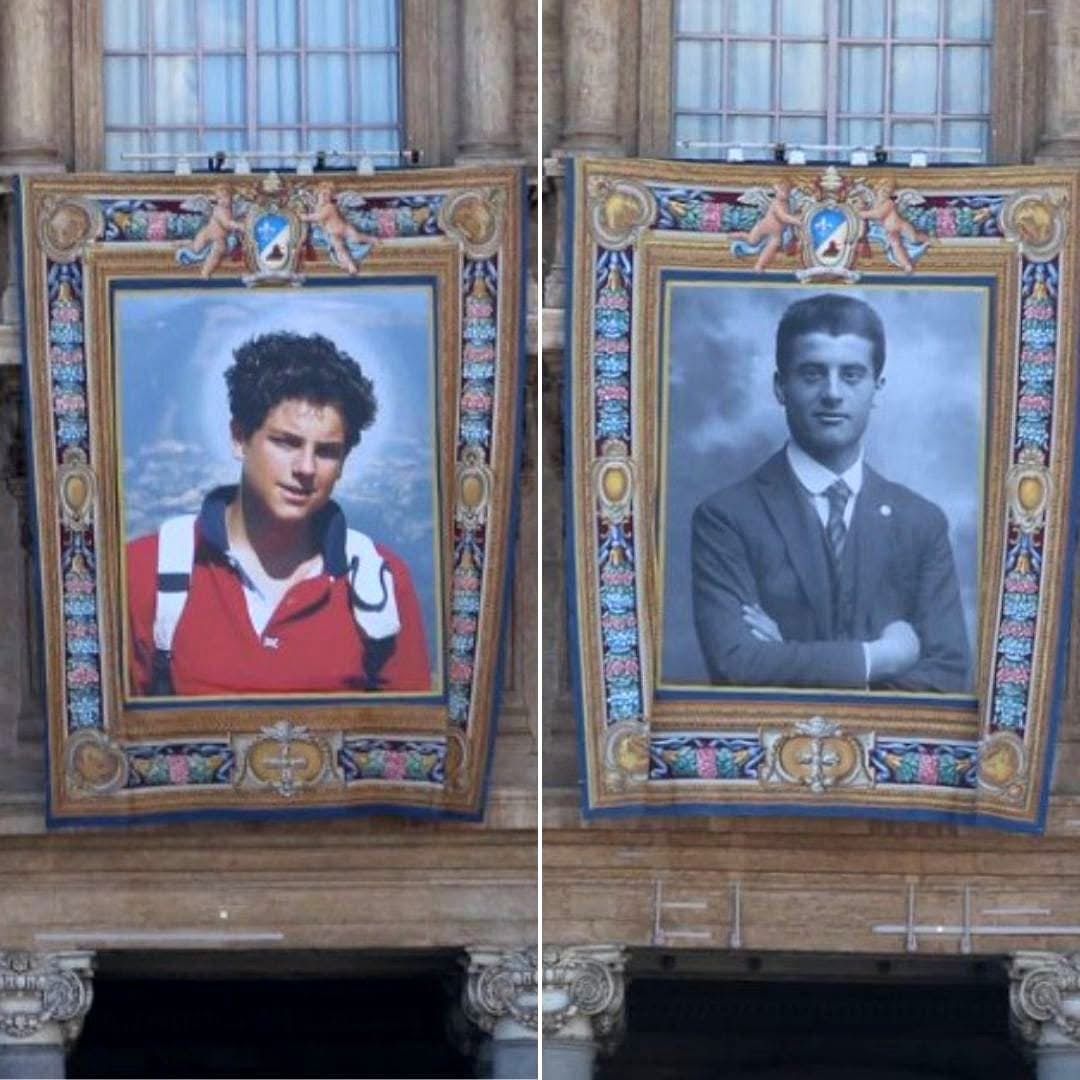
The Canonization of Blessed Giorgio Frassati and Blessed Carlos Acutis.
Today in the holy city of Rome, our beloved Holy Father, Pope Leo XIV will solemnly elevate for the whole Church two new saints, Giorgio Frassati and Carlos Acutis. Both of these young men died very young, yet in their brief journey, they show that living for Christ takes nothing away from life but fills it with meaning and joy.
The saints are the experts in listening. Like Mary of Bethany, the saints are attentive to the voice of Christ. They hear Him in the reading of the Gospel, they hear Him in the voice of the Church’s teaching, they hear Him in the voices of the poor and the immigrant, they hear Him in the silence of the Blessed Sacrament. The saints don’t just hear Jesus, they listen to Him. This work of listening is to discover the voice of Christ in those right beside us, in our families and our place of work. It's also about trying to hear the voice of Christ in our contemporaries, some of whom are far from the Church. Even in their estrangement, they are creatures of Logos, of reason, and can be unwitting transmitters of the truth. We need to have hearts and ears capable of hearing Christ speaking from the most unlikely places.
Poor Martha in her busy kitchen of Bethany could hear Christ speaking in the other room, but she was so distracted, she couldn’t listen. She got focused on her problems, her difficulties and her failures. She was listening to herself and only hearing Jesus from a distance.
The Divine Logos created the human body as a custom designed parable: we have two ears and one mouth. God is showing us that we have to do twice as much listening as we do speaking and listening is twice as hard as talking.
May our Blessed Mother, who’s beautiful birthday we shall celebrate tomorrow (for us Maronites, we think of our Lady of Mankee!) on September 8th, intercede for all of us to be betters listeners!
† Selim Sfeir
Maronite Archbishop of Cyprus